User:Fradeve11/prove2
Tagging scheme to describe historic structures/areas/elements.
Why we need new historical tagging?
The historical workgroup is an initiative of the Italian OSM community to bring in the project features for the most diffused types of cultural heritage in Europe and in the world. At now (half 2009), OSM lacks of more or less 10 types of cultural evidences, more or less diffused in all the continents. This consideration has been raised after the first ArchaeoMapping Party of the OSM history: Pompei 2008 (08-12-08). In pills: OSM is used for almost all applications of cartography, and now we want to enable OSM to be used also for historic heritage knowing - conservation - turism management.
The 2 logos are from Wikimedia Commons, and are used for "Finnish road sign no. 772 a. Museum or historic building"; it's in public domain because it is a part of a decision or a statement by an authority or a public body of Finland.
 | |||
|


Name
This applies both to historic areas and historic elements (highways, columns, etc.).
| name | local language spelling |
| name:it | Italian language spelling in national lettering. Examples: "Area archeologica di Pompei" |
| name:en | English spelling in national lettering. Examples: "Archaeological Area of Pompeii" |
| name:la | Latin spelling in national lettering. Examples: "Pompeii" |
Example
| Feature | Documentation | Tagging example |
|---|---|---|
| Example for Pompeii: Latin names | name=Taverna di Feboname:la=Taberna Phoebi |
Historic areas
| type |  |
| de | historischer Ort |
| en | Historic area |
| us | Historic area |
| fr | Zone historique |
| it | Area storica |
The historic site (land area), mostly fenced or outlined by hedge, barrier or access restriction is tagged on land with:
| Archaeologic area | historic=archaeological_site |
 Approved Approved |
|
| Palaeontological area | geological=palaeontological_site |
Voting |
|
| Historic station area/building | railway:historic=station_site |
 Voting Voting |
- See #Heritage designation for historic areas protected by designation from institutions (e.g. UNESCO).
- Use
historic=archaeological_site(orhistoric=paleontological_site) +site_type=fortificationfor castles or ancient fortifications which have completely vanished or of which only little visible remains exist like ramparts, moats or some stones. For others kind of fortification's tags, see #Castles.
Historic aqueducts
| type |  |
| de | antikes Aquädukt |
| en | Historic aqueduct |
| us | Historic aqueduct |
| fr | Aqueduc historique |
| it | Acquedotto storico |
Roman ones in en.wiki
historic=aqueductbridge_type=aqueduct |
 To be proposed To be proposed | ||
| Useful combination | historic:civilization=* |


Historic public baths (thermae)
| type |  |
| de | |
| en | Historic thermal baths |
| us | Historic thermal baths |
| fr | thermes historiquees |
| it | Terme antiche |
Thermae, Roman ad Greek, Roman ones on en.wiki
building=yeshistoric=thermae |
To be proposed | ||
| Useful combination | culture=* |


_les_thermes.JPG)
Ancient amphitheatres
| type | |
| de | |
| en | Historic amphitheatre |
| us | Historic amphitheatre |
| fr | Amphithéâtre historique |
| it | Anfiteatro storico |
building=yeshistoric=amphitheatre |
To be proposed | ||
| Useful combination | culture=* |


Obelisks
| type | |
| de | Obelisk |
| en | Obelisk |
| us | Obelisk |
| fr | Obélisque |
| it | Obelisco |
building=yeshistoric=obelisk |
also have a look at man_made=obelisk To be proposed | ||
| Useful combination | culture=*height=* |


Stones
| type | |
| de | |
| en | Historic stones |
| us | Historic stones |
| fr | |
| it | Pietre storiche |
| boundary_stone | historic=boundary_stone |
To be proposed |
||
| generic tag for megaliths | historic=megalith |
To be proposed |
||
| menhir | historic=megalith +megalith_type=menhir |
To be proposed |
In this key:value pair will be merged also all:historic=menhir [13]menhir=yes [2] etc.
| |
| stone_circle | historic=megalith +megalith_type=stone_circle |
To be proposed |
In this key:value pair will be merged also all:historic=stone_circle [13] etc.
| |
| dolmen | historic=megalith +megalith_type=dolmen |
To be proposed |
In this key:value pair will be merged also all:historic=dolmen [6]dolmen=yes [2] etc.
| |
| milestone | historic=milestone |
To be proposed |
-
 The Rudston Monolith
 -
 A stone circle
 -
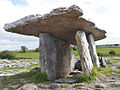 A dolmen
Apr2006.jpg)
May2005.jpg)

Historic roads
| type |  |
| de | |
| en | Historic roads |
| us | Historic roads |
| fr | Rues historiquees |
| it | Strade storiche |
We need a smart way to tag historic highways: both in good conditions and in bad conditions. Roman viaducts are here on en.wiki
* roman roads * pilgrimage roads * ancient commercial roads |
historic=road |
To be proposed |
In this key:value pair will be merged also all:historic=roman_road [50] etc.
| |
historic=bridgebridge_type=highway |
To be proposed |
Useful combinations
For both the elements (roads and viaducts) we recommend the following combinations of tags:
| Useful combination | route=historic |
To be proposed |
|
| Useful combination | culture=* |
To be proposed |
|
| Useful combination | smoothness=*cutting=yestunnel=yeswidth=* |
Approved |
Examples
| Feature | Documentation | Tagging example |
|---|---|---|
historic=roadname=Appian Wayname:la=Via Appiatype=routeroute=historicculture=roman | ||
historic=roadname=St. James' Wayname:es=El Camino de Santiagotype=routeroute=pilgrimage | ||
historic=roadname=Silk Roadname:it=Via della Setatype=routeroute=historic |


Castles
| type | |
| de | Burg |
| en | Castle |
| us | Castle |
| fr | Château fort |
| it | Castello |
See historic=castle for further informations.
historic=castle |
Approved |
|||
name=* |
Approved |
|||
wikipedia=article_name |
Approved |
Use different tags for linking the same article in different languages, e.g. wikipedia:en=Pillnitzwikipedia:de=Schloss Pillnitz
| ||
castle_type=* |
Discussion |
castle_type=* could be:castle_type=burgcastle_type=schlosscastle_type=burg;schlosscastle_type=festungcastle_type=kremlincastle_type=shirocastle_type=defensivecastle_type=statelycastle_type=fortresscastle_type=roman
| ||
ruins=yes |
Approved |
Use it when the castle is a ruin, that means if only remains of buildings without roof or at least some walls exist (don't use historic=ruins anymore!).
|


Tumulus
| type | |
| de | |
| en | Cairn |
| us | Tumulus |
| fr | |
| it | Tumulo |
historic=archaeologic_site +site_type=cairn |
Discussion |
This tag is heavily under discussion; historic=archaeologic_site+site_type=cairn could be substituted by site_type=tumulus or man_made=cairn. Also see historic=tomb and tomb=*


Memorial
| type | |
| de | |
| en | Memorial |
| us | Memorial |
| fr | |
| it | Memoriale |
historic=memorialname=* |
Approved |
This is used only for memorials. For monuments use historic=monument.
|


Battlefield
| type | |
| de | Schlachtfeld |
| en | Battlefield |
| us | Battlefield |
| fr | Champ de bataille |
| it | Campo di battaglia |
The site of a battle or military skirmish in the past. this could be on land or at sea.
historic=battlefield |
Approved |
In this key:value pair will be merged also all:historic=battelfield [1]historic=battle [2]historic=battle_field [3]historic=battle_ground [1]historic=battle_site [1]
| ||
name=*date=* |
Approved |
Name stands for the name of the battle; Date for the date of that as YYYY-MM-DD. |


Wreck
Monument
Heritage designation
| heritage designation | historic=heritage +designation=* |
Discussion |
Example
| Feature | Documentation | Tagging example |
|---|---|---|
historic=heritage +designation=UNESCO_world_heritage |
- Note: actually UNESCO has designed 890 world heritage sites. In Tagwatch this tag is used only [35] times. We have to homogenize in this tag also all the
historic=unesco_world_heritage[13] and all thehistoric=world cultural heritage.


Others useful tags
Museums
| de | Museum |
| en | Museum |
| us | Museum |
| fr | Musée |
| it | Museo |
building=yestourism=museum |
Approved | ||
| Useful combination | operator=*building=yesopening_hours=* |


Topology
The most popular question after this kind of tagging proposal is
Why have you proposed some features as "new", when we have already them? For example, for roman bridges, you have proposed
historic = bridge
bridge_type = viaduct
culture = roman
when we could have for example
brige = yes
highway = path
historic = yes
that could be use, avoiding to introduce "historic = bridge" into database.
- Answer: We need to strongly distinguish actual and suitable features from past ad historic ones. Probably, if I query the OSM database for all "bridge = yes", mostly I don't want the historical bridges (unsuitable for cars); in the same time, if I query database for "historic = bridge", i get them without adding any other query (while in the other case I must query for "bridge = yes" + "historic = yes"). Moreover, in the proposed model, the tag bridge_type contains the ancient use destination of the bridge. For example, a bridge that was built to carry a road and now is suitable today only for pedestrian, could be tagged as "historic = bridge" + "bridge_type = viaduct" + "highway = pedestrian" + "culture = roman". For the same reason, the use of historic = yes should be reduced, because searching for a "main" tag should not give a results including historic features.
So, the main problem is that the historic=* tag is more complex that other tags, because it represents features of the past, and mostly not usable today for they original ancient purpose. For this reason, all the historic features must be excluded from simply queries, which must give only actual features.
Problem: conventions to express the historical period
So, they're really a lot of features. What can we do? A problem remains open: how to distinguish building time.
Datation with period
historic = megalith
period = neolithic
Datation with date
historic = megalith
start_date = 3100 BC
or, for a Pompeii fountain
historic = yes
amenity = drinking_water
date = 78-08-24
TODO
- Define objections on bridges, viaducts and aqueducts
- Define a tag for
barrier=sally_portto use as the Pompeii'shistoric=city_gate(probablybarrier=sally_port+historic=yesbecause lots of actually working "sally_ports" have been in the past city gates?) - introduce
historic=triumphal_arch