OpenStreetMap logo OpenStreetMap

-karlos-'s Diary

Recent diary entries

Passau, das ist doch die Gelegenheit, mal Leute zu treffen. Bisher war ich nur mal war ich beim OSM Treffen in Nürnberg, dagegen war Passau ein Kulturschock. In meinem “vorherigen Leben” hatte ich als Raumpatrouille-Fan schon einige Veranstaltungen besucht. OSM ist mindestens genau so kreativ.

Bei meiner Bastelei an “OSM go” hatte ich ein paar Kontakte geknüpft. Nun hoffte ich, einige Aktive persönlich zu sehen, vielleicht auch User, die Feedback zu OSM go geben. “3D-Rendern” währe doch ein Thema. Kaum getwittert, wurde ich überredet, das im OSM-Wiki vor zu schlagen und auch gleich als “Moderator” uh! In den Wochen danach wurde jeden Tag mehr oder weniger programmiert. “Muss das bis Passau fertig sein” fragte meine Herzallerliebste. Na ja, nicht wirklich; “fertig” gibt es bei sowas ohnehin nicht. Aber halbwegs Fehlerfrei währe schon gut.

ANREISE UND ABEND

Dann war es Freitag, die FOSGISS schon in vollem Gange und ab Mittag wurde ich unruhig, bin bald weg von der Arbeit und zum Zug. ICE ohne Platzreservierung erhöht den Abenteuerfaktor noch. Schließlich saß ich mit einem 2-Jährigen plus Vater an einem Tisch und statt Notebook und Code kneten gab es Gebabbel und Fingerspiele.

Mein erster Eindruck von Passau: Es ist nicht so flach, wie es auf OSM aussieht. Immer muß man über diesen Hügel in der Mitte und es gibt nicht mal einen direkten Fußweg zur Uni. Dort kannte ich zwar die Hörsaal-Nummer und dachte, wenn da überhaupt welche ‘rumlaufen, ist es der OSM-Event. Von wegen. Erst mal war Info-Wochenende für neue Studenten. Gut, die kann man doch von typischen OSM-Mappern unterscheiden: Männlich, älter, rumstehend und Plaudernd. Ich wurde auch schon vor der Tür nett begrüßt; ok war eine Verwechslung. Innen liefen welche mit Ausweisen am Gürtel ‘rum. Ordner? Ich fragte nach OSM und wurde in den Hörsaal gewiesen. Äh? Der Beamer verkündete einen Vortrag von Gregor Gysi! War das geplant? Nein, falsches Gebäude. Weiter laufen!

See full entry

Location: Thanöd, Ries, Passau, Bayern, 94034, Deutschland

OSM go - Nodes und Daten (DE)

Posted by -karlos- on 9 January 2017 in German (Deutsch).

London

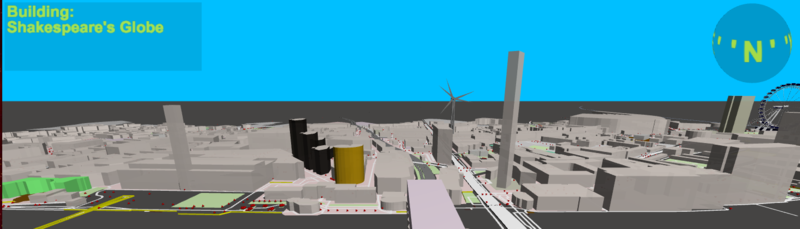
Es macht immer noch Spaß, “OSM go” zu verbessern und neue Funktionen zu ergänzen. Ein paar Zeilen Code dazu und Bäume werden sichtbar; und da sind wirklich viele Bäume in OSM. Die Hauptidee ist immer noch das Darstellen von OSM Daten. Eine echt realistische Darstellung mag möglich sein und kommen (viel) später (Als Teamwork mit OSMBuildings und OSM2WORLD, hoffe ich).

Wir haben ein Experiment gemacht: OSM2WORLD kann ein Gebiet als 3D Format “obj” exportieren. Und OSM go kann das anzeigen, auch Farben. Jan (OSMBuildings) exportierte einige Gebiete um zu Testen, ob sie als 3D-Tiles in einem Thin-Client genutzt werden können. Geht gut: Twitter-Post

See full entry

OSM go - Nodes and Data (EN)

Posted by -karlos- on 9 January 2017 in English.

London

It’s still fun to improve “OSM go” and add new features. After adding some lines of code, and trees get visible; and there are really a lot of trees in OSM. The main idea still is visualising OSM data. A really realistic view may be possible and may be done (much) later (As teamwork with OSMBuildings and OSM2WORLD, I hope)

We made an experiment: OSM2WORD offers to export an area as 3D format “obj”. And “OSM go” is able to show this, including colours. Jan (OSMBuildings) exported some areas to test, they may be used as 3D-tiles in an thin client. Works fine: Twitter-Post

The controls have been reworked generally. Now there are two ways to move and look around, the ‘Inspection-‘ and the ‘Segway-Mode’. ‘Inspection’ is default, use the key “C” to change the mode. ‘Inspection’ is what you know from other 3D renderers like OSMBuildings: By keys, you move your point of view, by mouse or touch, you move the 3D world.

See full entry

Work is in progress, features are improved and added. See the OSM Wiki page for more details and read some background infos below.

There is an Twitter-Feed: https://www.openstreetmap.org/user/OSM__go (two underscores!). You may follow the latest activities, upcoming ideas and related things.

Tile processing

Overpass seemed to be slow but my measurement was wrong because Javascript even delays console.log while callback code is running. A close inspection showed: Overpass is great, my code with a lot of string copy was slow and is now replaced by jQuery.js and getJSON. Much better, much faster but there was still that “wait-cursor”. Again it was me. I had simple linear searches for already existing nodes or ways. I replaced them by arrays with the OSM-ID as index. Odd to debug but fast. Now, the default load radius is set up to 800m and still fast. Or fine, if you are in a dense city. Old hardware devices may have trouble and get slow. Now the download will stop.

See full entry

Location: South Bank, Waterloo, London Borough of Lambeth, Greater London, England, SE1 9PZ, United Kingdom

OSM go - 3D Render? (DE)

Posted by -karlos- on 24 October 2016 in German (Deutsch).

Die Verbesserungen an “OSM go” gehen weiter. Ich war schon stolz, das der OSM Wochenbericht es erwähnt hat. Die Handhabung and Bedienfunktionen sind jetzt brauchbar. Es gibt Tasten- und URL-Befehle. Das Rendering kennt jetzt building levels und Geleise. Der erste “Layer” ist enthalten: Keepright. Es ist motivierend, alle Fehler zu beseitigen, die in der 3D-Welt markiert sind. Eine Objektauswahl zeigt Tags an.

Und gibt es das in einem anderen Programm oder Service: OSM rendered in Stereo zum Ansehen in Google Cardboard? Mit OSM go kann man durch die virtuelle welt von OSM lauen oder Fliegen.

cardboard

Alle Details stehen auf der OSM-Wikiseite für OSM go. Da stehen auch alle Einzelheiten zu den enthalten Teilfunktionen und deren Entwicklungsstand. Und am Ende eine ToDo-Liste.

See full entry

OSM go - 3D Render? (EN)

Posted by -karlos- on 24 October 2016 in English.

The improvements of “OSM go” are going on. I was quite proud, as the OSM weekly mentioned it. The handling and the control is usable now. There are keyboard- and URL-commands. The rendering includes building levels and train tracks. The first “Layer” is included: Keepright. It is motivating to clear the errors, marked in the 3D world. A object selector does show its OSM tags.

And did you ever see this in any tool or service?: OSM, rendered in stereo, to see it in a Google Cardboard? OSM go enables you to walk or fly through the virtual world of OSM

cardboard

Read all details in the OSM-Wiki page for OSM go . There you will also find details to ongoing component states and rendering details. And a todo list at last.

See full entry

OSM go Earth - Fragen

Posted by -karlos- on 29 August 2016 in German (Deutsch).

Es gibt auch diese Woche etwa zu berichten ;-) Es geht voran, zu langsam und doch zu schnell: Zu schnell geht es, weil meine Begeisterung mein Restleben und den Nachtschlaf beeinträchtigt. Zu langsam weil das Testen mit Javascript eine Qual ist per „Console.Log“, am Smartphone gar nur „alert“. Gibt es ein gutes Framework mit Beakpoints?

OSMgo Greenwich

See full entry

Google Earth ==> OSM Earth (EN)

Posted by -karlos- on 12 August 2016 in English. Last updated on 19 September 2016.

No, I dod not cancel, “OSM go”, I extended the idea. But first, thank you for the suggestions. At first, the reactions was limited, after a week it got nice.

After I postet that PSM-go, I spend a day to take snippets of old code of mine. And at night, I had that first 3D-View. It enthused me so much, to have a sleepless night, my imagination running wild: Walk through OSM in 3D (not that discouraging Pokemon style, something tidy), overlay data, not only walk but “fly”; thats why I used the term OSM-Earth. Sure, more layers with external- / realtime data are possible. May be switching to 2D mode.

Actual I am fighting with JavaScript Orientation-Controllern (the compass is wrong using Android), someone may take over this. Contributors are welcome anyway, not only by writing code. Also advice, what frameworks exist. I.E: If I got JSON by AJAX, how to convert the OSM data to Javascript arrays and how to index the node ids?

Actual, everything exists already; renderer in 2D and 3D, gamification with OSM improvements. Demotivating? Well - it’ fine, if one has les to do himself. However, its quite difficult to dig into stacks of alien code. And often, only the solutions may be usable because it is not Javascript.

  • A running gamification (in 2D): http://www.kort.ch
  • A Renderer in Javascript (2D): Cartagen
  • A 3D-Renderer (java,static): osm2world.org
  • Ingress, the “precursor von PG” OSM based: github.com/egore/osmgress
  • Other tools to motivate editing: Mapillary, OSMand and Maps.ME.

With edits there are a lot of doubts because newbies shall do it. I like the idea, this edits to go into a pool, used by “real” OSMer, loaded in an editor and verified.

What next? Just things I will have fun with :-)

See full entry

Nein, “OSM go” habe ich nicht gecancelt sondern die Idee erweitert. Aber erst mal Danke für die Anregungen. Die Reaktionen waren zunächst mäßig, nach einer Woche dann schon schön.

Nach meinem Go-Post habe ich einenTag lang einige Teile aus alten Code von mir zusammengeglaubt und hatte abends schon eine erste 3D-Ansicht. Was mich so begeistert hat, das mir einer schlaflosen Nacht die Phantasie durchgegangen ist: In 3D OSM durchwandern (nicht der abschreckende Pokemon-Style, was gescheites), Daten einblenden, nicht nur Laufen, auch “fliegen”; daher jetzt der Begriff “OSM Earth”. Klar sind dann weitere “Layer” auch mit Echtzeitdaten möglich. Vielleicht auch ein Wechseln zur 2D-Ansicht.

Derzeit kämpfe ich noch mit den JavaScript Orientation-Controllern (Der Kompass stimmt bei Android nicht) das kann gerne jemand Übernehmen. Mithelfende kann ich brauchen, nicht unbedingt nur zum Code schreiben. Aber auch Beratung, welche Frameworks es gibt. Zum Beispiel: Wenn ich mit AJAX JSON habe, wie konvertiere ich die OSM-Daten zu Javascript-Arrays und wie Indiziere ich die Node-IDs?

Eigentlich gibt es ja schon alles; Renderer in 2D und 3D, Gamification mit OSM-Verbessern. Demotivierend? Och - ist doch gut, wenn man weniger Arbeit hat. Allerdings ist es sau schwer, sich in einen Haufen fremden Codes einzuarbeiten. Und oft kann man nur die Lösungen nehmen, weil es kein Javascript ist.

  • Eine laufende Gamification (in 2D): http://www.kort.ch
  • Ein Renderer in Javascript (2D): Cartagen
  • Ein 3D-Renderer (java,statisch): osm2world.org
  • Ingress, der “Vorgänger von PG” auf OSM Basis: github.com/egore/osmgress
  • Andere Tools, die zum Editieren Motivieren: Mapillary, OSMand and Maps.ME.

Bei Edits gibt es viele Bedenken, da es ja Neulinge sein sollen. Mir gefällt die Idee, das diese Edits in einem Pool landen, die dann “echte” OSMler in ihren Editor laden und prüfen.

Wie geht es weiter? Immer das, was gerade Spaß macht :-)

See full entry

Pokemon Go ==> OSM Go (EN)

Posted by -karlos- on 31 July 2016 in English. Last updated on 7 September 2018.

Who did have the same association at once? One will get some ideas. Now eyes closed and then write down your ideas please. Gamification of OSM, als a helper to promote OSM as a useful every day tool. But not only this, the data base should also participate.

“If you have visions, see the doctor” Helmut Schmitt, German Chancellor. - A “OSM GO” is not a mini app, just plugged together in a minute. A server has to run, the handling should be DAU prove and appealing, the function understandable. That needs more than two enthusiastic coders until at last some basic level will run.

Wether the idea is nicked, anyone may note. Pokemon Go also is a mix of known elements: Collecting coins outdoor is done long way back. Augment reality too (I am irritated because Pokemon Go doesn’t use ist all the time)

The OSM-GO client may (at first) be a browser-app. 3D visualisation done with WebGL/Tree.js, Javascript On-Events to catch the moves and direction of the smartphone. As we don’t have an Javascript OSM render engine, this is, by the way, also a chalange.

There is still the question about the game play. Just do start, we also may do OSM-useless point collecting: Any healthy walked step counts, find and goto hydrants and water dispenser. If the player likes, he may set himself and its walks visible, virtual to all other players.

Really fun comes up with OSM-useful things: Check wether a shop, contained in OSM, still exists; the older the last verification the more points you get. Verify, update or insert tags of the shop. Note new house numbers. Is a way really a dead end or did the first mapper run out of time/enthusiasm? Enter new POI or even totally new ways.

At that moment OSM, data get changed, it gets critical and needs verifying. A lot helps a lot: If three player claim the same, it will be rather correct, and only now, it will be taken over to the OSM data. To collect more gameplay ideas and features there then may be a page in the OSM wiki.

See full entry

Pokemon Go ==> OSM Go (DE)

Posted by -karlos- on 31 July 2016 in German (Deutsch).

Wer hatte diese Assoziation auch gleich? Da kommen einem einige Ideen. Jetzt Augen zu und dann deine Ideen aufschreiben bitte. Gamification von OSM, als Trittbrett um OSM als nützlich im Alltag bekannt zu machen. Aber nicht nur, die Datenbasis soll auch davon partizipieren.

“Wer Visionen hat, soll zum Arzt gehen”, Helmut Schmitt. Ein “OSM GO” ist keine Mini-App, die man mal schnell zusammen popelt. Ein Server muss laufen, die Bedienung idiotensicher und verlockend sein. Die Funktion verständlich. Da braucht man mehr als zwei begeisterte Programmierer, bis zumindest einige Basis-Level laufen.

Das die Idee geklaut ist, darf jeder sehen, Pokemon Go ist auch ein Mix bekannter Elemente: Draußen Münzen sammeln gibt es schon lange. Augment Reality auch (mich irritiert, dass PG das nicht immer an läßt).

Der OSM-GO Client kann (erst mal) eine Browser-App sein. Mit WebGL/Three.js geht 3D-Darstellung, On-Events von Javascript können die Bewegung des Smartphone erfassen. Das man nebenbei auch einen OSM-Renderer in Javascript braucht, ist ja auch eine Herausforderung.

Bleibt noch die Frage nach dem “Game-Play”. Da kann man zur Anfangs-Motivation auch osm-nutzlose Punkte-Sammelei betreiben: Jeder gesund gelaufene Meter zählt, Hydranten oder Wasserspender suchen und aufsuchen. Wenn der Spieler will, kann er sich virtuell “sichtbar machen” so das andere Spieler sehen, wo er läuft.

Richtig Freude macht aber erst OSM-Nützliches: Prüfen, ob es den Laden noch gibt, der auf OSM eingetragen ist; je länger nicht geprüft wurde, je mehr Punkte. Die Daten der Läden prüfen / aktualisieren / Neue eintragen. Hausnummern erfassen. Hört ein Weg wirklich am Ende auf, oder hatte da ein Mapper keine Zeit/Lust mehr? Ganz neue POI und am Ende gar neue Wege erfassen.

See full entry

Pocket Earth, wiederentdeckt

Posted by -karlos- on 7 August 2014 in German (Deutsch).

Beim Ausmisten bin ich neulich eine nicht benutzte Karten-App gestoßen. Vor dem Löschen schaut man kurz hinein. Nach etwas Rumgestöber in den Menüs dann das “Wau!”. Das Teil ist nicht genial aber fast. Offline- und In-App Rendern, Adresssuche und Routing, Wanderplanung und GPS-Aufzeichnung, Im- und Export, fast alles was das Herz begehrt. Denn akzeptablen Preis musste ich wohl schon mal gezahlt haben, warum dann nicht genutzt? Das erste ist die Bedienung. Gut, ein App das eine Dokumentation braucht, taugt nicht. Und nach doch einigem Erkunden findet man alles, auch ein Handbuch, und entwickelt auch ein Bewusstsein für die Menüstruktur. Mich juckt es doch, die Logik im OSM-Wiki zu Beschreiben. Vielleicht finden sich dabei Haken.

Die Karten sehen wie OSM oder Pocket-Stiel aus. Da sind noch Macken ‘drin (Brücken-Stiel, falsche Flächen) Auch Fehler kann man ja zusammenstellen und übermitteln. Die App scheint ja noch gut in der Entwicklung zu sein.

Cool ist die Auswahl dessen, was gerändert wird. Endlich kann ich die nervenden Regions-Grenzen abwählen und Bushaltestellen sehen nur, wenn ich eine Suche. Beim Wahlmenü hätte ich noch Wünsche und Ideen. Und Mecker: Wenn ich Nebenstaßen ausschalte sollten bitte auch Waldwege weg sein.

Fast nichts zu meckern gibt es beim Download. Keine Kacheln diverser Auflösung, kompakte Vektor-Daten werden ruck-zuck gespeichert. Länder, Orte oder alles was für eine Route benötigt wird. Wenn man London nicht mehr baucht, löscht man gezielt die 13MB. Es gibt automatische Updates! Was ich vermisse sind Relationen wie markierte Wanderwege. Dazu kommt einiges an Kleinkram: Man kann Routen, Wege, Punkte und Markierungen in Ordnern sortieren. Adressen auch über die Kontakte suchen und diverses im Umkreis.

Oh, es gibt ein Forum; da bin ich dann mal weg …

TosmE tests touch gestures to edit a way. (to use with iD)

Last time I added a new way to delete a node: Touch it and stay on the node without move. Quite often, when I fine tunded existing nodes, my node was deleted unintended. Why? I broke my own rul: If something happends in the editor, show it! Now the running delete-time is visualized: after short, the nodes starts to change color form blue to black. You now know: If you don’t want to delete, move or untouch.

Because the sight/loupe was empty after the node was deleted, I added a thin ring where the node had been. That immediately lead to the next idea: If you accidently deletet a node, what would you like to do? Undo. What if you see the ring? Save it, touch it, restore it! Right, try it, you’l love it: http://tosme.openstreetmap.de

At last I love it as the most enjoyable way to undo.

In my last post, I presented just an idea. The responses showed, there are quite a view ongoing activities already. We all share the idea of tagging guided by a tag database structured to a agreed schema. Some projects seem to compete but that’s evolution in OSM. Some could interact with a little glue in between.

I really agree with the presentation by David.earl. I also like the idea, given in his video, to generate the data by parsing the Tag pages of the OSM wiki.

The name TagCentral first reminded me to a tag-centralizing Mafia. We do not want central decisions how to tag. But we need, like the central OSM database, a central tag database, maintaining code and a central server to run it.

At the moment we have two sources of tag data: First the tags, used in the OSM data as Taginfo and tagwatch present in analyses. Second the OSM-wiki with all its tag-pages. Both are crowdsourced (no Tag-Mafia :), both may be used to condense a tag database. Taginfo helps to prioritize and may show missing definitions in the wiki. Relations between tags, statistical retrieven, should be present in the wiki to.

Of course, no one wants to write an analyzer of human written wiki text. There is already a wiki-template “KeyDescription”. It looks like this Template includes all the data necessary to generate a tag-schema. If not, it may be extended.Let’s se the tag highway=trunk. The template includes value=trunk. “Trunk” is also the English word for that kind of road. But there is no option to append the used words in other languages. What about name=trunk and AT:name=Schnellstrasse? This way we would get the localization almost for free. If each localized wiki page has its own word definition in the template, all the templates can be merged to one tag schema with all local used words, and all local descriptions of course.

See full entry

Guided Tagging by an interpreter of XML-formated rules

Posted by -karlos- on 26 January 2013 in English. Last updated on 2 February 2013.

“How do I tag this” Is the most asked question of OSM users, isn’t it? Newbees may easily learn how to draw points and lines in a OSM-Tutorial-Game. But how do editors help with tagging? You have to memorize it or search in the OSM-Wiki. Potlarch, Josm and also a lot of Apps have some menus and dialogs to guild tagging. I assume, they are separably hard coded and maintained by each developer, more or less influenced by user feedback.

My suggestion: #### Let’s create a database for Guided Tagging rules The knowledge about tagging, written down in a well defined format, interpretable by software.

The format may be XML and defined by a XML-scheme. The content will, define all the ways, tags may be selected and checked by an interpreter code. Step by step, the scheme and the interpreter may handle more features:

  • Select-Menus and -Trees
  • Dialogs with Switches, Selections, Radio-Buttons and so on
  • Rules to consider between Tags (excludes, includes, context, …)
  • Sub-Dialog-Trees (i.e. Tagging scheme for wheel chair access)
  • A default-list “Often used” (“Recently used” done by the interpreter code)
  • An alphanumeric Index for text search!
  • Tag names in English and multilingual
  • Tooltips and small help texts (i.e. What means Path Grade 1 to 5?)
  • Links to Tag-Symbols
  • Links to the tag description in the OSM-Wiki
  • menus for often used task (i.e. mapping buildings) The editor may allow to add user-defined menus

The XML-database may be edited online like wiki pages by registered members. It can be checked by the XML-scheme automatically (There could be an WYSIWYG-Editor later) The changes should be approved by a team of experienced members.

The XML-scheme and the interpreter code have to be maintained synchronously by a team of developers. The developer of the important editors should be part of this team.

See full entry