 OpenStreetMap

Users' Diaries
Recent diary entries
Posted by SomeoneElse on 24 July 2023 in English.

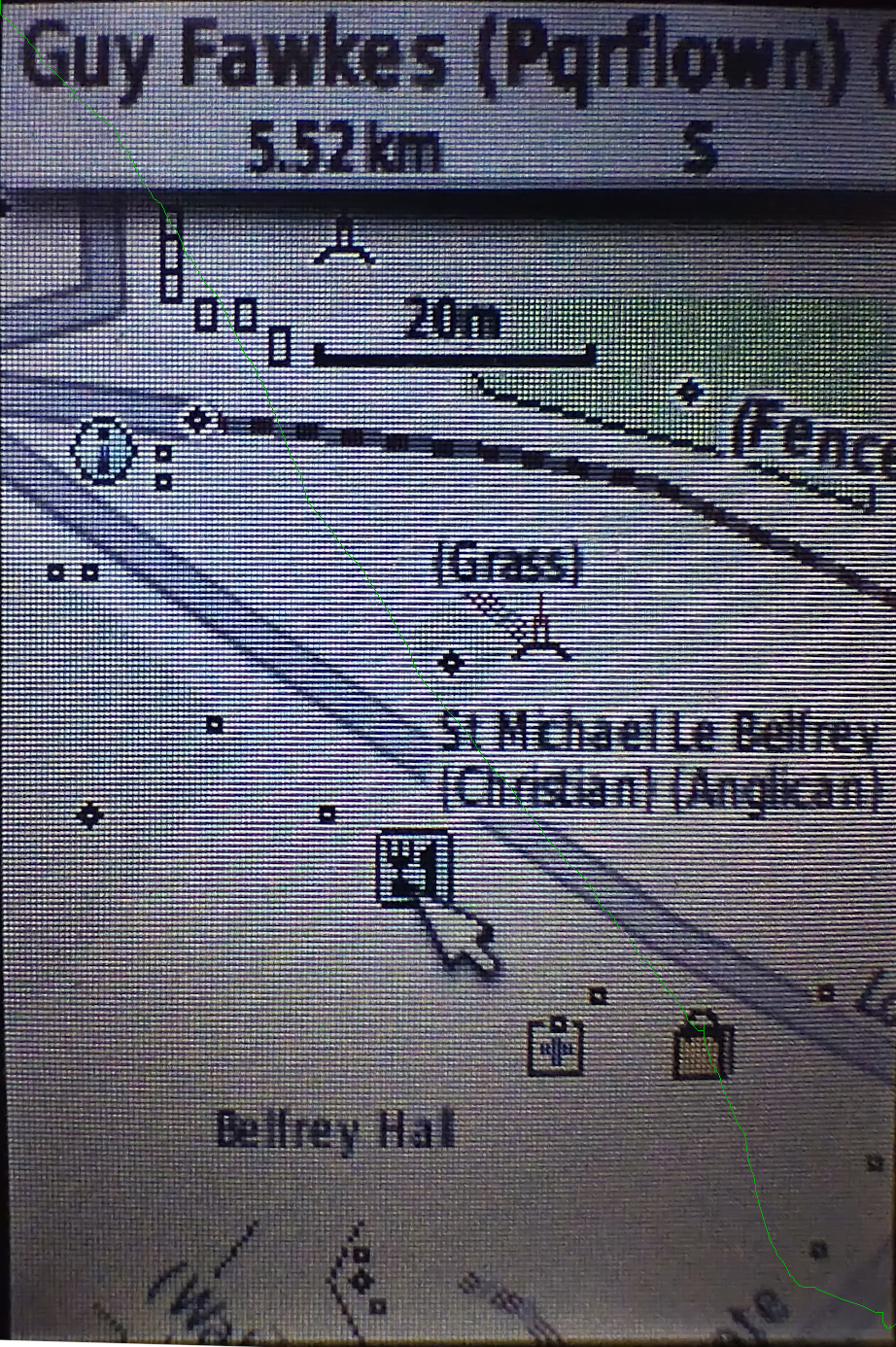
For many years I’ve used Garmin devices for both for navigation and for collecting data for OSM. As well as lots of premade maps in different styles it’s actually pretty easy to tinker with the map style yourself, although the OSM wiki makes it seem much more complicated than it actually is. It’s also pretty easy to see what OSM keys map to what values - there’s a file for points, one for lines and one for polygons that shows what OSM key and value corresponds to what Garmin feature.
I also maintain a web map style that tries to be much more inclusive than other web maps in terms of what it shows (have a look around the map legend for that), and thought that it’d be great to do the same for Garmin maps too. The web map style uses a lua script to preprocess OSM data before the CartoCSS code deals with it, which makes the latter much, much simpler. It turns out that exactly the same approach works when creating Garmin maps too, as described on this page.

Why are you mapping sidewalks as separate paths, rather than as tags on roadways?
While sidewalks as tags are adequate for many applications, they lack the ability to add detail to crossings and curbs. This information is vital for people who use visual and/or mobility aids. There is a project called OpenSidewalks which aims to bring equity to pedestrian data and provide routing tools for people whom have more specific mobility needs than what traditional routing tools can accommodate. Here is an excerpt from their mission:
Pedestrian pathways are critical infrastructure in urban environments that help people engage in their professional, community, and daily lives. To promote equitable urban growth, transit-oriented development, and resilient communities, we must give strategic, pedestrian-centric consideration to our sidewalks and pedestrian pathways, which are the dynamic connective tissue of our physical environments. Individuals experience the built environment in innumerable ways depending upon many factors, including their mobility. Therefore, their optimal path through the built environment is not necessarily the shortest or most direct route (despite the inherent Google Maps bias). Rather, their travel experience is influenced by static physical features, e.g., the availability of curb ramps and auditory signaling at crosswalks, as well as transient conditions (like precipitation). Automated routing applications can also make great use of this kind of data. For example, provided with such information, individuals prone to slipping on wet terrain could circumvent cobblestone sidewalk surfaces on rainy days, and individuals who require curb ramps can selectively identify routes that can accommodate their needs.
Additionally, much of Montréal already had sidewalks mapped as separate ways, and I am just expanding that coverage.
Guidelines
Sidewalks
Sidewalks should be:

This text is a continuation of my previous diary and do what the title says. The draft already existed 6 months ago, but just today I’m publishing this diary. Anyway, there’s comment I head about this on the @Wikimaps telegram
“You seem to be doing what we were doing 10+ years ago before Wikidata existed” – Maarten Dammers opinion on what this approach doing
Well, he’s right… but there’s a reason for that. This diary have 4 parts, the examples are on 3.
1. Preface
This extension could be perceived as one approach to make general proposed data extraction from OpenStreetMap Wiki, which , in a ABox vs TBox dicotomy, is the closest of a TBox for OpenStreetMap (*).
*: if we ignore id-tagging-schema and, obviously, other custom strategies to explain the meaning of OpenStreetMap data, which could include cartocss used to explain how to render as image. I do have a rudimentary draft of try to make sense of all of her encodings here, but not ready for today.
1.1 Wikibase is not consensus even between what would be ontologists on OpenStreetMap
Tip: for those wanting to view/review some past discussions, check https://wiki.openstreetmap.org/wiki/User:Minh_Nguyen/Wikidata_discussions#Wikidata_link_in_wiki_infoboxes. The same page from Minh Nguyen has other links, such as discussions to remove the entire Wikibase extension from OSM.wiki at https://github.com/openstreetmap/operations/issues/764.
Posted by NorthCrab on 24 July 2023 in Polish (Polski).
Last updated on 15 August 2023.

🗺️🦀 Witam społeczność OpenStreetMap,
Z zadowoleniem ogłaszam mój najnowszy projekt, osm-budynki-orto-import - w pełni autonomiczne narzędzie do importu budynków, które obecnie funkcjonuje w Polsce. Jest to mój kolejny krok w kierunku uczynienia OpenStreetMap (OSM) bardziej dynamiczną i wydajną platformą.

Narzędzie to zostało zaprojektowane w celu uproszczenia i zwiększenia dokładności procesu importu budynków. System wykorzystuje oficjalne dane budynków w połączeniu ze zdjęciami ortofotograficznymi w celu weryfikacji poprawności danych przed ich zaimportowaniem.
Sercem tego projektu jest zaawansowany model wizji komputerowej, którego precyzja sięga 99,7%. Moim zdaniem dokładność ta przewyższa możliwości większości przeciętnych mapujących, zapewniając szybszy i bardziej niezawodny sposób mapowania struktur.
🗺️🦀 Hello to the OpenStreetMap community,
I am happy to announce my latest project, osm-budynki-orto-import — a fully autonomous building import tool currently in operation in Poland. This is my next step towards making OpenStreetMap (OSM) a more dynamic and efficient platform.
This tool is designed with the objective of making building import process simpler and more accurate. The system utilizes official building data in conjunction with ortophoto imagery to validate the accuracy of the data before importing it.
At the heart of this tool lies an advanced computer vision model, with a precision as high as 99.7%. This accuracy is, in my opinion, superior to the capabilities of most average mappers, providing a faster and more reliable way of mapping structures.

Last fall I posted about “Living Streets of OpenStreetMap US”. In Las Vegas, I encountered two pedestrian streets (tagged with highway=pedestrian), and they’re in an outdoor mall.
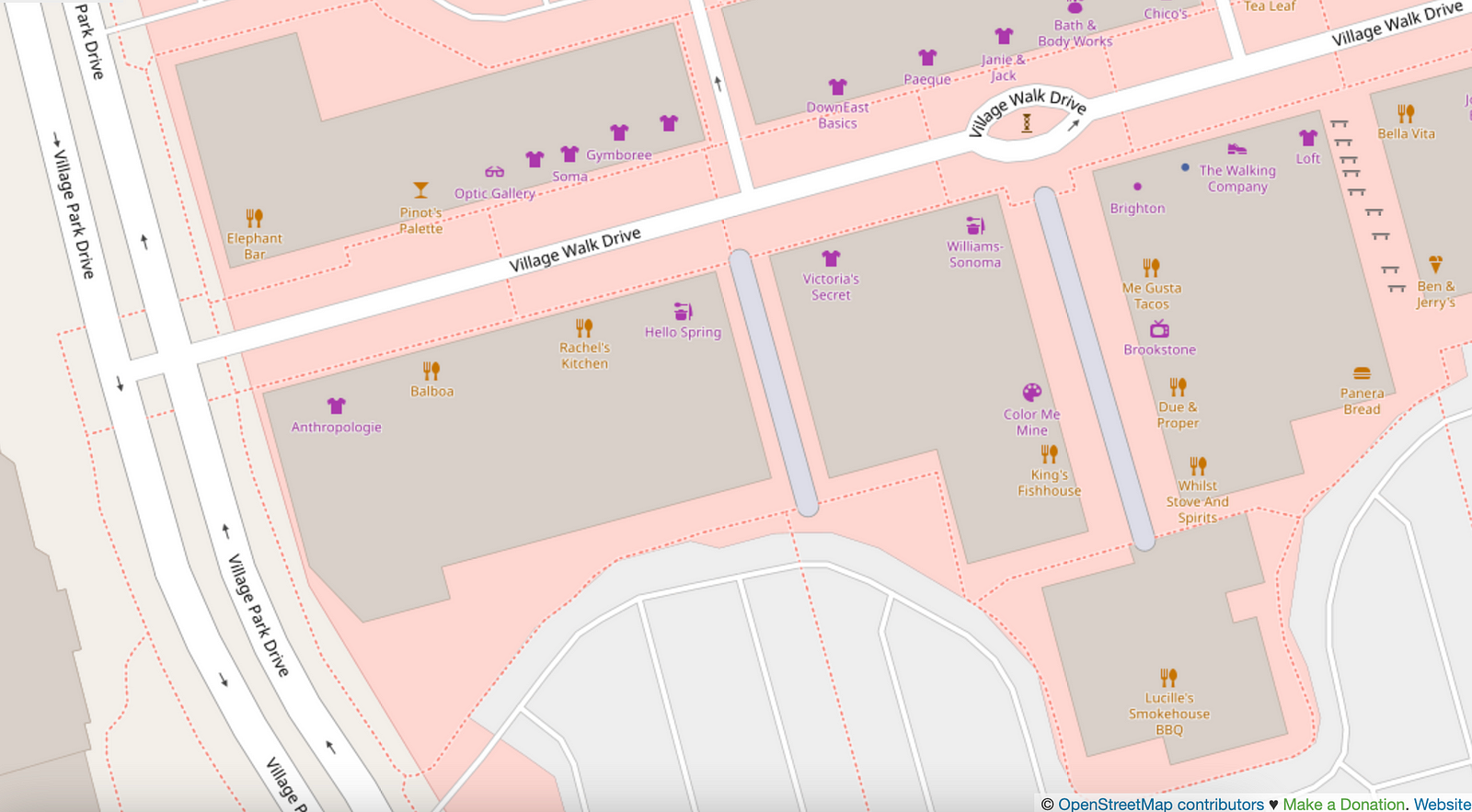
The next aisle over, by the Panera, is a walkable area tagged with benches but doesn’t have highway=pedestrian. I mapped a bike rack.
There’s also a splash pad on the map, which isn’t in any of the standard OSM renderers.
While visiting Moab, I corrected the new Utah Raptor state park to “Utahraptor”, and added two sculptures downtown (“Get Your Mind Rolling” was memorable).
I added some local businesses, parking access roads, residential access roads in a new development, etc. There are a good number of bike racks in national parks which ought to be mapped.
Shortly after I posted about bikes in northern Wisconsin / Lake Superior area, I found BicycleBenefits.org through the local co-op. Get discounts!

deleted
deleted
Posted by Erick Faria on 22 July 2023 in Brazilian Portuguese (Português do Brasil).

Como dito anteriormente, para as pessoas que estão interessados em aprender mais sobre o JOSM, gostaria de compartilhar alguns vídeos que registrei durante meus mapeamentos. Estes vídeos oferecem um pouco do meu processo e podem ajudar aqueles que são novos no JOSM ou que desejam aprimorar suas habilidades.
Aqui estão os links para os vídeos:
Estes são apenas alguns exemplos do trabalho que tenho feito. A intenção é mostrar um pouco do processo de mapeamento e fornecer alguns recursos educacionais para a comunidade OpenStreetMap.
Além disso, em breve espero começar a publicar conteúdo adicional no meu blog, Balaio Cientifico. Fique de olho para mais atualizações!
Posted by Erick Faria on 22 July 2023 in Brazilian Portuguese (Português do Brasil).
Estou de Volta ao OpenStreetMap
Olá a todos,
Depois de uma longa pausa, estou finalmente de volta ao OpenStreetMap. Quero compartilhar algumas novidades que podem ter impacto significativo no modo como continuamos a mapear nosso mundo.
Aquisição de um Novo GPS
A primeira grande notícia que quero compartilhar é que finalmente consegui adquirir um GPS. Esse é um avanço enorme para mim, pois irá melhorar muito a precisão do mapeamento, especialmente nas regiões rurais.
- Por que o GPS é tão importante?
Até então, contava principalmente com mapas baseados na web e imagens de satélite para realizar minhas contribuições. Embora estas sejam ferramentas úteis, têm limitações, especialmente quando se trata de áreas rurais, onde a cobertura do satélite pode não ser muito clara ou atualizada.
- Quais são os benefícios?
Com um GPS, agora posso coletar dados no terreno, tornando as contribuições muito mais precisas e úteis. Seja uma trilha pouco conhecida, um ponto de referência ou uma estrada rural, posso garantir que esses recursos sejam representados com precisão no OpenStreetMap.
Projetos Futuros
A segunda grande notícia é que, apesar da pausa, minha paixão por mapeamento não diminuiu. Na verdade, ela só aumentou. Quero levar minha experiência e conhecimento a um público maior, ajudando a educar mais pessoas sobre o valor e a importância do OpenStreetMap.
- Blogging
Em breve, começarei a abordar mais sobre o OpenStreetMap no meu blog, Balaio Cientifico. Planejo compartilhar dicas úteis, truques, guias passo a passo e relatórios de experiências. Este será um ótimo recurso para novatos e veteranos do OpenStreetMap.
- Tutoriais
Além disso, tenho planos de criar tutoriais de vídeo, mostrando como maximizar o uso do OpenStreetMap e do GPS para criar os melhores mapas possíveis.
Eu já criei alguns vídeos no meu canal no youtube. Se você ainda não visitou, te convido a dar uma olhada.
Por hoje é só. Em breve eu volto escrevendo mais.

Если вам срочно нужны свежие карты для Organic Maps (OM), то:
- Выберите на https://extract.bbbike.org нужный вам регион

- Укажите почту, на которую вам придёт выгрузка
- Запросите выгрузку и дождись письма. Следить за статусом выгрузки можно здесь: https://download.bbbike.org/osm/extract/ В принципе, с этой страницы тоже можно скачать выгрузку
- Скачайте полученный архив и распакуйте его.
- Найдите на телефоне папку
Android/data/app.organicmaps/files/<дата из шести цифр>/Для iOS: подключите iPhone к макбуку->Finder->File Sharing найдите папку organicmaps - Переместите в неё файл из архива заканчивающийся на .mwm
- Дайте ему имя вида:
Russia_Lipetsk Oblast.mwm. Чтобы точно узнать имя файла сначала скачайте карту этого региона через OM. Запомните имя, удалите файл и переименуйте перемещённый файл
⚠️ Иногда карты могут быть не совместимы с последней версией OM. Тогда может помочь перемещение карт в папку карт прошлого месяца.
Posted by Myter Erdeli on 20 July 2023 in Ukrainian (Українська).
Не забуваємо маркувати на карті археологічні пам’ятки(городища, стоянки, могильники). Історія, що лежить під земле також має значення.
Başla
Posted by Z_Empty on 20 July 2023 in Chinese (China) (中文(中国大陆)).
Last updated on 22 July 2023.

很早就看到了长沙周边丘陵山地已被绘制了不少,粗看还觉得绘图者做得很好,但从没有细看过。今日偶然放大查看长沙西部已被绘制“完成”的部分,才发现质量十分低下:

We have organized mapathons in Prague. We planned them, met on site, trained new mappers, mapped something and went to the pub. There we discussed and planned and exchanged our ideas. We called ourselves the core team. (I am only writing in the past tense because I am not there anymore; there is actually still a core team organizing mapathons in Prague.)
I was involved in Missing Maps CZ & SK from 2016 to 2020. I was involved in organizing mapathons. During that time I wrote and still maintain the mapathoner plugin. I like free software and I know that it is different from open source. I lobbed for openness. In 2020, I published Divide and map. Now. – the damn project and still maintain it. In 2022 I wrote simple hot intersecting areas and have not updated it since.
I am not sure if it’s time for this diary, but I want to write down my opinion about the core team and the community, because we have been talking about the community and the core team all along. And in my opinion, these two terms are often misunderstood.
DISCLAIMER: These are my own views. Please read this diary accordingly. I am in no way affiliated with OSMF, Missing Maps, HOT, MSF or the Red Cross.
Have you heard of WHAT, WHY, HOW and WHO questions? This is one of my favorite ways to discuss things.
Missing Maps’ WHAT and WHY are clear from their website. Let me put it another way: map the (vulnerable people of the) world because it’s a good thing. WHO is the community, the mappers. HOW is decided by the core team.
Posted by b-unicycling on 18 July 2023 in English.
Last updated on 3 August 2023.
I had added the odd sewer pipe using man_made=sewage_vent, because I had spotted some and was curious what they were. But someone in the Irish community had pointed out the under-documentation of man_made tags, so I did a bit of work, looked it up on wikidata and decided to go for man_made=sewer_vent instead. (I thought that man_made=sewer_ventilation_pipe was a bit long.) I retagged the existing ones which weren’t many anyway and added a few more from Wikimedia, especially in England, where many were covered by geograph.co.uk and one particular user (Rodhullandemu) especially.
 By Phil Nash from Wikimedia Commons CC BY-SA 4.0, CC BY-SA 4.0 https://creativecommons.org/licenses/by-sa/4.0, via Wikimedia Commons
Some in Ireland and in England are listed monuments, believe it or not.


I want to improve/update the lane information on the US highways where I traveled (maybe I’ll come back there one day and use OSM for navigation). The first one is US 6 in Utah, a part of the route between Salt Lake City and Moab, where great Arches and Canyonlands National Parks are. Bing aerial imagery is pretty good and recent in the US, so it’s pleasant to use. It’ll be an ongoing project in between other mapping.
What I’m mapping:
- number of lanes, turn lanes, change lanes (near intersections),
placement; - removing
note:laneswhere it’s now redundant; - turn restrictions including implicit ones;
-
connectivityrelations inferred from road markings; - occasionally aligning the road to the Bing aerial photos.