 OpenStreetMap

Огромная просьба к картографам! Несколько раз натыкался в Инете на “разновидность” карты OSM, но на ней была указана только основная информация - номера домов, названия домов и улиц, типы строений. А вот всей остальной информации не указывалось - магазины, аптеки, стоянки, парковки и прочее. Но, к сожалению, запамятовал её адрес. Буду рад и благодарен, если кто поделится адресом подобной карты.
Users' Diaries
Recent diary entries
Posted by frozenrabi on 8 October 2022 in English.

Weekly Reflection of my HOT DQI 2021
Hello everyone! This is my first OSM Diary. All the views and opinions are my own. I have summarized every week of my HOT DQI 2021 and added here. Hope you will like my experience and learnings. Happy reading! Any comments, suggestions and feedbacks are highly appreciated.
September
Week 1 Reflection (2021-09-06 to 10)
It was wonderful feeling to finally start this amazing internship journey from diverse community across the globe. The official kickoff of this internship was done by Sam and Becky. Later, on the same day the training on Introduction to OSM and Id editor were carried out by Mikko and Sam. This week we also learned basics of JOSM editor from Becky. Other comms orientations and contracts works were signed this week. We started mapping using ideditor this week. After years of working on JOSM, I felt a difficult start to get my hands on id editor again. This week was full of excitement rather than learning for me personally.
Week 2 Reflection (2021-09-13 to 17)

As the OSMF administrative assistant, I have been supporting the volunteers of the State of the Map (SotM) organizing committee with conference organisational tasks since 2017. This is a brief report on my work for State of the Map 2022.
- 400 hours of my time were requested in 2022 by the State of the Map working group to help with the organisation of the State of the Map 2022 conference and were approved by the OSMF board.
- I ended up working for 307 hours on SotM2022 tasks, from February 2022 until October 2022 (excluding work during the conference). Most of the work started in April.
Board decisions
- 2022-05-17 Resolution 2022/12: Board approval of 200 working hours for Dorothea for State of the Map 2022 in advance
- 2022-07-21 Resolution 2022/15: Board authorisation of an additional 200 hours for Dorothea on State of the Map working group tasks
I worked on the following:
SotM Sponsorships
Work included but was not limited to:
- Communicating with sponsors about available sponsorship tiers, answering questions, sending reminders about unused voucher codes for sponsor tickets etc.
- Tracking sponsorships on the SotM Gitlab repository and elsewhere.
- Arranging creation of invoices and sending them.
- Filling forms for registration on sponsors’ supplier portals and acquiring additional documents they needed.
- Creating accounts for OSMF on sponsors’ supplier portals.
SotM Visa-application support
- Providing invitation letters and additional support for Visa applications (to travel grantees/scholars and non-scholars)
- Communicating with applicants and embassies when additional Visa-support was needed
SotM travel grants/scholarships
In addition to creating invitation letters for the travel grantees/scholars, work included:
- Communicating with scholars and answering questions
- Providing documents for Visa application (see above)
- Organising reimbursements
- Arranging flights in exceptional cases
Additional SotM tasks
I’m continuing on my quest to map all the bike racks in Chicago, but it’s going a bit slower than I thought. Last update, I had a little less than 200 racks mapped, which is pretty good progress. This update I’ve gotten to 306. Here’s a look:
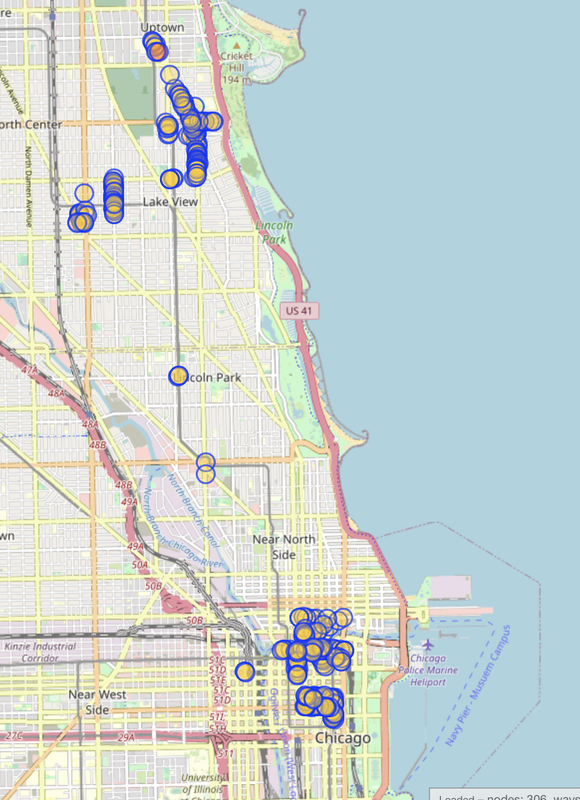
I got a suggestion last time to try using data from the city to help map the racks. Unfortunately, the data from the city isn’t super accurate. It can be off by as much as 2 blocks using the map on the official website. So I got data that was a little more updated, stripped the locations from it (the geocoder used was inaccurate) and punched it into Google MyMaps to see how accurate it was. It’s better, but still not something I’d want to use for actual mapping.
Another approach I’ve tried is using Mapillary. I bought a 360 camera and recorded a few tracks around town. Supposedly they’ll automatically tag stuff using computer vision (bike racks included), but none of my sequences posted more than a week ago have been tagged yet.

On September 9-11, 2022, I attended the Wikimedia Summit 2022 in Berlin, Germany as a representative of the Wikimedia Community User Group in Uganda. As someone who belongs to several communities, I was interested in learning from the Wikimedia community lessons that could be replicated by the OpenStreetMap community.
The Wikimedia Summit is the annual conference that brings together Affiliates of the Wikimedia Foundation. The program was designed around the implementation of Wikimedia Foundation’s 2030 Movement Strategy initiatives, and provided a space for connecting, celebrating, learning and planning for the future of the Wikimedia movement.

Photo by Jason Krüger CC BY-SA 4.0, from Wikimedia Commons

After I reconnected with Ilya at SOTM and talked to him about his new app Every Door, I thought it would be nice to organize a mapping party around it back home. I just got back from some Mall Mapping with a small OSM Utah group, and wanted to share my experiences with the app.
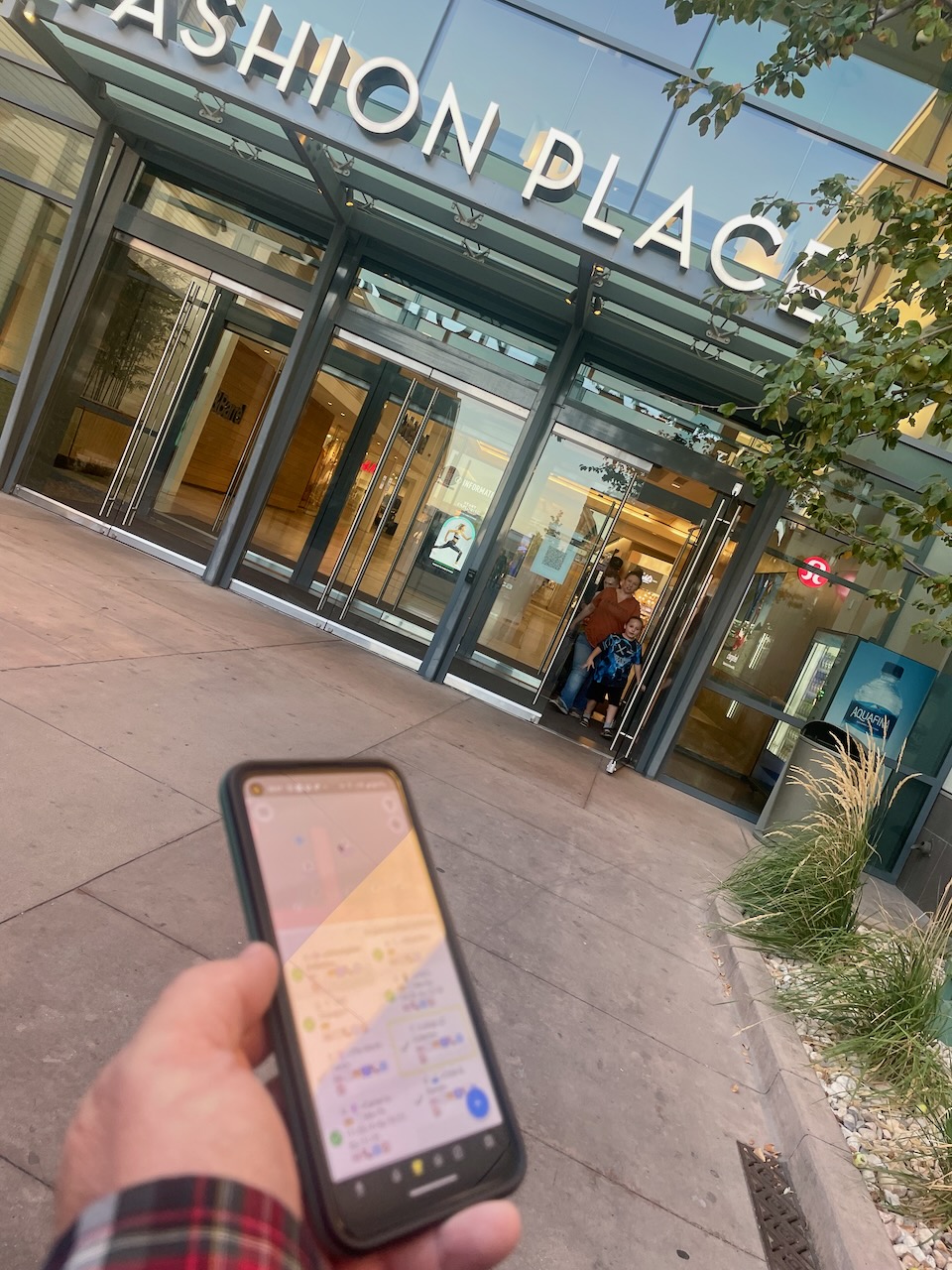
First things first, the app works great. The fact that it’s on Android and iOS and looks and works the same on both platforms is great. The interface is snappy, there’s no annoying crashes or delays, and everything is fairly easy to discover and learn how to use.(However, this is coming from a group of people who have experience with OSM mapping and are at least a little savvy about technology..)
Interface
There were two interface elements that took us a little time to figure out. One was the “modes” at the bottom. The default mode is POIs (the coffee cup icon). It is not immediately clear what the other modes do, but for people with some experience with OSM, you can figure it out in a few minutes.
In the recent days I’ve experimented with rendering floor plans using indoor data from OSM. The Simple Indoor Tagging schema suggests pretty lean additive tagging rules to specify the floor level of features and extends to drawing room/area shapes. Well done guys! It’s a very nice and flexible suggestion to add indoor data to OSM.
Turns out coverage of indoor data in OSM is quite limited:
- Only a few places mapped, mostly university buildings, subway stations and a few shopping centres.
- Walls are rarely drawn and room polygons touch each other.
- Doorways are not omitted when drawing walls, in other words there is no hole where doors are located.
This is expected given the difficulty to source indoor data paired with the limited editor support. And frankly, I don’t see much use in mapping indoor data (as part of OSM) except for POI floor levels.
The Simple Indoor Tagging is right in suggesting to map walls only if not already defined by room shapes. Having wall shapes in OSM would dramatically increase the number of nodes and make it more difficult than it already is to edit indoor data. Note that the spatially overlapping room shapes in the different floors are already troublesome to edit unless one uses things like JOSM’s filters extensively.
Being aware of these constraints I came up with the following process to generate walls on the fly:
- Cluster rooms, areas, walls, doors, floor level shape by floor level and spatial intersection. Basically collect what is close to each other.
- Create wireframes for the walls by collecting the outlines of the room shapes and explicitly drawn walls. This results in approximate centrelines of the walls.
- Calculate where the wall wireframe is close to door nodes, buffer (blow up) this part of the wall wireframe to gain the doorway polygons.
- Union buffered room polygons and the floor level polygon if available.
- Subtract walkable areas, add explicitly drawn walls, subtract doorways.
Настоящий мужчина
From time to time, I come across mappers that really specialize on a specific mapping topic. I was doing some random mapping in my state when I came across this very well mapped school:
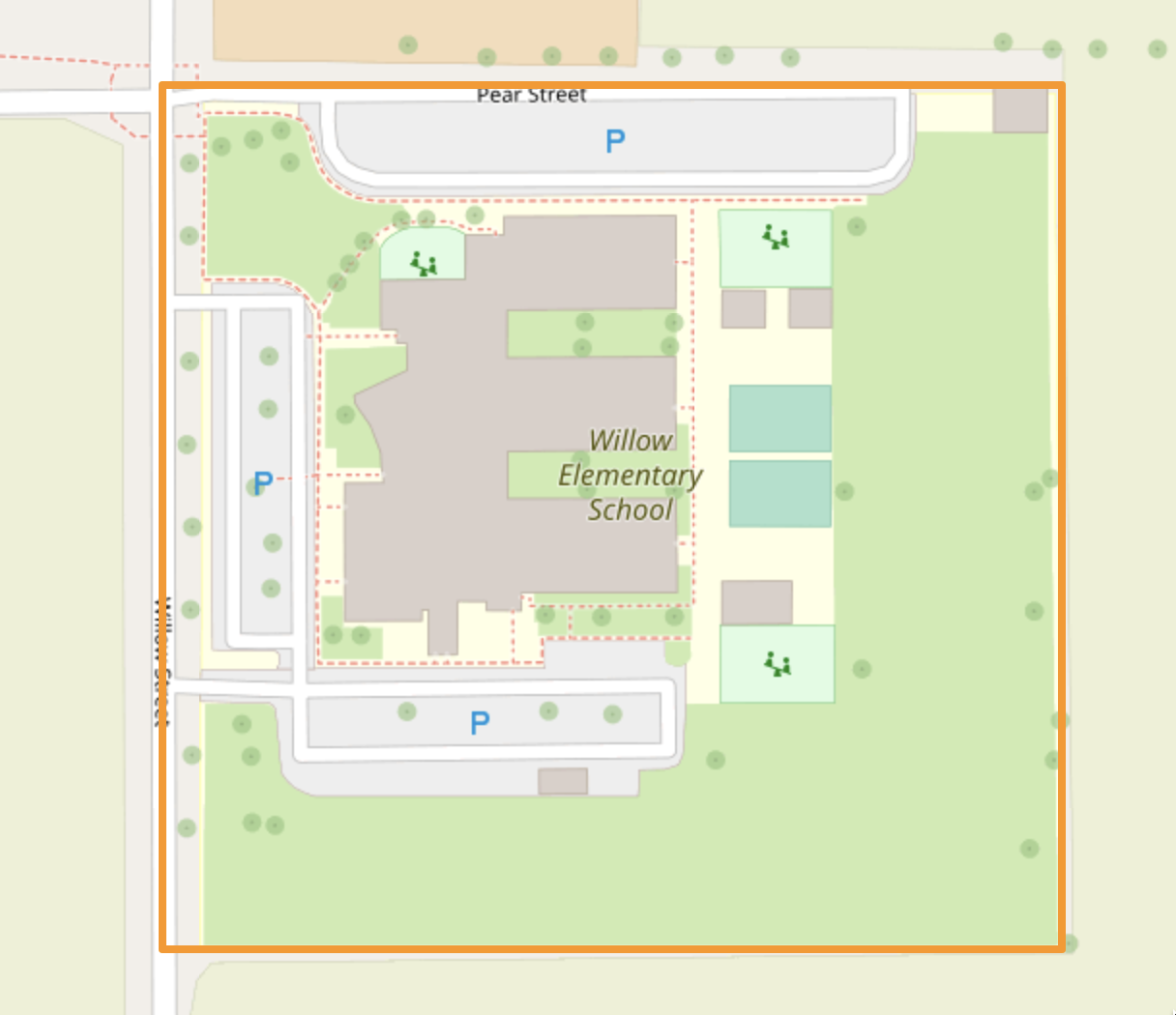
This mapper, Chef7, has mapped lots of schools across the United States in high detail:

Just creating this entry to link to the Wiki page for a proposed address import in Cache Valley, UT.
See also: Previous diary entry with a slightly more fuzzy proposal
Please add any comments here or on the Wiki page.
Posted by Mercy14846 on 5 October 2022 in English.
Last updated on 8 October 2022.

My experience at YouthMappers Workshop, State of the Map (SotM 2022) and Free and Open Source Software for Geospatial (FOSS4G 2022) in Florence Italy from August 18-28 2022.

Actually, this is going to be my first international conference out of Africa it was an amazing conference, and I had the opportunity to meet with different people all over the world. Attending a workshop and two different conferences, I will say it is the best so far.
During the workshop sessions and conference, different organizations hosted additional events, such as HOT unSummit at SotM, HOT unSummit Social in the evening, and YouthMappers Documentary Premiere which was insightful and emotional.
Posted by نور الدين بن محمد on 4 October 2022 in English.
Last updated on 17 December 2025.

It’s all good
Posted by Pieter Vander Vennet on 4 October 2022 in English.

Hi all,
Hacktoberfest is a yearly event where contributors get a T-shirt from hacktoberfest.com if they improve an Open Source Project.
MapComplete is open for such improvements. Head over to the repository. An ideal to get started is by creating a map layer about something that is interesting to you.
If you have questions on getting started, feel free to ask in our chat channel on matrix/element (telegram bridge )
Has anyone ever mapped an area because it was in some true crime podcast or video? I mapped the area (i.e. buildings) in Co. Cork in Ireland where the Sophie du Plantier murder took place while listening to a podcast about it.
And then Netflix went and made a documentary about it and used all that lovely OSM material without attribution.

Opera di presa
La diga di Barcis, detta anche del Cellina o Vecchia diga (1095179424) dopo la costruzione della diga di Ponte Antoi, è stata costruita all’inizio del 1900 per opera dell’allora appena costituita Società Promotrice per l’Utilizzazione delle forze Idrauliche del Torrente Cellina. La diga aveva lo scopo principale di funzionare come opera di presa per il canale di derivazione che percorrendo tutta la valle andava ad alimentare la centrale di Malnisio e successivamente quella di Giais e del Partidor. La diga, negli anni ‘50 ha cessato la sua funzione con la creazione dello sbarramento a Ponte Antoi di fronte all’abitato di Barcis.
Canale aduttore
Il canale aduttore, lungo circa 7 km, aveva la funzione di trasportare una parte delle acque del torrente Cellina verso la prima centrale idroelettrica di Malnisio. Il canale costruito all’interno della forra e parallelo alla Vecchia Strada del Cellina, si sviluppa in sponda destra a valle della diga fino alla località Monciaduda. Da qui il canale percorre una galleria prima di arrivare al bacino di calma dove è presente un imponente sfioratore a gradoni. Il canale termina nei pressi della centrale di Malnisio, dove dal bacino di carico partono quattro condotte forzate.
[continua..]

House
I was visiting my HDYC page today. I always get sentimental looking at my first changeset, a neat feature on HDYC. Here it is with ID 90313. This makes sense to me; I lived in that part of Amsterdam at the time and the timestamp coincides with the day I created my OSM account (while participating in a weekend-long mapping party).
But, when I scroll to the bottom of the changeset page info panel, I see there’s a previous changeset:
How is that possible? If I click on the previous changeset until there is no more previous changesets, I end up at this one, with ID 7671. But that changeset was opened and closed 10 months later, in April 2008.
I always assumed that changesets with a higher ID would also be newer, but that’s obviously not always true. My best guess is that the database got reshuffled in the early OSM API days. Perhaps coinciding with the disabling of anonymous edits in late 2007?
Mysterious. How will I be able to sleep now?
%20(1)_1.jpg)
ہُݨے ورتیا، مین دُرُست چاہیدے اے۔ پر حالیہ ایس ویب سائٹ ‘تے شاہمکھی انواد چڑھایئے، پنجابی لئی سیٹنگاں ‘تے تسیں بولی دا کوڈ «pnb» پا سکدے اے۔ (آئی ڈی ایڈیٹر لئی، ایہہ «pa-PK» پا سکدے۔) روزنامچے وچ گرمکھی یا شاہمکھی وچ نہیں لبھیا، پہلا لکھت لئی ایس لیکھ چھپدا۔ خبرے کوئی لفظاں پڑھنگی اے…

I really like the ‘notathon’ concept, so just posting a translated version of AngocA’s original diary entry (which was in Spanish).
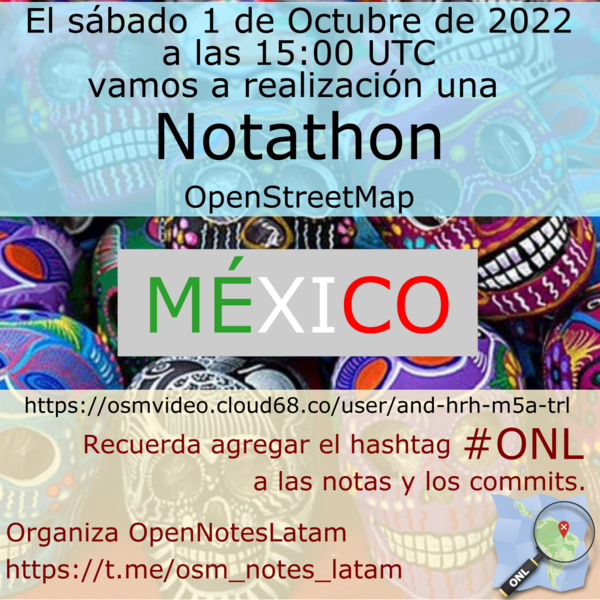
On Saturday 1 October 2022, a notathon was held, as is customary one week after the Latam meeting. This time it took place in Mexico, and was coordinated by BigBlueButton - OSMVideo, where several people participated.
This time DAMN-project was used to divide the areas. For the division of areas we filtered by only the notes created from the Maps.me application. This is the task of DAMN: https://client.damn-project.org/?area=2407
We showed how to use the JOSM plugin, which automatically downloads the notes, and this allows to work in several areas, without having to leave the editor.
In total 63 notes were solved, with participants mainly from Mexico (alex_mayorga, Mapeadora, Sandra, among others), but there were also attendees from Venezuela (risturiz), Argentina (Manuel Retamozo) and Colombia (AngocA).


청량산 트랙 수정