OpenStreetMap logo OpenStreetMap

Users' Diaries

Recent diary entries

Posted by AbstractGeo on 23 November 2025 in English.

Not a lot to say, other than “I’m glad to be starting!” I set up the following in my profile, which seemed as good a place to start as any:

Overview

GIS amateur in rural Maine, United States

Introduction

Hi there! I’m Geo, and I’m thrilled to contribute to public GIS data & resources! I’ve been editing Wikipedia since 2005, but despite registering in 2008, I’ve only started editing OSM in late 2025!

I can bring local knowledge from my area of Maine - Waldo County - and possibly more.

شرکت آذرگشت سهند شماره تلفن 02156371922 شماره همراه091259754461 حمل و نقل مسفر کد پستی 3314768993 آدرس اسلامشهر خ صیاد شیرازی زاهدی 2 پ b3 www.azar-ghasht.ir

Location: باغ فیض, اسلامشهر, بخش مرکزی اسلامشهر, شهرستان اسلامشهر, استان تهران, 33147-53135, ایران
Posted by giopera on 23 November 2025 in English.

Recently I’ve made some logos for the Italian community (osm.wiki/Logos#in_Italy) and today I want to tell you how to I make this logos.

The first step is always to analyze what data do I need to represent and research how to get it, the https://osm-boundaries.com/ has been helpful to get this data and to get a first imprint of how the border is.

I usually download the data in an OSM format and then I use the ogr2ogr tool to convert the data in a format compatible with QGIS like GPKGs, this will be important later in the creation of the logo since I need the representation to be an SVG file to put together with all the other elements of the logo, like the map and the magnifying glass.

After downloading boundaries I start searching all the elements and how I need to represent them in the map, like for the Italian railway logo I proceeded to make different GPKGs file with all the necessary railway data divided into the various types, this can be achieved with a regional osm file, osmium and ogs2ogr.

After this we have to put together the data, and believe it or not this is going to be the hard part.

After making the GPKGs we open QGIS and open the files with it, by doing this we can put them together and customize the representation of the data for the logo, after this we can make a layout and render an SVG file from all the data we’ve imported.

Once we have the SVG export we are able to use a program like Inkscape to put together the SVG file with the default Logo file, usually what I do is deleting unnecessary detail from the original logo, changing the background color and making changes to other details in SVG to mek the logo look better or more personalized.

Once done this the only thing left to do is giving the logo to the community and “fine-tune” it based on opinions.

See full entry

足球场

各种足球场的标线异曲同工,生活中也很常见。

足球场

就尺寸上来看——

  • 11人制足球场(也是最常见的标准足球场):长度一般在105米左右,上下误差不超15米;宽度跨度较大,从45米到90米不等,70米左右比较常见。
  • 由于空间限制或实际需求,5人制足球场也不算少见。5人制足球场长度最长42米,最短25米;宽度最长25米,最短15米。一般5人制足球场长宽均不足11人制足球场的一半,因此其面积一般不足11人制足球场的四分之一。
  • 有时还会看到7人制足球场,长65~68米,宽45~48米。

注意:无论何时,正规足球场必须是长方形,边线的长度必须长于球门线的长度。

篮球场

这个就更常见了,同样是长方形,而且样式尺寸也更单一、更具标识性,故直接上图:

See full entry

Posted by pussreboots on 23 November 2025 in English.

I’ve lived in this unincorporated neighborhood since 2004. Earlier this year, the U.S. Post Office with feedback from the Fairview Municipal Advisory Council (and surveys sent to residents) reverted our place name from “Unincorporated Hayward” to Fairview while leaving the zip code the same: 94541.

Twenty-one years of living here I’ve learned that you either know about this area and how it works or you’ve never heard of it. I was originally of the “never heard of it.” In 2010 I worked as a census enumerator sent to addresses that hadn’t mailed in their census packet. That’s when I really got to learn how Fairview works and how to use local data to better understand the area.

Now I am slowly working through my neighborhood in OSM to map it. I started with my house (my second residence here) and I’m working my way out. I am learning by doing (and reading the wiki).

Location: Fairview, Alameda County, California, 94542, United States
Posted by Adrian Shobrooke on 22 November 2025 in English.

My diary entries all all my own thoughts and do not represent OpenStreetMap, The Humanitarian OpenStreetMap Team (HOT) or any organisation using the HOT systems. Any errors are all my own work.

This first diary entry is based on my response to a mapper on the HOT Slack Channel asking about validation methods.

When it comes to HOT mapping and validation, I’d say there are not really any standards, or training to judge mapping against those standards. It’s a constant frustration of mine. However, the use of the data should be considered when validating tasks. If a road in Africa is a few meters out from a vehicle GPS while driving, does it really matter? The driver is going to follow the track. Relative positions are more important - do things match what might be seen in the field?

Skipping a task that you don’t feel experienced enough to validate seems a mature approach to me. I also try to map a few tasks in a project before validating tasks to get some understanding of the problems mappers may face.

I’ve only been seriously HOT mapping with some validation since early 2024, although I’ve mapped in a small way since April 2019, including my own locality. I’ve developed the thought that there are three basic types of validators;

See full entry

เก้าเลี้ยว, เก้าเลี้ยว, นครสวรรค์, 60230

Location: บ้านหาดเสลาตก, Kao Liao, จังหวัดนครสวรรค์, 60230, ประเทศไทย
Posted by Somashekarknnl on 22 November 2025 in English.

Haihole Dam is constructed across Kanee halla river near Haihole village about 12 Km from Shimoga city. Kane halla is a small tributary to Tunga River which originates in Shankaragudda hills and flows mostly in thick forest. This dam is located at longitude 75deg 28’ 45” E and Latitude 13deg 53’ 08” N in the limits of Haihole village in Shimoga taluk and district. This dam has been constructed during the period 1976-79 and is in operation since then The independent catchment area of the river at the dam site is 37.81 sqkm. The stream has its origin in a fairly heavy rainfall area with its entire catchment being in hilly and forest region and hence considered as Good for yield calculation. There are gauge stations situated near to the catchment area. However four influencing rain gauge station visa, (1) Malur (2) Aynur (3) Shimoga (4) Umblebylu have been considered for yield calculation. These polygons has been drawn on the basis of these four influencing rain gauge stations and the average rain falls have been calculated for these four rain gauge stations taking into consideration the rain fall of Ten years (1952 to 1963). The average rain fall works out to 98.55 cm with 70% dependability (year 1956) Considering the catchment area as Good for average annual rainfall of 98.55 cm the yield available at dam site is 13.52 cum (477.00 mcft.) apart from this perennially flowing two small streams across which the dam is constructed discharge about 0.11 to 0.14 Cumecs during the summer months due to the existence of some springs in the Shankaragudda hills also contribute to yield. There is good flow during the monsoon months and fair flow during November and December.

Location: Bharatinagara, Basavapura, Shivamogga taluk, Shimoga, Karnataka, India
Posted by GerardHog on 22 November 2025 in Dutch (Nederlands).

De Westwouderpolder is een polder én een eiland, zie de Historie, bereikbaar met de pont. Op De Woude zijn geen parkeerplaatsen, je kan voor de pont je auto achterlaten op het parkeerterrein.
* Geoapps Noord-Holland
* Geonames
* Staatsbosbeheer
* OSM
* wikipedia - de Woude

Location: Stierop, de Woude, Castricum, Noord-Holland, Nederland, 1489 NG, Nederland
Posted by SomeoneElse on 20 November 2025 in English. Last updated on 30 November 2025.

Zaandam Station, svwd03

The https://www.openstreetmap.org website currently has two “OSM-hosted” map styles on it - the “Standard” style (raster tiles) and a “Shortbread” one. The schema for “Shortbread” is here, and the display style shown is “Colorful” from Versatiles. It looks like this:

See full entry

Location: Rosmolenbuurt, Zaandam, Zaanstad, North Holland, Netherlands, 1502 CJ, Netherlands
Posted by Jiri Podhorecky on 19 November 2025 in Czech (Česky). Last updated on 20 November 2025.

OpenStreetMap sleduji už mnoho let nejen jako užitečný nástroj, ale jako jedinečné společenství lidí, kteří dobrovolně budují mapu světa. Přitahuje mě otevřený, „wikipedický“ duch a pocit, že společně tvoříme něco, co má smysl a skutečně pomáhá. Poslední roky OSM vstupuje do období, které přináší nové výzvy i novou odpovědnost. Diskuze se už netočí jen kolem technických detailů. Diskutuje se, co vlastně znamená tvořit otevřená geodata v době velkých korporací a umělé inteligence.

Korporace jsou všude

Je zřejmé, že globální firmy jako Apple, Meta, Microsoft nebo navigátory TomTom mají o OSM velký zájem. Pochopily, že utvořit novou, vlastní mapu od nuly je prakticky nemožné a především drahé. Připojují tedy do projektu rozsáhlé mapovací týmy, využívají interní nástroje, importují vlastní datové sady. Tempo, s jakým dokážou doplňovat či aktualizovat data která je zajímají, je ohromující.

Přínosy jsou zjevné. Povrch světa je intenzívněji mapován. Zároveň ale soudím, že s tím roste i riziko, že se ztratí cit pro místní kontext a jemnost komunitního mapování. OSM dlouhodobě stojí na dobrovolnících, kteří mapují proto, že jim záleží na svém okolí. Tahle subkultura je křehká. A pokud má mít projekt budoucnost, neměla by být přehlušena privátním zájmem vydělat na odvozené službě.

AI v mapování

Umělá inteligence dokáže během pár minut odhalit mnoho nezmapovaných budov, nově vzniklé cesty, nebo změny v krajině. V oblastech třetího světa, které zůstávaly roky nemapované, to je obrovský skok kupředu.

A přesto u toho doporučuji i určitou opatrnost. AI má občas tendenci fungovat jako silný nástroj – užitečný, ale schopný způsobit nechtěné škody. Chybný import může vyvolat nepochopení proč se tak stalo, zahlcovat komunitu opravami a narušit důvěru v kvalitu dat. Rizikem je i to, že se z mapování vytratí lidský dotek a procesní zkušenost. Naučit se správně mapovat je cesta a AI by ji neměla novým mapovačům sebrat.

Humanitární zkušenost

See full entry

Heyho, das ist mein erster Blog auf OSM :)

Ich habe einen kleinen Tipp, wenn ihr mal Indoor Dinge mappt: Mit SCEE (Street Complete Expert Edition) kann man sich selber Overlays erstellen. Das habe ich vor allem genutzt, als ich ein Gebäude, das ich vorher schon mit Indoor Features gemappt habe, anschließend mit den richtigen Raumnamen versehen wollte.

Das hier ist mein Setup, das sogar anzeigt, wenn wo das level fehlt:

See full entry

Location: Kurzes Holz, Wolfenbüttel, Landkreis Wolfenbüttel, Niedersachsen, 38302, Deutschland
Posted by pnorman on 17 November 2025 in English.

For the last 10 days I’ve been travelling in Europe to go to OSM events. I have some spare time before my flights to get home to Vancouver, so I’m posting a brief overview of the events and what got done.

My first event was the Karlsruhe hack weekend. This event is held twice a year and attracts lots of German and Swiss OSM developers. I started out by discovering that the jet lag is worse as I get older and I missed the pre-event social.

At the event itself I focused on the Shortbread Vector Tiles specification and osm2pgsql. In total three people from the Shortbread steering committee were at the event. The main Shortbread coding that’s been completed was a cleanup of the tables in the 1.0 spec. I think this is the last change we’ll see to 1.0 and all my Shortbread focus is now on 1.1.

I haven’t yet published the changes but support for multiple languages in the OSMF shortbread vector tiles is basically done. I just need to clean up some changes and add them to the WIP commit. Initially the language list is only en and de, but it’s ready to be added to.

I met with the two other maintainers of osm2pgsql and we discussed what’s necessary to tag releases of osm2pgsql-themepark. I think we’ve got a route forward there.

I spent the Monday after the hack weekend around town. The next morning I started for Nottingham via the Eurostar train. While I was in Nottingham I visited relatives and didn’t do anything OSM-related.

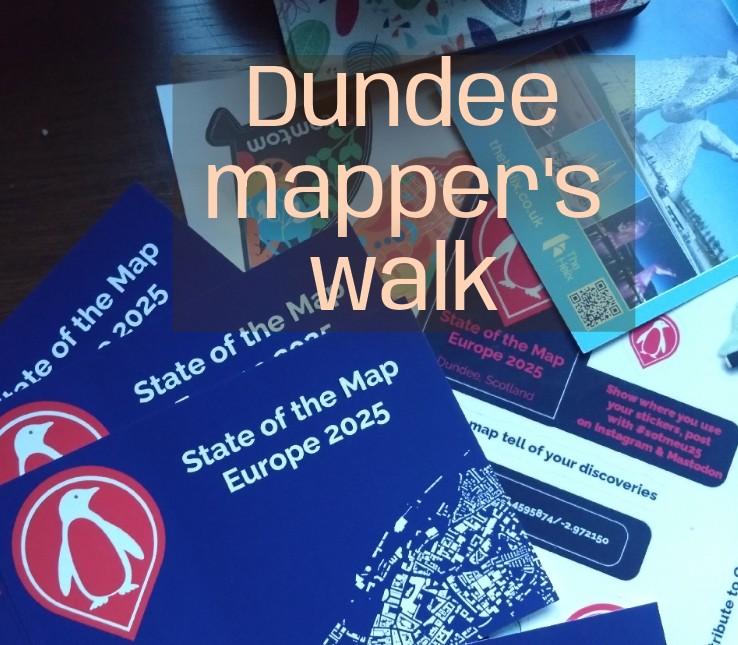
On the trip north to Dundee I got a cheap seat upgrade on the train to Edinburgh. This gave me three hours of focused time to work on my SOTM EU presentations.

See full entry