 OpenStreetMap

CubaConf & FOSS4G NA & !DebConf
Posted by tassia on 26 July 2016 in English. Last updated on 28 July 2016.This summer I missed DebConf16 in Cape Town and, being completely offline, not even the videos I followed this time. I hope I can meet many of my old Debian friends next year in Montreal, and I’ll try to slowly catch up with what happened during those days in Africa.
Luckily I had attended CubaConf and FOSS4G NA that fulfilled my needed dose of conference days and brought me many other friends and projects that I hope to keep up when I go back to real life. After almost 3 months of comings and goings of all kinds of trips, between conferences and family commitments, now I’m finally packing to go back home. It seems more than time to publish some late reports.
CubaConf took place in Havana from April 25th to 27th. It was the first international free software conference in the Island, with people from 17 countries, mainly from Latin America. All sessions in the main room were simultaneously translated to/from English/Spanish. The conference had a colorful and diverse environment, above the average of all the other tech meetings I’ve already attended.
CubaConf was an eye-opening experience for me with respect to:
-
The barriers for participation of Cuban people in free software development, namely poor connectivity and scarce hardware resources. Putting in perspective, can you imagine what would be your contribution to free software if you did not have a personal computer? Or if you could only access the Internet twice a week, for a short period of time?
-
The impressive capacity of Cubans to deal with and overcome obstacles. “We need to work with what we have. A crime would be to close our arms and do nothing”.
-
The alignment between the Free Software movement and non-capitalist values, and how Cuba is a fertile ground for Free Software flourishing. “Free Software for us is not a technical choice but a philosophy of life”.
-
The power of a community working together, which is much greater than the sum of all individual efforts. That was CubaConf.
Here are some highlights of the conference:
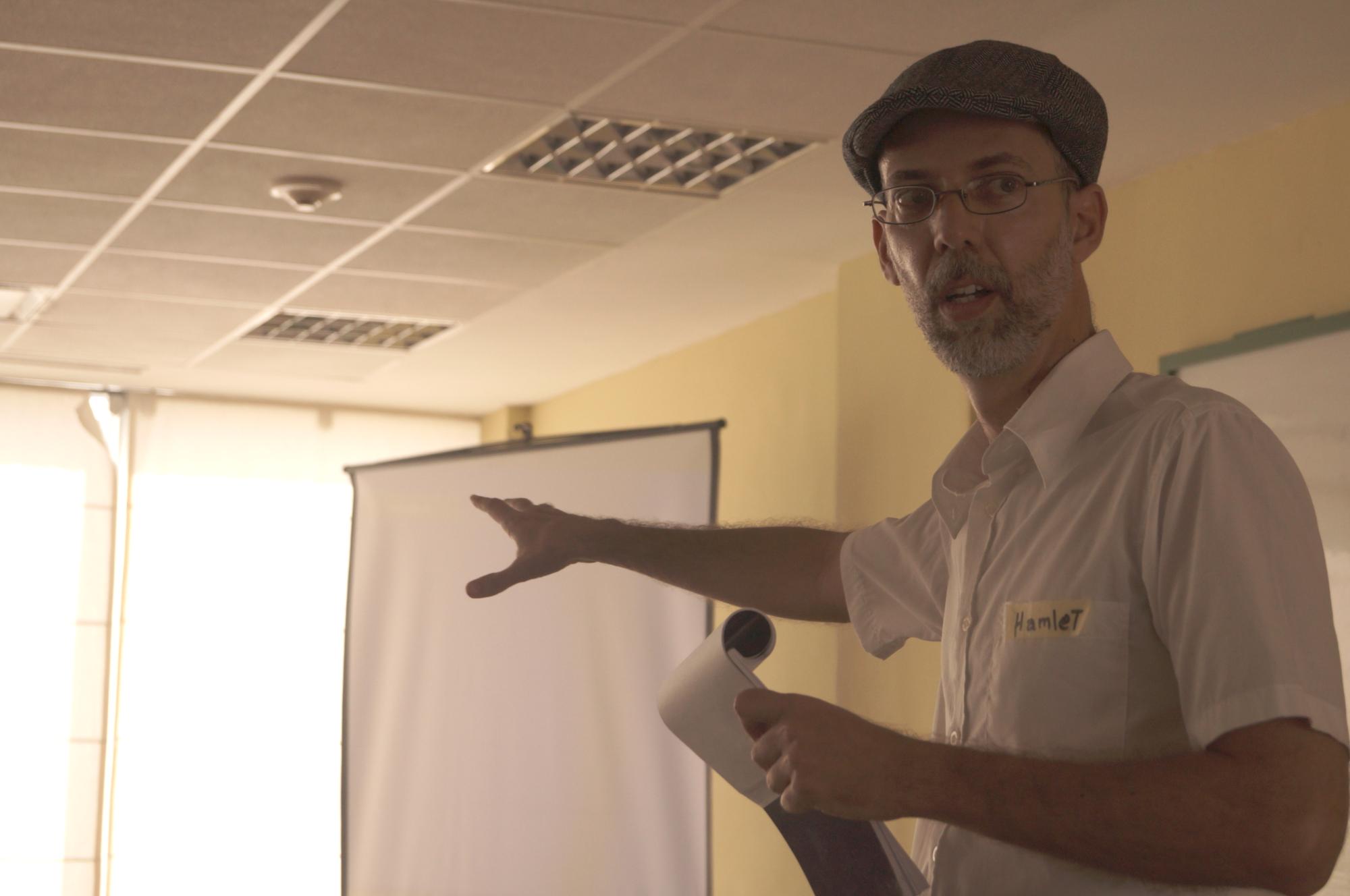
- Hamlet Lopez Garcia: “Las tecnologías libres en Cuba. Una mirada desde la cultura.” This was an awesome choice of keynote to open the conference and set up the solidarity environment we could feel throughout the meeting. Hamlet talked about the adoption and development of Free Software in the context of Cuban history and culture. If you read Spanish, I highly recommend Hamlet’s article “Las comunidades virtuales de software libre en Cuba” in the book Bienes Comunes.
-
OSM community sessions: OSM activities started before I arrived in Havana, with a talk given by PB during Flisol (Festival Latinoamericano de Instalación de Software Libre) and a bike tour in El Vedado to map POIs and take photos to mappillary. During the conference there were many OSM-related sessions: Introduction to OpenStreetMap by Wille, Mapping Ecuador after the Earthquake, by Ivan Terceros, OSM to map risk of flooding in Costa Rica, and a mapping workshop at the last day. The conference was offline, and Wille did a good job in preparing enough screenshots to show how to map using certain applications, and he also had the iD editor running locally so that we could simulate an edition in OSM server. The fact that we didn’t have satellite imagery as a background really puzzled me, cause the lack of Internet was not an issue of CubaConf only. Cubans in general have very little access to Internet, so in practice most of them cannot engage in base map drawing. Local mapathon activities need to consider that and plan in advance, either acquiring imagery in advance or using drones/balloons/kites for local aerial surveying. If none of this is possible, local contributions will be limited to filling nodes’ attributes, which is for sure a great contribution, but doesn’t use all the potential workforce Cubans could provide as OSM mappers.
-
Debian community sessions: Valessio gave a talk on his experience as a Debian contributor and how it was important for his trajectory from Jacobina, a small town in the Northeast of Brazil, to the world. I translated his speech to English, while he was speaking in “Portugnol”. During the unconference day, Maykel gave the talk “MiSOX - Personalización de Debian GNU/Linux, a su medida o necesidad”, where he presented this tool that allows to create Debian Derivatives using local mini repositories that contains most popular packages among their users. Then I gave a talk on the Universality of Debian Contributors, where I exposed the demographics of Debian Developers (which I suspect coincide with many other Free software projects) and talked about how it is important for the project to have contributors from diverse backgrounds if we want to move towards the utopia of an Universal Operating System. At the last day of the conference we made a Debian community meeting, which was named “the first MicroDebconf in Cuba”. There we shared our experiences, cases of successes and frustrations. By the end of the meeting we were all very inspired and planning a miniDebConf in the Island soon.

Cubaconf was organized by User Group of Free Technologies (GUTL) from Cuba and Best Of Open Technologies (BOOT e.V.) from Germany. The conference in itself was a very collaborative effort and faced many issues that are unthinkable for most people outside Cuba. It was with no doubt a great great success, many thanks for all the organizers and participants that made it real. Here is a nice video put together by Valessio, to share with the world the energy of those special days.
Back from Cuba, I spent a couple of days in Montreal then I flew to Raleigh, North Carolina. FOSS4G NA happened between May 2nd and 5th, followed by a geotour at the university on May 6th.
My highlights of FOSS4G NA were the contact with the GRASS community, playing with tangible interfaces, meeting OSM/HOT members and figuring out many free software solutions and challenges for fields that are largely dominated by proprietary software.
Here is my list of memorable sessions, you can follow the links for more info and slides:
- Workshops:
- Using Grass GIS through python and tangible interfaces
- Managing Versioned Data with QGIS using GeoGig
- HOT-related sessions:
- Portable OSM - OSM in the Disconnected Wilds
- Putting 14 Million People on the Map: Revolutionizing crisis response through open mapping tools
- UAV-related sessions:
- From UAV to Orthomosaic: Building a Toolchain
- Balloons, Kites & Poles - Low-cost ways to capture and analyze open geodata
- Open Source Photogrammetry with OpenDroneMap
- Open the classroom window for… DRONES!
- GRASS-related sesions:
- Tangible interaction for GIS
- GRASS GIS loves lidar
- Other projects I want to follow:
- Visualizing GPS Tracks with RikiTraki
- GIPPY: A high performance geospatial image processing library for Python
- Terra Populus: Free Human-Environment Spatial Data
- Bringing OpenStreetMap to the third dimension with 3D Tiles and Cesium
I came back from both conferences inspired and full-charged to keep my efforts towards lowering the barriers for people from all backgrounds to engage actively in Free Software projects. Yes we always need more contributors, but more important than our needs, the opportunity to contribute to a Free Software project is everyone’s rights.





Discussion