 OpenStreetMap

Hi community I’m sharing my application to become a Voting Member of HOT through this diary entry.
What does HOT mean to me?
For me, HOT has been a true school since I started mapping in OpenStreetMap. At the end of 2022, as a founding member of the YouthMappers SAGEMA chapter, we were excited to begin using this tool in our research and community work. My first contact was with Juan Melo, Data Quality Senior Associate at the HOT Open Mapping Hub for Latin America and the Caribbean, who became a mentor to our chapter and taught us the tools we needed to organize our first mapathon at the campus of the Universidad Nacional de Colombia. After that experience, I decided to get more involved in volunteer mapping. That’s how I discovered the Tasking Manager and participated in my first humanitarian project: mapping after the earthquake in Morocco. That experience showed me the real impact of OSM, and how with just a little time, we can help save lives. Since then, I have been part of various HOT projects, and each of them has been a constant learning space. HOT has not only been a platform for action, but also a space for training, connection, and personal and collective growth.

How did I get involved in HOT?
After completing our first mapping project, I looked for more ways to keep learning and contributing. I reached out to Juan Melo again and got involved in a project promoting sustainable mobility in Colombia, mapping bike lanes in major cities.
 Later, I joined a territorial governance project, in collaboration with the Universidad Autónoma Latinoamericana and HOT, which aimed to train leaders from informal neighborhoods in using OSM to support their organizational processes. We worked with 24 grassroots organizations in Medellín, providing tools to map their territories and strengthen their advocacy efforts.
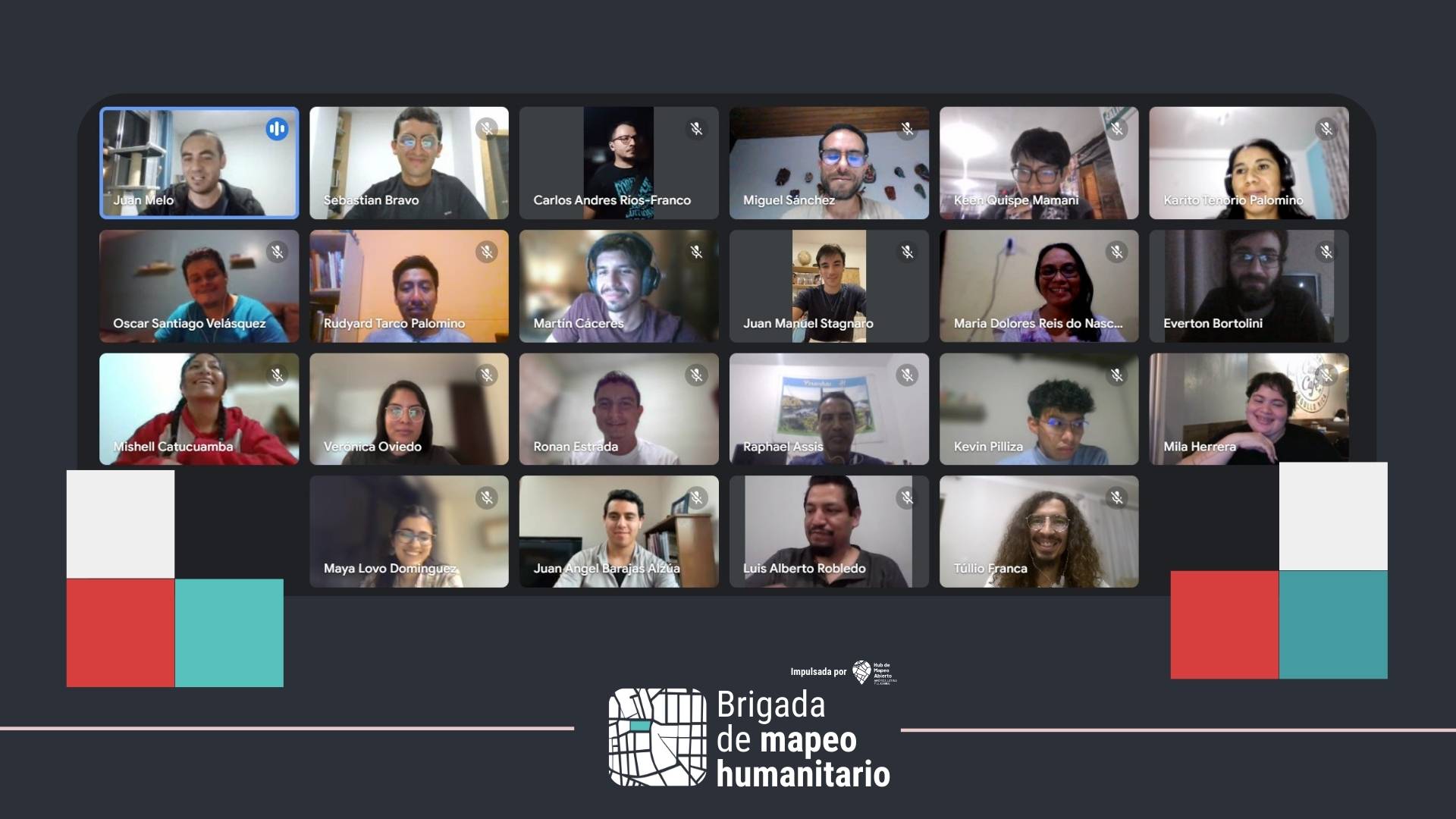
 By the end of that year, thanks to my participation in these processes and the experience I had gained using the Tasking Manager, I was selected for the pilot phase of the HOT Humanitarian Mapping Brigade. This initiative aimed to empower mappers from Latin America by strengthening their ability to complete projects and validate data in humanitarian activations. Since then, I have collaborated in regional initiatives like the National Risk Management Mapathon in Ecuador, the response to Hurricane Otis in Acapulco (Mexico), and Amazon-focused mapping projects for fire and flood prevention in the Amazon basin. These experiences have solidified my commitment to HOT and to the transformative power of collaborative mapping.
Why do I want to be a Voting Member?
I want to be a Voting Member because I feel deeply committed to HOT’s mission, and I want to take an active role in shaping the future of our community. Since my first steps in humanitarian mapping, I’ve seen how HOT is not just a technical platform, but a network of people who believe in collective action, territorial justice, and the power of open data to transform local, regional, and national realities. My participation in mapping projects in both urban and rural contexts has allowed me to understand the challenges and opportunities that communities in our region face. I believe the experience I’ve gained gives me a valuable perspective to contribute to HOT’s strategic decisions. Being part of the Voting Membership is a great responsibility: to uphold a diverse, ethical, and participatory community. I am especially motivated to help more people in Latin America find in HOT a space for learning, impact, and growth—just as it was for me from the very beginning.
How do I plan to participate in HOT as a Voting Member? Are there any working groups you’re interested in?
As a Voting Member, I want to participate actively in building a more inclusive, stronger, and more representative community. I plan to attend assemblies, carefully read and analyze proposals submitted to voting, and ensure that my decisions reflect the needs of the territories and communities I work with—especially in Latin America.
I’m particularly interested in contributing to the following three Working Groups:
- Community: Because I strongly believe in the value of a global community that empowers local groups and fosters horizontal connections of learning, mutual support, and collaboration.
- Governance: Because I want to bring a youthful and regional perspective to discussions about organizational structure, participation, and transparency, to help ensure that HOT grows in a fair and democratic way.
- Training: Because I have personally experienced how access to good training materials can transform the way people engage with OSM and HOT. I want to help create and improve training resources that are accessible, context-aware, and available in multiple languages—especially Spanish.
I’m convinced that my active participation in these spaces can contribute both to capacity building and to strengthening HOT’s institutional development.
What do you think is the greatest challenge HOT faces, and how will you help address it?
One of HOT’s biggest challenges is ensuring equity in participation and the real representation of the geographical and cultural diversity within its community. Although HOT has grown significantly, there are still gaps in access, visibility, and decision-making for many communities in the Global South. To help address this challenge, I will contribute my territorial experience in training, advocacy, and collaboration with social organizations. I will promote the visibility of initiatives led by youth and local communities, and work to ensure that HOT not only supports local processes but also recognizes them as key drivers of strategic decision-making. Inclusion must not only be a value—it must be a daily practice guiding our collective actions.





Discussion