 OpenStreetMap

This weekend, I attended the 2023 OHNI Conference, OHNI standing for Oral History Network Ireland. The overall topic was “Power & Resistance”. I had heard about them at a training seminar for Heritage Week where I went in preparation for my events about milk churn stands. I had 4 days before the deadline to hand in an abstract, but I went for it! I was granted a slot in the “moments” section where people get 10 mins to present their project.
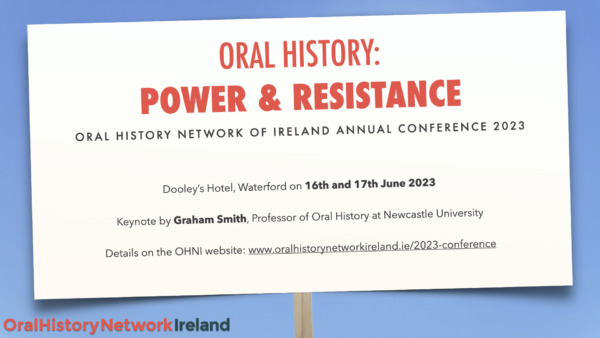
My reasoning for participating was to spread the word about OpenStreetMap which seems to be very little known in academia and maybe especially the humanities, as well as local authorities. I did not know how well attended this conference would be, but every little helps.
I decided to talk about the possibility of mapping place names like field names, because that could be considered oral history and because I expected most attendees to be Irish and to know about field names. I was trying to make OSM as relatable as possible.
My talk was slotted into the second day, and despite my original plans to only attend that day, I attended both days which gave me time to meet more people beforehand, listen to more presentations etc. That way, I could adapt my presentation slightly by making references to what I had been talking to with people and what had come up in other presentations. Maura Cronin from Mary Immaculate College in Limerick, for example, mentioned a project where she had collected oral history about creameries, a tag that I introduced to OSM in October 2021.
The presentations were all supposed to have their audio recorded (in the tradition of Oral History), but it was forgotten for the first half of the first day. I talked to organisers, and it turned out that the audio files would only be available for members behind a paywall. Naturally, I was not happy to hear that, us being all about openness, so I decided to record my own audio and make it into a video after the conference.
Before the “moments” session on Saturday, there was a workshop which I arrived to late, but I made a contribution in telling them about the wikisphere and suggesting how they could use it for their purposes. The question had arisen on where and how to create an accessible index of all the oral histories recorded so far, not the audio files themselves, mind you, only an index, so I suggested the use of wikidata and wikipedia and tried to explain how wikidata works with the example of name:etymology:wikidata which I had covered in previous videos on my channel.
I don’t know if there is a general lack of awareness about the endless possibilities of OpenData in academia or if this is an Irish phenomenon.
Anyway, here’s my talk , slightly over 10 mins, but I had a lot of information to cram in:





Discussion
Comment from arnalielsewhere on 22 June 2023 at 22:56
Thank you for sharing and advocating OpenStreetMap in the academic sector! :)