 OpenStreetMap

I am contributing to OpenStreetMap because I want to make the world a better place by adding verified information.
Users' Diaries
Recent diary entries

Hello! Today, I want to share a handy script that can enhance your experience with JOSM on MacOS by enabling a dark mode theme. Dark mode not only looks sleek but can also reduce eye strain, especially during late-night mapping sessions.
Note: This script is specifically for MacOS users.
Step 1: Download JOSM
If you haven’t already, download the latest version of josm-tested.jar here. Save it to a location on your Mac.
Step 2: Install the FlatLaf Plugin
FlatLaf is a fantastic plugin that allows you to apply dark themes to Java applications. After installing the plugin and restarting, go to the menu and select the dark theme: JOSM → Settings → Display → Look and Feel → FlatLaf Darcula
Step 3: Create and Run the Script
Now, let’s create a script that will launch JOSM with a dark theme. Open your favorite text editor and paste the following code:
shell
#!/bin/zsh
java https://wiki.openstreetmap.org/wiki/Tag:-Dapple.awt.application.appearance=NSAppearanceNameDarkAqua -Xmx7168m -jar /Users/YourUsername/Documents/josm-tested.jar
Make sure to replace YourUsername with your actual MacOS username. This script does the following:
-
#!/bin/zsh: Informs your system to use the Zsh shell to execute the script. -
java https://wiki.openstreetmap.org/wiki/Tag:-Dapple.awt.application.appearance=NSAppearanceNameDarkAqua -Xmx7168m -jar /Users/YourUsername/Documents/josm-tested.jar: Launches the Java runtime with dark mode enabled, allocates 7168MB (or 7GB) of RAM to JOSM (you can adjust this value), and specifies the path to your JOSM JAR file.
Step 4: Save and Make the Script Executable
Save this script with a .command extension, for example, josm-dark-mode.command. To make it executable, open your terminal, navigate to the directory where you saved the script, and run the following command:
shell
chmod +x josm-dark-mode.command
Step 5: Execute the Script

เดินทาง
Posted by Sarabjeet Sodhi on 28 August 2023 in English.

Introduction
Hi everyone, this is my final report for my GSoC’23 project: support Vespucci preset extensions in JOSM.
Previous diary entries
Project Summary
About the project
Vespucci utilizes the JOSM preset format but has extended the configuration to work better outside of the narrow realm of JOSM. The project aimed at adding these additional extensions in JOSM. These extensions include deprecated, regions, exclude_regions, value_type, and alternative. see Vespucci preset documentation
Work done
The presets can have the additional attribute “regions”, which will contain the ISO codes of the countries to which the preset is applicable. “exclude_regions” will invert the meaning of “regions”, i.e., the preset should not be applied in countries specified under “regions”.
A warning message is displayed before the upload if the preset is applied in the country not defined in the “regions”.

It has been just over a week that I have accomplished the 365 daily MappingChallenge (Mastodon) and decided to persist with a 100 weekly challenge instead. One of the main (Mastodon) reasons is how daily contributions are being processed based off of UTC+0, which is manageable if one does not travel. Further this week I have decided to use the OSM Diary over Mastodon, since this way I can do long form entries with less constraints and possibly reach a larger audience.
Quick overview
In week 54:
- 34 change sets created in total
- 5327 node changes in total
all were done within JOSM.
Changes
- extracting sidewalks from roads
- splitting up schools
- adding roof shape and roof material
Puchheim Realschule and Gymnasium
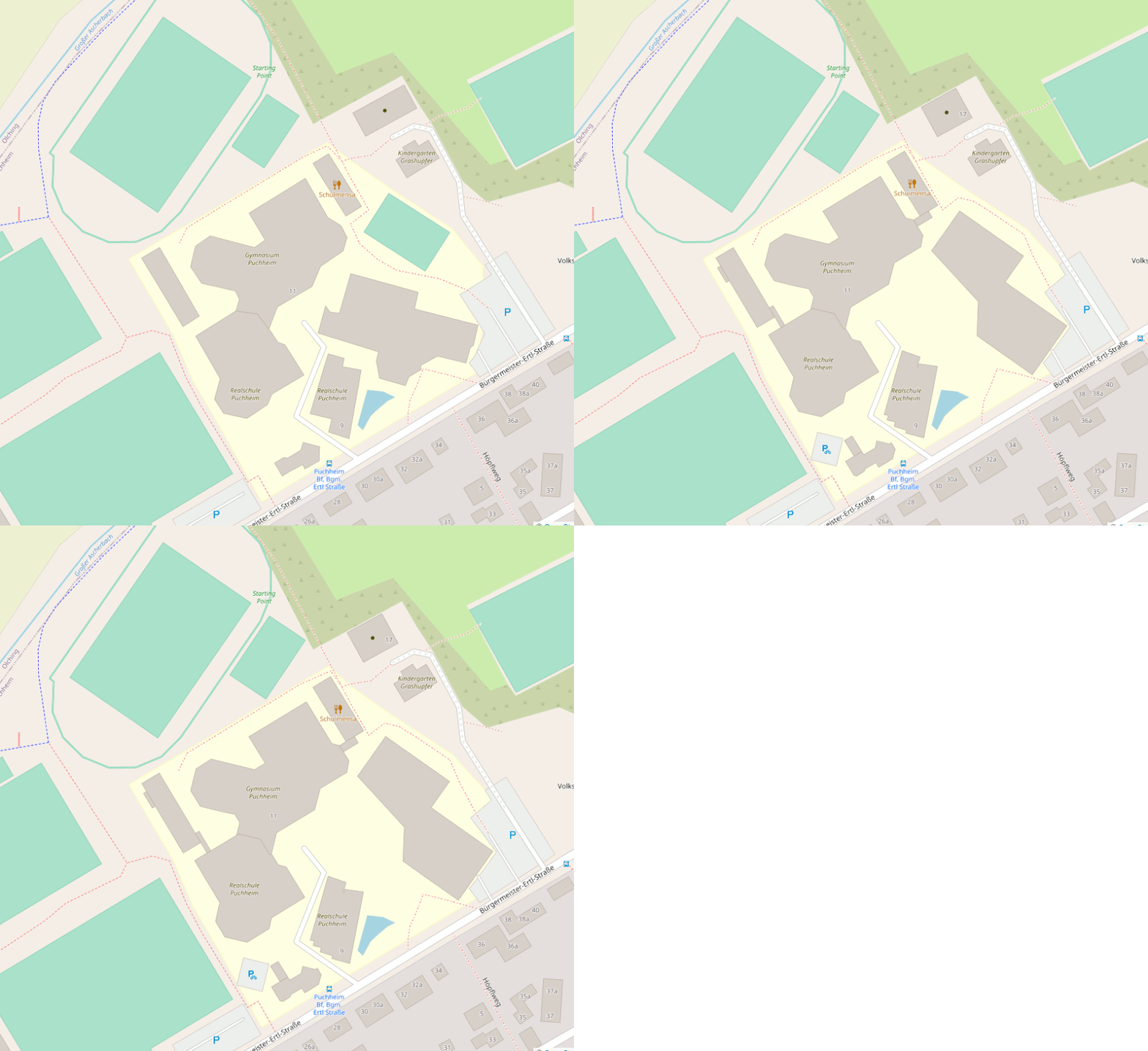
Puchheim Mittelschule and Grundschule
Posted by Wagner Alexandre on 27 August 2023 in Brazilian Portuguese (Português do Brasil).

Após desfrutar de um delicioso café da manhã no encantador distrito de Lapinha da Serra, partimos animados para a desafiadora travessia da majestosa Serra do Tabuleiro. Essa região é um verdadeiro tesouro natural, repleta de características únicas que encantam os aventureiros.
Durante nossa jornada, fomos agraciados com paisagens deslumbrantes e uma diversidade impressionante de vegetação. A serra é famosa por abrigar formações rochosas, cânions exuberantes, cachoeiras cristalinas e uma rica fauna e flora
Uma das partes mais desafiadoras da travessia foi a ascensão ao cume do Breu, onde praticamente precisamos nos aventurar em uma escalada. Lá em cima apreciamos ainda mais a grandiosidade da serra.
Por volta das 15 horas, atravessamos o Rio Parauninha, claro que não deixamos de entrar. Próximo a esse local, descobrimos um trecho que foi carinhosamente nomeado de Prainha, uma área com areia qu simula uma praia, embora alimentada pelas águas do rio. Foi nesse momento que nos deparamos com o primeiro e único grupo que encontramos durante toda a travessia. Admiramos sua iniciativa de explorar a região em bicicletas.
Ao longo do caminho, passamos por diversas porteiras. Cruzamos campos onde rebanhos de bois e vacas pastavam tranquilamente, em meio a uma paisagem que parecia ter saído de um cartão postal.
Enquanto o sol se punha, continuamos em nossa caminhada, proporcionando um espetáculo visual único.
Enfim, chegamos ao acampamento, onde nos acomodamos, relembramos os desafios superados e nos preparamos para descansar. A sensação de realização e gratidão nos acompanhou enquanto nos entregávamos ao merecido descanso.
Heritage Week is an annual number of days (it’s longer than a week by now) taking place in August in Ireland. There is a wide array of events including talks, workshops, guided walks etc all around built and natural heritage. This year’s topic was “Living Heritage”.
Recording Milk Churn Stands
Early on in my effort to map milk churn stands in Ireland, I thought that it was not sustainable for me to travel around the country and look for the needle in the haystack, when the locals knew where all the milk churn stands were. So I decided to give a talk which would hopefully raise awareness about the endless possibilities OpenData, OpenSource and OpenStreetMap offers. It was supposed to be a workshop, but I had a funny feeling that the demographic of the audience would turn it into a talk. It actually turned out to be the first event on the Heritage Week website. The Minister for Heritage (, Housing & Electoral Reford) who I happen to be friends with offered to attend, and of course I thought that would be a great opportunity to promote OSM.
The venue was a library in a rural town which used to have a creamery, because I thought it might attract people who remembered the time when milk churn stands (aka creamery stands) were still in use. Once the librarians heard that the minister was attending, they got a bit excited and let the regional library manager know. The big day arrived on August 16th, and he did attend. I had brought the OSM Ireland pull-up poster for the photo op, and also for branding awareness reasons. - So many people still don’t know about OSM, even though everyone by now must have been exposed to it one way or another.
Hi everyone,
I am thrilled to present the final updates on my ongoing project focused on enhancing the search experience in Japan. For reference, you can find the previous blog entry here and the interim report here. In the last interim report, I introduced the changes related to the sanitizer. The associated pull requests for these changes can be accessed here. Regarding this article, you can find the pull request for this specific change here.
In this final update, I will provide detailed insights into our efforts in the “Address Search” realm, specifically related to the tokenizer.
Enhancements in Address Search Methods in Japanese
Japanese Addresses are written in one large string without spaces and Nominatim needs help to find the words. As an illustration, for instance, consider the Japanese address “東京都新宿区西新宿2丁目8−1”. Although it lacks spaces, it can be divided into internal segments such as “東京都” (similar to a state or district), “新宿区” (akin to a city), “西新宿” (akin to a town), and “2丁目” (a block). However, Nominatim only divides such addresses using ICU (International Components for Unicode) transliteration, not based on this semantic division. Fig.1 illustrates a debugging example with multiple potential candidates.
.jpg)
Gestión popular de riesgos de desastres y OpenStreetMap LATAM 2022
- Gestión popular de riesgos de desastres y OpenStreetMap LATAM 2022 en OpenStreetMap Perú
- Gestión popular de riesgos de desastres y OpenStreetMap LATAM 2022 en OpenStreetMap Perú

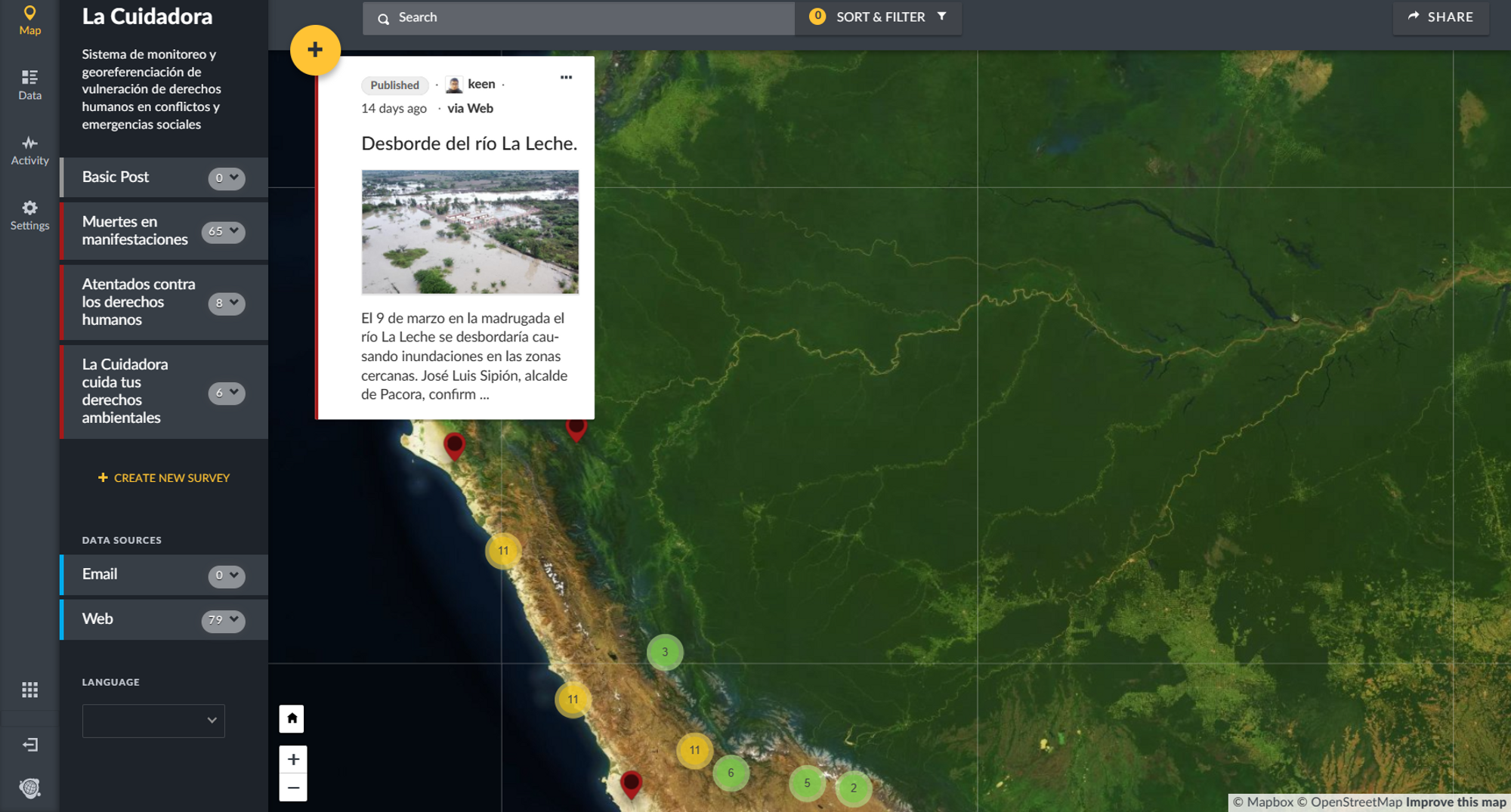
La Cuidadora
“La Cuidadora es un sistema de monitoreo y sistematización de atentados contra los derechos humanos. La plataforma se desenvuelve de forma colaborativa y abierta, pudiendo cualquiera de los usuarios subir un caso de manera anónima. Funciona como un mapa interactivo en el que se pude geolocalizar el punto exacto o referencial del hecho, además de poder recopilarse una serie de datos en las viñetas, desde el nombre de los actores y la descripción del evento hasta el día en el que ocurrió.”
OpenStreetMap como una política educativa global: Aprendizajes desde el Perú
Hace meses publiqué mi primer artículo sobre mis impresiones y perplejidades al respecto de OpenStreetMap, espero sean de utilidad para la comunidad, sino, pues lo intenté, me gustaría iniciar una literatura entera sobre OSM en el Perú, solo estoy pensando en voz alta. Aquí link:


Project name: Guidelines for mapping of wetlands and floodzones. Case study of Lower Sinu river basin in Caribean region of Colombia
Description
The goal of the project is to test the mapping case study to build a document with guidelines for mapping in this areas. It comes from the experience of the “Water telling stories” Social Movement, a root social initiative of near 47 communities, grassroots organizations from 5 municipalities around the ecosystem of the Lower Sinu River Basin, located in the north coastal side of the Cordoba Department, in the Caribean region of Colombia. As part of the technical support team of the movement, Iḿ leading the mapping project for this area.
I used the jamboard to put one the difficulties from my side:
“I can’t find allies for my legacy project from my OSM local and regional Community. I need people to help me to identify the needs of mapping wetlands and flood areas.”
I’m working with one volunteer from Youth mappers in Colombia who is interested in help to this mapping project. As I said in my diary entry, previously I had lead one mapping session to invite people to join our tasking manager mapping task to map Bajo Sinu “Lower Sinu River basin”.
In my action plan I have:
Posted by pb07 on 26 August 2023 in French (Français).
Last updated on 30 January 2024.
Réseaux de carrefours
Dans beaucoup de régions les offices de tourisme proposent des boucles de randonnées décrites dans des topoguides imprimés ou accessibles sur intenet.
La plupart du temps, sur le terrain ces boucles sont complétées par des itinéraires de liaison, balisés aussi, mais il est souvent difficile d’en trouver une cartographie détaillée.
Des panneaux Info rando dans les villages montrent que l’ensemble boucles + liaisons forme en fait un réseau de carrefours : tronçons balisés reliant deux carrefours indiqués par des poteaux.
Depuis quelque temps, des contributeurs d’OpenStreetMap travaillent à intégrer ces réseaux de carrefours dans la base de données OpenStreetMap. Pour ma part, j’ai intégré une bonne partie du réseau en Ardèche Sud (plus de 1700 km actuellement).
Ces réseaux apparaissent dans plusieurs visualisations : Waymarkedtrails, Knooppuntnet, Thunderforest outdoors…
J’ai par ailleurs développé un outil, basé sur Leaflet, permettant de visualiser ces réseaux sur différents fonds de carte, de construire de proche en proche un itinéraire personnel dans le réseau puis de l’exporter sous forme de fichier GPX. Voir par exemple le réseau Ardèche Sud : Itinéraires Ardèche Sud.
Moyennant quelques requêtes Overpass, cet outil peut être adapté à n’importe quel réseau de carrefours.
Posted by ronalde on 26 August 2023 in Dutch (Nederlands).
Lichaam binnen een straal van 1 km gevonden.
Summary of the situation

Current mapping is inadequate. I have some idea how to make it better, but I am not so sure just yet.
Southern junction
You will smiling, but yes. Again vandalism. Thousands of obscene names have been added to the map. Entire cities were flooded with offensive expressions. I have never seen so huge vandalism.
I thank everyone who worked on solving this problem. You do the good job. Thank you very much.

I found myself down a rabbit hole searching for a good tool for a specific use-case today. The use case is trying to send someone a link to a specific geographic area. My use-case was for directing another person to a specific meetup spot (“meet me over here by the northeast corner of the parking lot”), which doesn’t need to be a point but could be something like a 10x10 foot square and still get the point across. Additionally, there’s a use-case for it in leaving “map notes” within the OSM system: some notes need to indicate very precisely “there’s a missing feature RIGHT HERE”, but others could be more general (“this area is a forest”), and if the note could be tied to a zone, that could be more helpful.
I have used what3words in the past for this, and that site has a nice, short URI scheme to share with people, but the map layers don’t include OSM options, so I started looking for ways to combine the two. That lead me to the wiki page that highlighted many shortcomings with that system (as it’s a centralized, copywritten service). So I went hunting for other systems that could fill the same need of sending people a nice link to “meet me here” (small area) or “I live here” (building-sized area), with OSM tile data under it.
Of the many options for “geohash”-style approximations of latitude/longitude, it seems “Plus Codes” (formerly “Open Location Codes”, OLC) have gained traction as a way to refer to small and large geographic areas, but the main https://plus.codes/map site (the key one that allows seeing a visualization of the grid system, so you know how big a region you’re referring to) only uses Google Maps tiles as the underlying visual, so aesthetically is the same as what3words (telling someone “meet me at the corner of the parking lot here:” with https://plus.codes/86MG4JJJ+HHR is essentially the same experience as giving them https://w3w.co/handy.lame.treats).

Since a few month, uMap has been integrated in a French state incubator, so things are moving quite a lot!
uMap is now ten years old, and is deployed on many instances around the world. The one I know well is hosted by OSM France, and is close to reach one million maps created and 100.000 users.
This incubation program is ported by the French “Accélérateur d’initiatives citoyennes”, it includes coaches and a small budget for non tech needs (UI/UX…). One goal of this program is to find financial support for uMap development and maintainance. A French administration, the Agence pour la cohésion des territoires, is the first uMap financial backer since a few months. This allowed us to put up a small team to work, part time, in uMap:
- two devs: David Larlet and myself
- a UX designer: Aurélie Jallut
- a bizdev, which is yet to hire (interested ? Contact me!)
That’s great news! Until then, uMap was 100% developed on my spare time.
uMap is used a lot by French public agents, and this explains the support from the French state, to make this tool better, and more official. For this, a first step is an “official” instance for public workers:
https://umap.incubateur.anct.gouv.fr/fr/
We’ll be at the NEC - Numérique En Communs event (Bordeaux, France), on October 19th and 20th. See you there for more news and announcements!
What’s new in uMap, then ?
First, a huge cleaning, upgrade and bug fight in uMap code. Since a few years, my time available for uMap has been very low (I’ve been a baker for two years…), so the code urgently needed more love.
What else? Here are a few of the notable changes made recently in uMap, let’s go!
Docker image
Finally!
Tl;dr
Dieser Beitrag erklärt, wie sich ein Radnetz, das durch Wegweiser ausgeschildert ist, in OSM abbilden lässt und wie ein Routing-Algorithmus diese Informationen nutzen kann.
Zunächst wird die Grundidee erläutert. Dann folgt ein Vorschlag zum EIntrag in OSM und die dafür erforlichen Tags auf Relationen, Ways und Nodes. Die erforlichen Rollen der Mitglieder der Relation und ihre Reihenfolg werden vorgestellt; dies schließt die Behandlung einiger Sonderfälle ein.
Eine mögliche Nutzung zum Routing auf diesem Radnetz und die dafür erforlichen Voraussetzungen wird diskutiert.
Grundidee
Die grundsätzliche Idee des Basisnetzes liegt darin, dass es miteinander verbundene Wege gibt, die jeweils von einem Kreuzungspunkt zu einem anderen Kreuzungspunkt führen und zusammen ein Netz bilden. Zu diesen Kreuzungspunkten gehören Wegweiser. Für Radverkehrsnetze sind dies Radwegweiser.
In OSM sind die Wegweiser als Node u.a. mit dem Tag information=guidepost abgebildet.
Wegweiser
An jedem Kreuzungspunkt steht mindestens ein Rad-Wegweiser, es können aber auch mehrere sein. Dies tritt in der Regel immer dann auf, wenn die Wegweiser die Form der Tabellenwegweiser haben.
Auf dem Wegweiser sind mindestens zwei Ziele angegeben und die Himmelsrichtungen der Ziele sind bekannt. Sie sind in der Form direction_* angegeben und bezeichnen 8 mögliche Himmerichtungen in 45° Grad-Schritten von northeast über east bis north in englischer Sprache. Siehe hierzu https://wiki.openstreetmap.org/wiki/Tag:DE:Tag:information=guidepost – OpenStreetMap Wiki
Wege
EIn Weg bezeichnet in diesem Beitrag eine Verbindungen innerhalb des Radnetzes von Kreuzungspunkt zu Kreuzungspunkt. Er kann aus mehreren Teilstücken bestehen.
Die Wege sind in der Regel in beiden Richtungen befahrbar, also vom Anfang zum Ende und vom Ende zum Anfang. Der Hinweg führt vom Anfang zum Ende, der Rückweg vom Ende zum Anfang.
Village and union council