OpenStreetMap logo OpenStreetMap

Users' Diaries

Recent diary entries

After an unfortunate setback in 2020 the 14th in-person State of the Map conference will be held in Africa for the first time, underlining OSM’s status as a truly global map. Long may our commitment to going round the world to experience what we are mapping continue.

I’ve never heard complaints from the many people who attended Foss4g and the HOT summit in Dar es Salaam and I am confident that Nairobi can be a similar success.

Location: Central Business District, CBD division, Starehe, Nairobi, Nairobi County, 46464, Kenya
Posted by qeef on 18 August 2023 in English.

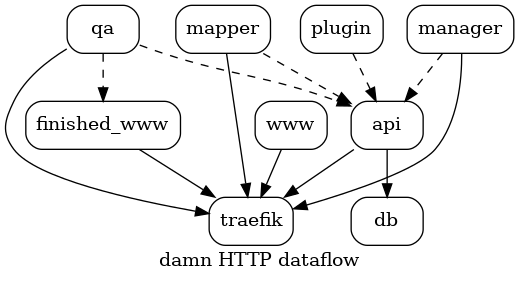
This diary is about how the Divide and map. Now. is deployed.

Divide and map. Now. consists of multiple parts like server, JavaScript clients, JOSM plugin or web page. Each part is clearly separated and has its own repository. All are integrated within the damn-deploy, which has its own repository, too.

The dataflow of HTTP services

I am not a sysadmin. When I worked on the refactor deploy, I kept Docker and Systemd and Debian. I simplified dockerfiles, removed unnecessary ones, removed unused SQL code, added systemd units and rewrote the “How to deploy” and “How to upgrade” in the README.

I added damn-www-template with the hugo static site generator, simple blogging theme and an example content. If you care to run your own instance, you may get inspired. But don’t get limited – only a dockerfile serving your web page is expected.

See full entry

Basándome en los catastros del Instituto Colombiano Agustín Codazzi, he incorporado construcciones situadas al occidente de la Avenida Camilo Torres.

Estas edificaciones se obtuvieron de un extenso conjunto de datos proporcionado por el catastro. Para su limpieza, elaboración y corrección, utilicé un modelo diseñado por Juan Melo llamado “cutis”.

Puedes encontrar más detalles sobre el modelo que fue implementado y ejecutado en QGIS para la corrección de datos en el siguiente enlace:

https://github.com/MaptimeBogota/Varios

changeset/140033530

Location: Barrio San Juan Bosco, Cabecera Municipal Duitama, Duitama, Tundama, Boyacá, RAP (Especial) Central, Colombia

原行政院農業委員會林務局,經升格為農業部林業及自然保育署,並於2023年8月14日正式揭牌,所轄8個林區管理處更名為各分署及航測及遙測分署、阿里山林業鐵路及文化資產管理處,其中所轄各工作站也同時更名。才發現在OSM上的資訊落差很大,有的連單位名稱都沒有、有的是沒有建築物、有的是只有地名標示,此次採用手動及衛星圖對照,把所有名稱全數標註,並全部增加辦公室建築物圖徵。 本次也配合本次組改新增了三峽工作站、關子嶺工作站。

資訊來源https://www.forest.gov.tw/0004547/0071910

Location: 莿子埒, 中正區, 華山, 臺北市, 10055, 臺灣

rt。此疑问是在补充长沙地铁3号线的名字时产生的。

百度百科采用的是“长沙轨道交通x号线”;
维基百科采用的是“长沙地铁x号线”和“x号线”;
长沙市各个总体规划文件上采用的是“长沙轨道交通”;
媒体大都采用“长沙地铁x号线”;
而长沙市轨道交通集团公司官网上,则既使用“长沙轨道交通x号线”又使用“长沙地铁x号线”,或者就只写“x号线”。

所以究竟哪个是正确的呢?在“长沙轨道交通x号线”、“长沙地铁x号线”、“x号线”三者中,osm应采用哪一个呢?

(目前osm中已标注线路名称采用的是“长沙地铁x号线”)

Location: 桔子洲街道, 长沙市, 湘江新区, 岳麓区, 湖南省, 中国
  • Başlamadan önce, eğer “kent rehberi”nin ne olduğu hakkında hiçbir fikriniz yoksa bora can’ın listesindeki sitelerden birkaçına girip bakmanızı tavsiye ederim.

Bildiğiniz üzere kent rehberlerini JOSM’de PicLayer gibi uygulamalarla kullanışlı şekilde görüntüleme (dikkatinizi çekiyorum sadece görüntüleme) biraz fazla zahmetli. Hızlıca bunun çözümüne geliyorum: Bunun için çılgınca bir şey denedim ve oldu. Harita altlıkları genelde WMS ve/veya WMTS veya benzeri formatta olur, standarttır. Ben de açıkçası “bence bu arkaplanda da bu şekilde, o zaman bu uygulamalar da çok özensizce yapıldığı için ben de web geliştirici araçları ağ kısmına veri transferini kaydedip bunları kolaylıkla bulabilirim.” diye düşündüm ve de ilginç bir şekilde bu varsayımım tuttu.

Türkiye’de “kent rehberi” denilen olayda kullanılan iki büyük yazılım var: ArcGIS (ki bu dünya çapında da yaygındır, bizde de çok yaygındır), Belsis üzerindeki uygulamalar (gerçi bunların çoğu da arkaplanda ArcGIS ya da NetGIS çalıştırır, NetGIS çalıştıranlarına IMS gibi bir şey deniyor. Burada NetGIS çalıştıranlarından bahsedeceğim) ve NetGIS (ArcGIS kadar yaygın değildir ancak bilinir, Türkiye’de KEOS da deniyor anlamadığım bir şekilde). Çünkü kimse tepeden tırnağa kendi yazılımını yazıp “debug”uyla ayrı uğraşmak istemez, onun yerine üstüne kendi arayüzünü çizer o kadar. Hatta bazı durumlarda bu arayüz o kadar çirkin oluyor ki uygulamayı kullanasınız gelmiyor. Bunun dışında GeoWebServer, CitySurf gibi daha küçük çapta kullanılan ya da tamamen özel olarak yapılmış uygulamalar da mevcut, bunlara girmiyorum. Bunların da bazıları bahsettiğim metotla kolayca halledilebilirken bazıları için imkansız gibi bir şey.

Harita altlığı çekme yöntemlerine gelirsek:

ArcGIS

Belki de uğraşması en kolay olanı. Genelde ayarlamalara dikkat edilmediği için https://(site)/arcgis/ şeklinde, sonrasında altlıkların her birine bakarak yukarıdaki seçeneklerden WMS veya bazen WMTS seçeneğiyle istediğiniz altlığı çekmek mümkün.

See full entry

Posted by NorthCrab on 15 August 2023 in English. Last updated on 17 August 2023.

Over the past few days, my perspective on OpenStreetMap (OSM) has undergone a seismic shift. For the longest time, I held OSM in the highest regard, viewing it as a beacon of transparency and people-centricity amidst a sea of profit-driven tech conglomerates.

Chapter 1: The Banner of Surprises

My view started to waver a couple of days ago when a new donation request banner popped up on the main OSM page. Though its sheer size and prominence were unsettling, the real issue lay in the near-invisible close button. When I voiced concerns on its ready-for-production state, opposition awaited me on the other end. Was this a shift in OSM’s priorities?

Chapter 2: The Amazon Alliance

See full entry

Posted by Piotr Strębski on 15 August 2023 in Polish (Polski). Last updated on 20 May 2025.

OpenStreetMap dla straży pożarnej

(Inspiracją dla tego wpisu w dzienniku był dla mnie trwający już ponad 3 lata kontakt ze strażakami z Jednostki Ratowniczo-Gaśniczej nr 1 w Suwałkach, których serdecznie pozdrawiam!)

Nawet najbardziej zaangażowanego kartografa serwisu OpenStreetMap (“mappera”) mogą z czasem ogarnąć wątpliwości czy znudzenie, u podłoża których stoi pytanie: “A tak właściwie, na co to komu?”. Czasem, poza osobistą satysfakcją czy osobistą nagrodą za włożoną pracę (w postaci możliwości wykorzystania w praktyce stworzonych przez siebie przed chwilą map = odwzorowania rzeczywistości), potrzebujemy po prostu czegoś więcej, poczucia sensowności społecznej a nie tylko indywidualnej (dla nas czy naszych znajomych). Każda więc informacja zwrotna ze strony np. służby straży pożarnej, że to co się robi ma sens i jest na co dzień przydatne i wykorzystywane w bieżącej pracy - to kop satysfakcyjny motywujący do dalszej pracy!

See full entry

Posted by petrusko on 14 August 2023 in French (Français). Last updated on 15 August 2023.

Découverte du Disc Golf, ou Frisbee Golf.

Du coup on rigole à ajouter un terrain de ce loisir/sport
way/1198132418

avec les infos du wiki
leisure=disc_golf_course

Disc golfer et basket
osm.wiki/File:Disc_golfer_and_basket.jpg

Have fun ;)

EDIT :

See full entry

Location: Les Vaux Bruns, Plombières-lès-Dijon, Dijon, Côte-d'Or, Bourgogne-Franche-Comté, France métropolitaine, 21370, France

Hello everyone, I am here again with the 5th Blog of my journey as an Outreachy intern. For those who don’t know me , I am Neelima Mohanty , selected as an Outreachy intern at Humanitarian OpenStreetMap Team (HOTOSM) for the May to August Cohort. If you are new to my blog then make sure you read my previous Outreachy Blogs before going through this blog post.

This is the second last week of my Outreachy internship and I almost feel like I am a part of the HOT Community or in other words I feel like I know many members of HOT already. Apart from my mentors Rob Savoye and Petya Kangalova , the list of members whom I know are Kshitij Raj Sharma , Omran Najjar , Susmina Manandhar and Sam Woodcock . Informal chats with all these people made me more familiar with this community. Let me introduce all of them with you and what I have learnt from the informal chats with them.

Kshitij and Omran are part of the dev team for fAIr project of HOT . I learnt a lot from each one of them about backend and frontend of that project and understood their work to implement AI in the process of mapping .

I already have written about my interaction with Sam Woodcock in my 2nd Blog . But that was how we came to know each other for the first time . Whereas when I got selected as an Intern , he sent me a message introducing himself and told me that he would like to help me in my technical documentation work in FMTM if I face any issues . Then I came to know that he had been volunteering for FMTM since a long time.

And finally and very recently I met with Susmina Manandhar from Nepal who work as an Associate Project Manager at NAXA one of the partners of HOT . We together worked for two weeks and prepared the Lightning Talk Video of the FMTM project for Code for All summit. While in these two weeks , we met almost everyday and not just talked about work but she also shared about herself and her University days .

See full entry

Posted by b-unicycling on 14 August 2023 in English.

I had mapped my first mass path a little over two years ago and made a video about it: https://www.youtube.com/watch?v=JyxYRqNG6aI. I’m revisiting the topic now for reasons I will get into.

What is a mass path?

In Ireland, mass paths are either footpaths people used to walk to church or - more often - to school (because the school tended to be very close to the church). Those mass paths are basically short cuts across fields and were used until the 1960s or thereabouts. The other type of mass path dates back to the times of the Penal Laws, when Catholics were forbidden to go to mass (and to school). They met at secret locations, mass rocks or mass pits, to celebrate mass. The went out of use with the end of the Penal Laws.

Why my re-awakened interest?

My local county council had wanted to start a project to record mass paths in the county, and I considered applying for it, but I could not meet their conditions (driver’s license, insurance). This was regrettable, because I could have assembled the perfect team, but it was not possible for us. However, thanks to determination and OpenData platforms like OSM and Wikimedia, it doesn’t mean we can’t record some of them.

Methodology

See full entry

Location: Loughmerans, Dunmore, The Municipal District of Kilkenny City, County Kilkenny, Leinster, Ireland
Posted by 38446 on 13 August 2023 in English.

Today I spent half the day in the forest near Bahrdorf to prepare an orienteering map in OOMapper. First I downloaded the OSM data into the app, then set out with a tablet computer as well as fieldpaper, pencil and compass to add all the features necessary for orienteering. There are of course lots of details to attend to, but I want to write about the role of OSM in orienteering mapping today.

For a forest map that I set up from scratch, OSM data come in handy because they provide a georeferenced basemap to start from. But other than that, 99% of the orienteering map is my work, and there is not much in what I do that is of interest for OSM (except the odd information board or a path that has disappeared).

Things are quite different when it comes to sprint orienteering maps, which mostly show parks and urban areas. The availability of OSM data was a real game changer here, because we used to draw all the building outlines by hand. For a quick training map, there is a webservice that renders OSM data in an orienteering map design and lets you download the map as a nicely styled pdf. Of course, this map will only contain the features that are present in OSM and cannot be edited further, so I still prefer to use the OOMapper app with downloaded OSM data, so I can add whatever features I need for the orienteering map - and more than a few of them will also be useful in OpenStreetMap.

The biggest question here is: do I add the features after downloading from OSM, or before? One the one hand, since OSM data helped save such a lot of time, it seemed only fair to give back. Moreover, if all orienteering features of a specific area were present in OSM, I wouldn’t have to bother about map backups, and every interested orienteer could download a decent o-map from the webservice mentioned above.

So this is what I brought me to OSM. Needless to say, today I spend far more time on OSM mapping than on mapping for orienteering.

See full entry

Posted by Kamil Kalata on 13 August 2023 in Polish (Polski). Last updated on 19 June 2024.

Dzień dobry.

Planuję podzielić obszary zabudowy mieszkaniowej w Zwoleniu (przede wszystkim linia nr 857055120) na mniejsze części. Mam zamiar rozłożyć tę pracę na co najmniej kilka etapów, w tym niżej wymienione:

See full entry

Location: Praga, Zwoleń, gmina Zwoleń, powiat zwoleński, województwo mazowieckie, 26-700, Polska
Posted by jidanni on 13 August 2023 in English.

North America has a lot of streets that go “straight north and south”.

This presents a difficulty because once a road’s azimuth goes left of due north, its labels must flip to avoid becoming upside down (as the street continues curving.)

This is not usually a problem with straight parallel streets, as all will be left or right of due north, thus their labels will all either read all upwards or all downwards.

So why do the labels on Brown Avenue, in Evanston, IL USA flip back and forth, disturbingly different than its neighboring fellow north-south streets? (See way/23392043 and inspect its avenue name at different zoom levels.)

Ah ha, because it wavers sightly back and forth over true north! Let’s check those azimuths as we go along it:

wget https://www.openstreetmap.org/api/0.6/way/23392043/full
perl -F\" -awnle 'next unless $#F==18; print "https://www.openstreetmap.org/user/F[-2,-4]"' full |
  sort -k 2n | gmt mapproject -Aof -o2
NaN
1.34312351808
1.4347131823
0.581553728998
-0.40040076319
-0.406099373288
0.930238524534
0.595013044226
1.17968994378

Anyway, “you got to draw the line somewhere” for when to flip lettering, so it’s at true north. Adding some “AI fuzz factor” would probably just complicate algorithms.

Location: Church and Dodge, Evanston, Evanston Township, Cook County, Illinois, 60201, United States
Posted by JzHartmut on 12 August 2023 in German (Deutsch).

Muss ich jetzt auf Google Maps umsteigen? Ich finde in der PC-Version nicht die Möglichkeit, gezielt Campingplätze anzuzeigen. Es fehlt das sogenannte Burgermenü. Wenn ich als Suchbegriff “Campingplatz” eingebe und vorher mühevoll mein Zielgebiet herausgezoomt habe, werde ich mit dem ersten Treffer mit der Nase irgendwo bei Würzburg aufgeprallt und muss mühevoll wieder die Gegend aufzoomen. Usability ist wohl hier ein Fremdwort. Es muss immer möglich sein, “auf dem angezeigten Kartengebiet” zu suchen und die Ergebnisse als Position grafisch anzuzeigen. Denn das brauche ich meist, wenn ich mit Karte arbeite.