OpenStreetMap logo OpenStreetMap

Users' Diaries

Recent diary entries

La prise en compte des pénalités par les GPS

La plupart des GPS se basant sur les données OSM utilisent la signalisation routière et le marquage au sol (stop, panneaux, feux de signalisation, ralentisseurs, passages piéton, îlots, …) pour fiabiliser le calcul d’itinéraire et améliorer le temps estimé d’un itinéraire. La prise en compte dans les calculateurs se fait souvent via un système de pénalités impactant l’itinéraire en en associant une pénalité par défaut pour un type d’objets donné.

CoMaps regroupe les différents objets dans 7 types différents et OSMAnd applique une pénalité pour chaque type d’objets/valeurs possibles ce qui permet d’avoir une plus grande finesse.

Un travail d’ajout et de mise à jour dans la base de données est aussi nécessaire en utilisant les éditeurs ID/JOSM ou StreetComplete.

Contribution

J’ai souhaité contribuer à cette thématique notamment sur les clés valeurs https://wiki.openstreetmap.org/wiki/Key:crossing et https://wiki.openstreetmap.org/wiki/Key:traffic_calming suite à la prise en compte des pénalités dans CoMaps en m’appuyant sur l’outil Taginfo.

Taginfo est un superbe outil pour découvrir la richesse d’OSM (création de nouvelles clés/valeurs par la communauté) et réaliser un travail de nettoyage et de mise à jour sur des clés/valeurs peu utilisées car il permet de visualiser l’usage des valeurs les plus utilisées aux valeurs les moins utilisées.

Les contributions ont consisté à corriger les valeurs les moins utilisées (utilisées moins de 10 fois) s’apparentant à des erreurs.

Les erreurs rencontrées dans la base de données OSM sont :

See full entry

Posted by jessiepech on 3 October 2025 in English. Last updated on 29 October 2025.

Recently, ESRI World Imagery updated to include imagery from early 2025 in Gaza. Now, for the first time since the conflict escalated in October 2023, it is possible to update OSM using open satellite imagery to reflect the many features in Gaza that are destroyed or no longer standing.

If you are updating OSM in Gaza, please follow OSM lifecycle prefix conventions:

  • For features (buildings, roads, etc) that are destroyed or severely damaged, please use the demolished lifecycle prefix: for example https://wiki.openstreetmap.org/wiki/Tag:demolished:building=yes or https://wiki.openstreetmap.org/wiki/Tag:demolished:highway=residential. This prefix is most appropriate in Gaza.
  • A similar but alternative ‘destroyed’ prefix is only used for features that were destroyed by an event other than intentional demolition, such as a natural disaster. So this is most likely not appropriate in Gaza.
  • Please do not delete: It is only appropriate to delete a feature if there is absolutely no trace of the original feature, and the land has been repurposed. Note that in many/all cases it will not be possible to tell if there is no trace of an object from satellite imagery, so features should be updated with a lifecycle prefix, and not deleted. See nonexistent features for more information. Eventually, if structures are rebuilt and no trace is confirmed, then deletion may become appropriate.

For now, it is important to avoid deleting features and use appropriate lifecycle tags in order to retain data OSM. In 2024, Humanitarian OpenStreetMap Team mapped all pre-conflict buildings in Gaza. If you need to access the full pre-conflict dataset, you can still access the data on HDX.

Thank you for the dedication in OSM, and Gaza.

The PCT exits Yosemite National Park though Dorothy Pass at the northern edge of the park. This marks the high point for through hikers after a 70 mile uphill. Statationed there with a National Parks trail crew this summer season I noticed that mapping data was sparse and inacurate. Water and campsite markings were esspecialy lacking.

I have made a number of additons and adjustements based on my notes from this summer and added ponds/streams where they are vissible on satilite data. Any stream marked as intermintet was personaly verified by me, otherwise I have left them unknown.

I belive that the avaiable tags for backcounty conditions are insuficiant and that there would be a use for a point of interest to indicate cellphone reception points in mountain areas.

Location: Tuolumne County, California, United States

🚀 O Projeto Mapeia Brasil foi lançado!

Tivemos a alegria de apresentar nossa iniciativa em uma entrevista publicada no blog da OpenCage. https://blog.opencagedata.com/post/supporting-mapeia-brasil

O Mapeia Brasil nasce com a missão de atualizar e enriquecer os dados geográficos do OpenStreetMap, fortalecendo a comunidade e levando informação livre e colaborativa para todo o Brasil. 🌍

Na entrevista, eu (Raphael de Assis, presidente da UMBRAOSM) converso sobre: A motivação e trajetória no OpenStreetMap, Os desafios e as oportunidades de mapear ruas no Brasil, especialmente em regiões invisibilizadas; O projeto Mapeia Brasil: seus objetivos, metodologia e impacto esperado;

A importância do apoio global e colaborativo, e como iniciativas como essa podem transformar realidades locais.

Esse espaço no blog da OpenCage representa um reconhecimento importante para o Mapeia Brasil.

Ao divulgar a iniciativa em um canal internacional, conseguimos: Dar visibilidade ao trabalho da comunidade de mapeamento no Brasil. Atrair possíveis apoiadores, voluntários e parceiros interessados em geodados abertos.

Contribuir para que mais pessoas conheçam a importância de dados geográficos precisos e democráticos.

Link da entrevista; https://blog.opencagedata.com/post/supporting-mapeia-brasil

Site do Projeto: https://projeto-mapeiabrasil.mapaslivre.com.br/

Location: Setor Oeste, Goiânia, Região Geográfica Imediata de Goiânia, Região Geográfica Intermediária de Goiânia, Goiás, Região Centro-Oeste, 74215-030, Brasil
Posted by hankbp on 2 October 2025 in English.

In downtown Minneapolis, MN, USA, there are 80 linked blocks of connected buildings, making up the largest distance of indoor navigation in the world[1]. The “Skyways” are a mix of interior hallways, unmarked tunnels, stairs, pedway bridges, and occasionally outdoor 2nd Floor paths which connect hundreds of local businesses. Each building sets its own hours and holiday schedules for it’s portion of the skyway.

There have been a few PDF maps and maybe a defunct app here and there. Sometimes the city publishes a list of businesses as PDF. But to truly improve the skyway, data needs to be accurate, editable, and updated for ever-changing city.

Skyway.run

I created Skyway.run (a web app) to make the skyway easy and fun to use. And an app that is easy to improve.

The app includes walking navigation filtered only to the skyway system, and highlights the changing hours and holiday/event schedule of each building. You can click a building and see the businesses inside, and easily jump to OSM to update the data.

Now I need help mapping the skyways.

Improving Skyway Data

OpenStreetMap is the data source for Skyway.run, and anyone can enroll as an editor to OSM. Once you create an account, there are a few ways you can help improve the data of the skyway:

  • Delete businesses that are no longer operational and add new businesses moving in.
  • Change the opening_hours for buildings and businesses as you walk past their signage.
  • Update the walking footpaths and building shapes of the skyway system itself.

Starting with small changes like updating a business node is the best way to learn OSM editing. There are several editors for making changes, and each one has its own strengths. Try them out based on how you plan to map:

See full entry

Location: St Anthony West, Minneapolis, Hennepin County, Minnesota, 55413, United States
Posted by SColchester on 1 October 2025 in English. Last updated on 11 December 2025.

What are Super Mappers?


Update: This new feature is live on Tasking Manager as of 14 October 2025


HOT’s Tasking Manager is about to undergo the most significant user experience upgrade since 2020. A brand new Super Mapper level will be introduced, one step higher than ‘Advanced’ mappers and much more rigorously assessed.

Entry to this new mapper level will require you to attain a series of new badges, which are automatically allocated to mappers based on the number of objects mapped. Once you have the required badges, a human assessment will then grant access to this most prestigious of mapper levels!

Wait, badges? Yes, badges are also a completely new feature with this upgrade. Users will automatically attain badges once they have made a certain number of edits, for example: mapping more than 1,000km of roads will grant you a highways badge. Once you’ve attained a badge you’ll see it against your public user profile page on Tasking Manager.

This is how the badges and Super Mapper level will appear on your user profile page in Tasking Manager (once you have them!):

See full entry

HeiGIT recently published an analysis together with the German Federal Agency for Cartography and Geodesy (BKG), comparing land cover data from OSM with the official CORINE Land Cover (CLC) dataset from BKG.

I want to use this opportunity to make an appeal to HeiGIT and similar projects analyzing OSM data: just because data is published by an authoritative (mostly government) source does not make it more correct than OSM.


I’ve often observed that OSM is compared to external datasets, and the analysis is framed around the question of whether OSM is “right.” This framing does OSM a disservice, because it suggests OSM is wrong and the other dataset is right.

In reality, all open datasets I’ve compared with OSM—whether bicycle parking, public parking spaces, buildings, cycling infrastructure, or cycling routes—have always contained errors in both datasets. The reality is: the publishing authority has no inherent influence on data quality.

Of course, this does not mean such comparisons should be avoided. They are very useful and important. But I urge that the way these analyses are communicated be reconsidered. The communication must make clear that such comparisons are evaluations of both datasets, aimed at finding similarities and differences. It must be explicit that this is not an evaluation of correctness.

Correctness of data can only be checked through ground truth and usually by sample analysis. This is a lot of work, but only this approach can truly allow for an assessment of data quality.


At this point, it would also be valuable for such analyses not only to acknowledge that all datasets contain errors, but also to highlight one of the central advantages of OSM compared to other datasets: how errors are handled once they are found.

See full entry

Location: Theoretikum, Neuenheim, Heidelberg, Baden-Württemberg, 69120, Germany

시티 버스 매니저가 얼리 액새스로 나온게 2022년 11월 10일이다. 그때 처음에 구입하고서 한국 지도가 있다는것을 알게 되었고..

OSM을 그때부터 알게 됐는데.. 서울을 보는 순간 기겁했다.. 정류장 이름들이 언제적 기준인지.. 알지도 못했고.. 지도 편집이 꽤 되다보니까 버스정류장 위치도 맞지않아 게임을 플레이 하면서 꽤나 고생을 했다.

물론 소프트웨어적인 수정이기보다는 이런 정류장 이름을 갱신하고 위치도 갱신해서 좀 바꿔보자 라는 의미였으니까..

과거에 있었던 버스 정류장의 데이터를 존치할까 말까 라는 고민도 했었다. 다국어 한국어 정보는 냅다 지우고 새로 이름을 바꾸고 위치도 바꾸다보니.. 지금은 마을버스 일부 정류장 / 공항버스 빼고는 다 된것이다.

서울시에 정보공개청구를 하면서 작년부터 공식적인 데이터를 가지고 작업을 하고 있는데 얼추 맞아가고 있지만 내가 혹시나 어떠한 사정이 생겨서 수정을 못하면 누가..할려나.. 걱정이 된다….

다시 포켓몬 고 열풍이 언젠가 오면 또 편집하는 사람들이 늘어날려나??

Posted by pnorman on 29 September 2025 in English.

The Street Spirit style contains the code used by the OSMF’s Vector Tile Service. This doesn’t make sense at first glance but requires some knowledge of the history and planned future direction.

A style like Street Spirit requires code for loading OSM data into a database, code for turning the database contents into vector tiles, and a MapLibre GL style to create a viewable map. Genenerating Shortbread tiles requires the first two of these, but there are existing styles out there that turn the vector tiles into a viewable map.

Some features are common across maps. Building polygons are a good example — almost every map will need the same data in the database. Street Spirit was started before the OSMF Vector Tile work, and this gave me a starting point for the code from Shortbread. I combined this with the experimental osm2pgsql themepark shortbread theme.

Long term the plan is to keep as much code in common as possible, and have the option to generate Street Spirit tiles, Shortbread tiles, or both. Generating both would happen out of one database with reduced duplication.

Right now I’m in the middle of this process. A lot of work has been done on Shortbread, but Street Spirit hasn’t been a focus. The reason the Shortbread code is in the Street Spirit repository is not because of what it is now, but because of where it came from and where it’s going.

Posted by aselnigu on 28 September 2025 in English. Last updated on 29 September 2025.

You can find a German version of this article here: Navigation Control oder Zoom Control in MapLibre

In this post, I’m considering how to customize the Navigation Control and Zoom Control in MapLibre for different scenarios—such as depending on whether a pointer is available or the size of the screen. I’m also wondering whether CSS or JavaScript would be the better approach.

My goal is to display the Navigation Control only on devices where it makes sense and provides a good user experience. Since I’m new to this topic, I welcome any thoughts, feedback, or suggestions for improvement.

I’ll start with a simple example:

<!DOCTYPE html>
<html lang="de">
  <head>
    <title>Demo Navigation Control</title>
    <meta charset="utf-8">
    <meta name="viewport" content="https://wiki.openstreetmap.org/wiki/Tag:width=device-width, https://wiki.openstreetmap.org/wiki/Tag:initial-scale=1">

    <meta name="description" content="Demo Navication Control 1">
    <link
      href="https://unpkg.com/maplibre-gl@latest/dist/maplibre-gl.css"
      rel="stylesheet"
    >
    <script
      src="https://unpkg.com/maplibre-gl@latest/dist/maplibre-gl.js"
    ></script>
    <link rel="stylesheet" href="index.css">
    <script type="module" src="index.js" defer></script>
  </head>
  <body>
    <div id="map"></div>
  </body>
</html>
const map = new maplibregl.Map({
  container: "map",
  center: [12, 50],
  zoom: 6,
  style: "https://tiles.versatiles.org/assets/styles/colorful/style.json",
});

map.addControl(new maplibregl.NavigationControl({}));
body {
  margin: 0;
  padding: 0;
}

html,
body,
#map {
  height: 100%;
}

See full entry

Posted by liums on 28 September 2025 in English.

Long time OSM user and occasional contributor, I recently found out that I can import bus stops from the operator* data for the area of Grenoble, France. For the moment I just want to import stop points which don’t exists in OSM.

I described all the process in this wiki page and, as it seems that mass imports are not always a good idea, I’d be happy to read any comment or tips ! I am currently discussing with locals contributors and doing some tests import on the dev server

* the data producer is not really the operator of the bus

Posted by Nicolás Antonio Celano on 28 September 2025 in Spanish (Español). Last updated on 21 December 2025.

Líneas corregidas / revisadas / mapeadas

  • 1
  • 2
  • 4
  • 7
  • 12
  • 26
  • 34
  • 39
  • 42
  • 44
  • 46
  • 47
  • 49
  • 50
  • 55
  • 56
  • 61
  • 62
  • 63
  • 64
  • 65
  • 68
  • 76
  • 80
  • 86
  • 88
  • 91
  • 96
  • 97
  • 99
  • 102
  • 103
  • 105
  • 106
  • 107
  • 108
  • 109
  • 113
  • 115
  • 118
  • 124
  • 126
  • 132
  • 135
  • 146
  • 150
  • 153
  • 166
  • 172
  • 174
  • 237-V
  • 242
  • 320
  • 328-B [Amarillo], C
  • 395
  • 441
  • 443
  • 461
  • 462
  • 463/443
  • 464

Cañuelas

  • 502 Parque Industrial Km. 48, Uribelarrea, Máximo Paz, UCES ida

Ituzaingó

  • 504

Merlo

  • 500
  • 503
  • 504 1, 1B, 2, 3, 4, 5, 6, 7, 8, 9, 10, 12

Morón

  • 634
Posted by mapmeld on 27 September 2025 in English.

In the English Channel, technically outside of the UK, there are the Crown Dependencies of Jersey and Guernsey. Aside from the main island of Guernsey there are three related islands: Alderney, Herm, and Sark. I visited the latter two by ferry earlier this month.
You can find plenty of travel photos of these places, so I will try to focus on the niche topics of mapping and car-free communities.

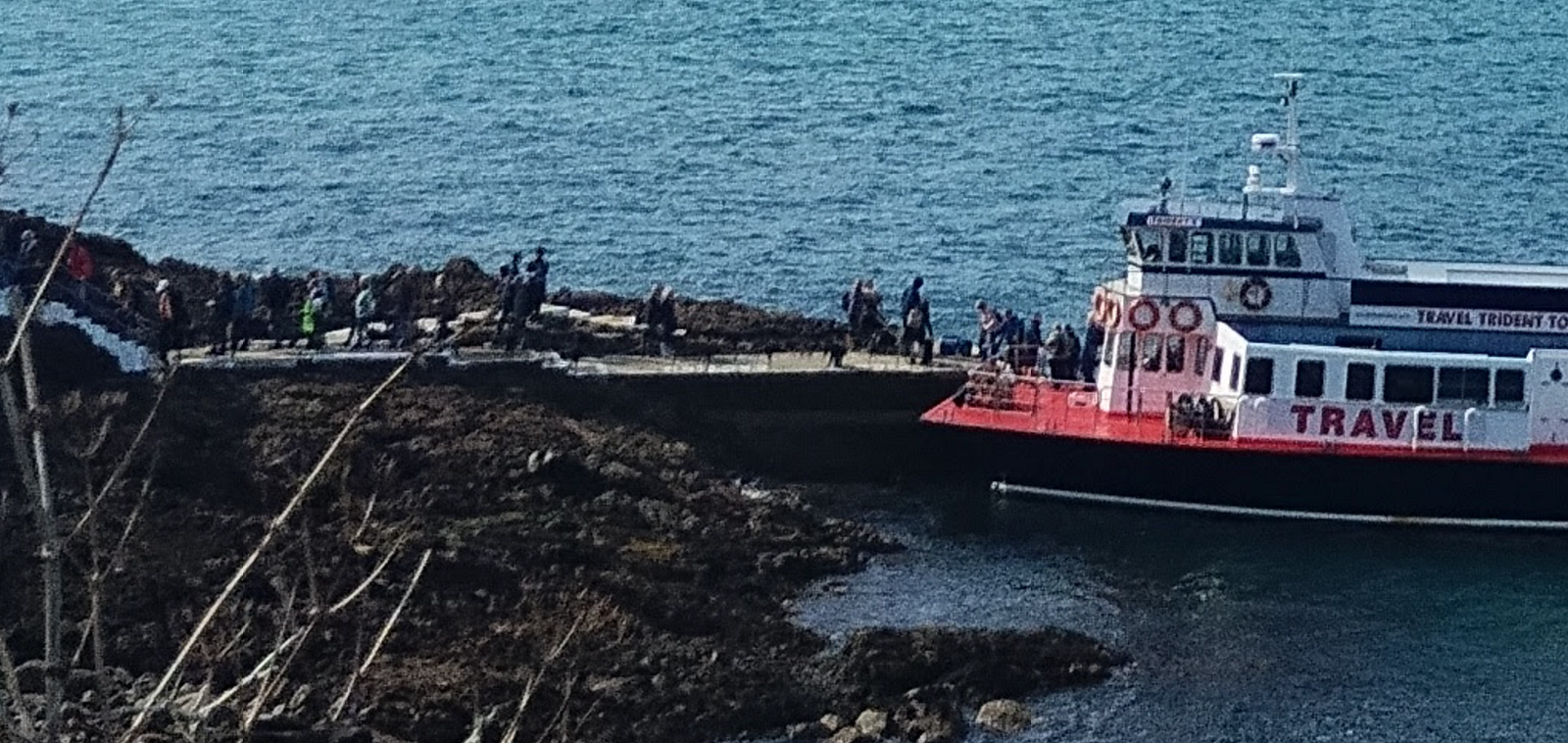
Herm is the smaller island with ~60 permanent residents. They have even banned bicycles? I had two hours and mapped a newer business and a sculpture near the quay. There is a one-person hut with a sign saying it’s their jail/gaol - I wasn’t sure if it was a joke?
One of the boat landing sites was a bit precarious:

Boat pulled up against some rocks with steps up to shore

See full entry

Location: Sark, Guernsey
Posted by dcapillae on 27 September 2025 in Spanish (Español).

Ya está disponible a través del gestor de tareas el proyecto para la incorporación de edificios y direcciones en el municipio de Almogía. Dado que se trata de un municipio con un número manejable de edificaciones, se prevé que la integración de estos datos en OpenStreetMap pueda completarse en un plazo relativamente corto y sin grandes dificultades.

Captura de pantalla donde se muestra un mapa del municipio de Almogía dividido en secciones o tareas con una leyenda a la izquierda donde se indica el estado de las tareas según un código de colores. Captura de pantalla del proyecto para la incorporación de edificios y direcciones en el municipio de Almogía. Fuente: Gestor de tareas de OpenStreetMap.


Location: Almogía, Valle del Guadalhorce, Málaga, Andalucía, 29150, España
Posted by MYShaw on 26 September 2025 in English.

I’ve been a geography nerd for my entire life. Recently, I’ve gotten into OSM as part of my need to map bike lanes for an advocacy article on bike lanes.

Initially, I mapped manually using Mapbox studio. Yes, it was tedious.

A bit more research led to OSM. I checked ways to pull down bike lane tags. That led me to the world of OverpassQL, with Overpass Turbo and the Overpass API. Along the way, I also got a taste of tagging with the need to find bike related infrastructure. Apparently, all the tags here apply:

  • bike=
  • cycleway=
  • cycleway_left=
  • cycleway_right=
  • cycleway_both=

Quite fun.

I managed to put my query together. Google Gemini search AI tried to be helpful with query suggestions. It was of limited accuracy.

After realizing that some infrastructure was missing, I had to consider maintenance of my underlying data. With OSM being an open source project, I decided to become a contributor.

The iD webapp was too limited for me. I’ve worked extensively with ArcMap before. JOSM was my tool of choice.

That leads me to today. I found additional bike maps (cycleOSM) that were nice but not illustrative enough. I also made my first updates to OSM. JOSM certainly has a learning curve but it’s mild.

I’ll still be making my own queries and I still plan to use Mapbox for my visualization. Will also have to test out Esri’s visual storytelling features.

More to come.

Location: North Highland, Courthouse, Arlington, Arlington County, Virginia, 22209, United States

East Riding of Yorkshire Sign

There are a number of ongoing discussions about the geocoder on osm.org (Nominatim) in the forum at the moment. These include spelling tolerance, how it might work with data that does not exist in OSM yet and what it actually returns.

Sometimes the results of the last of those can be a bit odd. Here for example is a post office not far from me. The returned data (“Stillington Post Office & Stores, Main Street, Stillington, York, North Yorkshire, York and North Yorkshire, England, YO61 1JS, United Kingdom”) has three things that could plausibly be a county in there - York itself, North Yorkshire, and York and North Yorkshire. In OSM these are respectively a nearby https://wiki.openstreetmap.org/wiki/Tag:place=city node, and encompassing https://wiki.openstreetmap.org/wiki/Tag:admin_level=6 and https://wiki.openstreetmap.org/wiki/Tag:admin_level=5 relations.

See full entry

Location: Stamford Bridge, East Riding of Yorkshire, Hull and East Yorkshire, England, United Kingdom

– ENGLISH BELOW

Lição bilíngue criada para a oficina sobre mapeamento de caminhos (ways) no OpenStreetMap - PT | EN


A oficina que foi realizada no dia 18 de setembro de 2025, 100% ao vivo e online, é um oferecimento da empresa IVIDES DATA.


capa_oficina1


O certificado de realização será enviado a quem completar satisfatoriamente uma prática de mapeamento, conforme consta nos últimos slides do PDF disponibilizado. NOVO PRAZO: 01-10-2025.


See full entry

Posted by Floris DC on 24 September 2025 in English.

If there’s one thing people who know me will say, it’s that I’m a proud Lokeraar through and through. The history of Lokeren, and the way the city keeps changing, has always fascinated me.

It all started in 2019 when I began editing Lokeren’s Wikipedia page. I wanted it to be more than just a dry article—I wanted it to reflect the city’s character with accurate and engaging information. After two years of expanding and polishing, I felt I had done my part there, and I started looking for other ways to put Lokeren on the map.

That’s when I discovered OpenStreetMap in 2021. My first edit was just a tiny stream in Lokeren. But from that small start, it turned into a real passion. Before long, I was mapping everything: trees, bike paths, parking lots, even new buildings as they appeared.

Now, four years later, I can proudly say the mission has been a success so far. But it doesn’t stop here—Lokeren keeps growing, and so does my map. And honestly, that’s the best part: there’s always something new to add, and always another story to tell about my hometown.

Location: Den Dam, Lokeren, Sint-Niklaas, East Flanders, 9160, Belgium