OpenStreetMap logo OpenStreetMap

Users' Diaries

Recent diary entries

Posted by aaei924 on 19 October 2023 in Korean (한국어). Last updated on 11 July 2025.

도로의 분류 기준


현실의 국가에서

일반적으로 도로의 위계를 구분함에 있어서는, 해당 도로가 연결하는 지역의 성질을 기준으로 하고 있습니다.

  1. 여러 도 혹은 국가적으로 중요한 지점 사이를 잇는 도로 (국도에 대응)
  2. 여러 시/군 사이를 잇는 도로 (지방도에 대응)
  3. 여러 읍/면 사이를 잇는 도로 (시/군/구도에 대응)
  4. 하나의 읍/면 내에서 여러 동/리 사이를 잇는 도로
  5. 하나의 동/리 내부를 잇는 도로

이런 식의 지역 단위를 기준으로 한 분류 체계는 일제강점기부터 오늘날 남북한에서까지 이용되고 있는 유서 깊은 방식입니다. 그만큼 검증되고 확실한 분류 체계라는 의미도 될 수 있습니다.

도시계획시설 기준에 관한 규칙 제9조제3호에 따른 기능상의 구분으로는 아래와 같습니다. 어느 도로가 어디 해당하는지에 대한 구체적인 정보는 vworld 등에서 도시계획도로 정보를 참고하면 확인할 수 있습니다.

  • 주간선도로
  • 보조간선도로
  • 집산도로
  • 국지도로

일반적으로 주간선도로에서 보조간선도로가, 보조간선도로에서 집산도로가, 집산도로에서 국지도로가 분기되는 구조를 가지고 있습니다.

오픈스트리트맵에서

현재 OSM에서 통용되는 한국 지역의 편집 기준은 아래와 같습니다. (아래의 주요/비주요 도로는 iD편집기 상 카테고리입니다.)

  • 주요 도로
    • 1차: 국도
    • 2차: 지방도
    • 3차: 시/군도
  • 비주요 도로
    • 주거: 주거 구역을 연결하는 도로
    • 주택가: 거리 구역/마을 안의 길
    • 미분류: 마을 등을 잇는 샛길, 임도와 유사함
    • 트랙: 관리 도로(농로/임로)
    • 서비스: 시설 내부 접근 도로/진입로 등

현 체계의 문제점


비주요 도로 분류 기준의 불명확성

현재 비주요 도로는 주요 도로에 비해 분류 기준의 명확성이 떨어지는 상태입니다. 명확성이 주요 도로에 비해 상대적으로 떨어지는 것은 어쩔 수 없으나, 가능한 한 명확한 기준을 세울 필요가 있어 보입니다.

주거, 미분류 도로의 잘못된 기준

현재의 기준을 보면 주거 도로는 주거 구역을 이어주며, 주거 구역 바깥의 길로 설명하고 있습니다. 하지만 영문판 위키의 태그 설명을 참고해 보면, 원 의미가 ‘마을을 연결하는 기능이 없는 주거지로의 접근을 목적으로 하는 도로’입니다.

Roads which serve as an access to housing, without function of connecting settlements.

  • 영문 위키의 설명 -

즉, 현재 한국에서의 ‘주거 도로’ 기준은 원래의 개념과 완전히 다른 것을 가리키고 있습니다. 주거 구역 바깥을 이어 주는 도로는 오히려 ‘미분류 도로’(unclassified)가 적절합니다.

미분류 도로의 경우, 원래 한국에서 사용되지 않았던 것으로 보이지만, 한국의 분류 기준 설명에서는 주택가 도로와 트랙 사이에 있는 것으로 설명하고 있습니다. 하지만 highway 태그의 설명을 보면, unclassified는 tertiary의 바로 다음 단계입니다. 원래 미분류 도로가 가리켜야 하는 것은 작은 규모(마을보다 크고 도시보다 작음)의 지역 내부를 이어 주는 도로이지만, 현행의 체계는 이것을 ’주거 도로‘로 태그하라고 안내하고 있습니다. 물론 마을 등을 잇는 샛길이라는 현재의 특성은 이 기준에서 벗어나지 않지만, 위계가 잘못 정해져 주거 도로의 분류가 우선되고 있는 현재의 상황은 문제가 있다고 생각합니다.

특정 지역에서 지역적 특성에 기반하여 구체적인 기준을 정하는 경우에는, 그 기준이 원래의 개념과 체계 전체에 비추어 보았을 때 괴리가 가급적 없어야 합니다. 그런 점에서 현재의 기준은, 가장 기본적인 위계조차 잘못 설정되어 있다는 점에서 개선이 요구됩니다.

trunk 태그에 대한 오해석

See full entry

Posted by Matt_ on 19 October 2023 in English.

I pulled together some info I wanted to share: what is the longest connected group of untouched TIGER imported roadways in the U.S.? The answer is this 1258.6km group of ways in Brooks County, Texas. And then below will be the rest of the info I found. I haven’t done anything with it, I just wanted to share.

Note: the Overpass queries I link directly to are all relatively quick since they’re just lists of way IDs. But for some of them I link to pastebin since they were too long to pass in a url.

Overpass Turbo - Brooks County, TX Results from Brooks County, Texas

Idea

The full results are here as a spreadsheet but I also want to explain.

I was looking at the results of the query for unedited ways and nodes in an area near me and noticed there were way more untouched roads than I thought there would be.

See full entry

Posted by JamesUNIPORT on 19 October 2023 in English.

Sotm Nigeria 2023 Abuja was very very impactful to me. Especially, having the privilege to present a topic titled ‘The Role Of Open Street Map On Emergency response. I want to use this opportunity to say thank you to all our sponsors for paving way for some volunteers who could not afford it to the conference physically, by giving grant which I also benefited from it. I’m looking forward to mapping more using open street maps and having more opportunities to participate in conferences and events coming up in the merest future. Once again I say thank you, I really do appreciate. 🙏

Posted by gvwaal on 18 October 2023 in English.

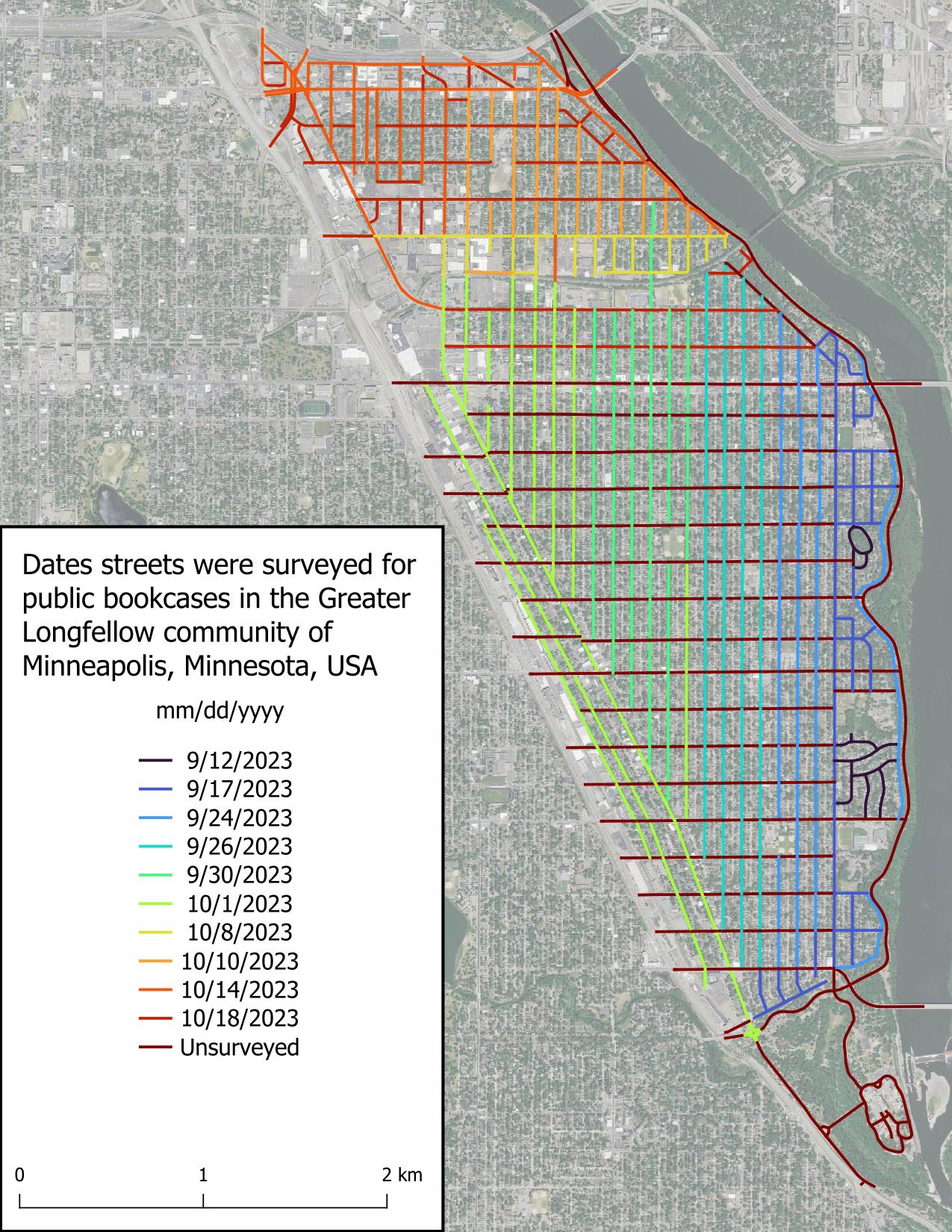
All* of Seward is surveyed! I found very few public bookcases (PBs) when surveying the remaining streets, which wasn’t surprising because most people put their PB in their front yard, and in Minneapolis, most front yards are on the avenues (north-south roads).

*It’s possible there are PBs in the entryways or at the base of large apartment complexes, and I didn’t attempt to circumnavigate each large apartment as that would have involved leaving the street.

Intro

Part 2

Part 3

Figure displaying dates roads were surveyed in the scope area. Roads are colored based on date, with the earliest date, 2023-09-12, in very dark blue and grading to red for unsurveyed roads.

It’s another previllage and opportunity to the part of local organizing committee (LOC) beand community volunteers and also selected as travel grantee to attend the hybrid state of the Map conference in Abuja Nigeria. collaborations with national research and development agency (NARSDA). It was very inspiring moment and knowledge shared was super amazing. I’m getting so much interesting In researching with geospatial tools after the presentation of #Afrigis, #cartoscope and #scistarter and Geoffrey keganttera presentation on food production system in Uganda was very educative . And also discussed more about technical support to local community members of open street Map foundation and sponsorship. I’ll like to appreciate the west and North African hub(WNH) for there special support to unique Mappers . (Afrigist)(URL) *##@{Alt picture}URL

Location: Gabi, Barde, Jema'A, Kaduna State, Nigeria

It’s another previllage and opportunity to the part of local organizing committee (LOC) beand community volunteers and also selected as travel grantee to attend the hybrid state of the Map conference in Abuja Nigeria. collaborations with national research and development agency (NARSDA). It was very inspiring moment and knowledge shared was super amazing. I’m getting so much interesting In researching with geospatial tools after the presentation of #Afrigis, #cartoscope and #scistarter and Geoffrey keganttera presentation on food production system in Uganda was very educative . And also discussed more about technical support to local community members of open street Map foundation and sponsorship. I’ll like to appreciate the west and North African hub(WNH) for there special support to unique Mappers . (Text)(URL

Location: Gabi, Barde, Jema'A, Kaduna State, Nigeria

It was indeed a great privilege attending the SOTM Nigeria 2023 conference in Abuja, at the Obasanjo Space Centre.

I was also a participant last year at the maiden edition of the SOTM conference 2022 in Port Harcourt. This participation aroused my interest and I have not looked back ever since. This year my very good friend and sister Hopeful Bafamodei invited me to be a part of the panel that talked about the cultural perception of genital mutilation. Thereafter my co panelist shared how mapping is needed to get data from areas identified as code red, where genital mutilation is being practised and how with the use of these data collected, help can come to such communities. Right there we had a live participant who shared her experience of what she had to go through in the hands of her very own father. I want to appreciate most importantly Dr Victor Sunday and all the LOC who made this event possible, The presentations made by Ian Tobia, Makcron, Eromosele and Hopeful, thought me one thing…….RESILIENCE. My passion for this conference is growing by the day and I am looking forward to more engaging content to be discussed during future events.

Hi, I use Street Complete a fair bit and it often shows up buildings with their areas drawn and asks what type of building it is.

But when I map some areas, the online editor won’t let me close the save set without having features for each area. If I choose generic “building” I don’t think StreetComplete is asking me anything at all, as though it has been settled.

So what’s a default feature for an unknown building (or unknown area for that matter - some bright white objects are very hard to tell if concrete, on the ground or a roof.) ??

Posted by Klenje on 16 October 2023 in English. Last updated on 22 October 2023.

One of the greatest things in OpenStreetMap is that, when you start looking beyond the basic features, the amount of details and specific themes you can use to enrich the map is practically endless (special mention for the guard stones mapping)

An example which may go unnoticed at first is playground mapping. I became interested in this due to the frequent visits, and I started as usual from the wiki.

The goal of this post is to have a quick summary on how to map playgrounds in order to hopefully help fellow mappers around the world interested in this topic.

Why

Because having the data in OpenStreetMap will allow your favorite app/website to let you search and display easily the existing playgrounds and their features, removing one more reason to use other providers, while making kids and parents happy.

How to map

Level 0 - starter

Minimal mapping is to place a node tagged with https://wiki.openstreetmap.org/wiki/Tag:leisure=playground in the playground location.

Note: in some places you can also find single play installations which are not part of a playground, those can be mapped directly as nodes without a playground.

Level 1 - basic

Map the playground as an area and add tag leisure=playground and any other relevant tag on it (wheelchair access, minimal age and so on). This opens up the possibility to go further into details as explained just below.

If the playground has a fence, you can also add that to the playground area with the relative gates (and possibly some footways to reach them for the routing engines!)

Level 2 - medium

Map the devices and installations as nodes within the playground area. You can find a detailed list of possible values on the wiki.

Besides that, you can also map any additional amenity like benches or drinking water that are located within the playground area.

Level 3 - advanced

See full entry

As I reflect on my journey to the State of the Map Nigeria 2023 (SotM Nigeria 2023) conference, the words that come to mind are unforgettable, inspiring, and hopeful. This year’s event was a unique blend of challenges and triumphs, new friendships, and a shared vision for the future of open mapping in Nigeria.

Unforgettable Connections: The most remarkable aspect of SotM Nigeria 2023 was the people I had the privilege to meet. Despite the challenges posed by limited funds and logistical hurdles, participants from different corners of Nigeria and beyond gathered in Abuja with a shared passion for open mapping. Each conversation was a new opportunity to learn, collaborate, and inspire one another.

Inspiring Endeavors: The conference sessions were a wealth of knowledge and inspiration. From innovative mapping technologies to community-led projects, the presentations showcased the incredible work happening within the Nigerian open mapping community. The dedication of speakers, volunteers, and attendees left me inspired and eager to contribute to these initiatives.

Hope for the Future: While navigating the constraints of limited funds, we shared a collective hope for a brighter future. The challenges we faced underscored the importance of growing support for open mapping in Nigeria. I was fortunate to witness the commitment of the organizing team as they worked tirelessly to make the event a success, and I left with hope that future SotM Nigeria conferences will have the resources needed to flourish.

SotM Nigeria 2023 was a testament to the resilience of the open mapping community in Nigeria. Despite the obstacles, we came together, learned, shared, and celebrated our common goal. The connections made, knowledge gained, and the spirit of collaboration will continue to inspire me as I work towards a more vibrant open mapping landscape in Nigeria.

See full entry

In a world where technology is at our fingertips, it is easy to forget that not every corner of the globe has been extensively mapped or can enjoy the benefits of modern cartography. This is especially true in regions torn by conflict, where infrastructure and basic services have been devastated. South Sudan, a nation born out of conflict, is one such place where mapping takes on a unique and critical role.

South Sudan, the world’s youngest country, has been grappling with conflict since its inception in 2011. The violence has often been drawn along tribal lines, making reconciliation and rebuilding particularly challenging. In such a fragile post-conflict environment, the work of organizations like OSM South Sudan takes on profound importance.

The OSM South Sudan Initiative

OSM South Sudan, an open mapping community, has taken up the mantle of mapping the nation’s remote and conflict-affected areas. Mapping in such an environment is not just about geographical data; it is a tool for social healing, reconciliation, and empowerment. The volunteers involved in OSM South Sudan are driven by the belief that the act of mapping can foster peace and unity in a divided land.

Concept Mapping as a Starting Point

To initiate this endeavor, OSM South Sudan starts with a fundamental step – concept mapping. The first phase of their approach is all about introducing the local communities to the concept of mapping in a way that resonates with their everyday lives. By asking simple questions like, “What would you do before you build a house?” the volunteers create a bridge between mapping and the participants’ own experiences.

See full entry

Location: Hai Buluk, Juba City, Juba, Central Equatoria, South Sudan
Posted by Karinorz on 15 October 2023 in English.

Introduction

Open Her Map team was consisted of 3 people, Mirnayani (Indonesia), Shafiya (Sri Lanka), and Karina (Indonesia). As a follow up of She Leads She Inspires program, Open Her Map was selected to be one out of 10 grant beneficiaries to make a platform to gather information related to the availability of women-only spaces in public facilities, such as the availability of breastfeeding rooms, kids’ playing spaces, women-only restrooms, ladies’ parking spaces, women-only rooms, women-only hours service, and many other women-only spaces’ necessities.

Outcome

By the end of the project, the project achieved the following: Women participants have increased sense of safety and comfort in terms of women-only spaces in public facilities One pilot location in each Jakarta and Moratuwa have increased the number of mapped women-only spaces in public facilities Women participants have increased knowledge on mapping women-only spaces using OpenStreetMap

Output

See full entry

Location: RW 10, Pela Mampang, Mampang Prapatan, South Jakarta, Special Capital Region of Jakarta, Java, Indonesia