OpenStreetMap logo OpenStreetMap

Users' Diaries

Recent diary entries

Posted by Legitimater on 21 December 2022 in English. Last updated on 23 December 2022.

I’ve been mapping OpenStreetMap for approximately 9 months now, and for the 128 edits I’ve done (which 50% of it is mapping trees and farmland), I’m proud to introduce to you all my new operation.

The “Operation Green”. Which involve of me mapping farmland, trees, to make the map look more “greener” (more info here)

Changelogs:

  1. Mapping trees/farmlands, and other related nature features (Natural wood, etc.) will be now separated from other changesets
  2. A hashtag #OperationGreen will be now displayed on the comments in each changesets.

If someone see this diary entry, and you decide to do it also to make the map more greener as well, feel free! (P.S., Put the hashtag #OperationGreen on the changesets so I can know it came from me.

Thanks!

Posted by Letwin on 21 December 2022 in English.

2022 PART 01

#Welcome to OpenStreetMap Community

It was just 3 students, ambitious about a pathway they were not even so sure about. They accepted the challenge and got ready to roll.

So, we started our YouthMappers Chapter just as a Students OSM Community at our University. We didn’t know much but we were willing to take the risk. So, one thing we knew and we did was hold Africa Monthly Mapathons.

File:Launch3

This we knew and actually followed and for a time it was the only activity we knew. Fortunately for us, we had the unwavering support of our mentor Dr Prestige T Makanga and Dr Charles Paradzayi and of course Geoffrey Kateregga (our Mr OSM)! Later on, light came, and thanks to Regional Ambassador Laura Mugeha; we registered our small community as a YouthMappers Chapter and things started getting better and brighter. On this day, we launched our Chapter with an introduction to OpenStreetMap and YouthMappers.

See full entry

Posted by tffmh on 20 December 2022 in English.

Overview

Over the last year in context of Code for Niederrhein (CFN), especially the weekly online meetings, we have added the origin of the names of the streets in Moers to OSM. We added description, wikipedia- and wikidatalinks.

More than 1000 streets were processed.

The book “Moeser Straßen - Geschichte und Deutung - zum 700-jährigen Stadtjubiläum” (Moeser streets - history and interpretation - on the occasion of the 700th anniversary of the town) by Peter Hostermann, published by the town of Moers and made available online, was our main source. In addition to a comprehensive ethymological study, the book also contains the dates when the streets were named, in many cases the date of the town council decision that led to the naming. The book also lists renamings, so that we were able to include these for Moers if the course of the street remained identical or if an exact description of the old course of the street is documented.

In addition, the street index has been entered for many streets; here the work is not yet complete and will be pursued further.

Tags used:

  • name:etymology:wikidata
  • name:etymology:wikipedia
  • name:etymology:description
  • name:start_date (yyyy-mm-dd)
  • old_name: VON-BIS (yyyy)
  • de:strassenschluessel

Crew

  • black_bike
  • tffmh
  • Nastja G
  • noninc

Web

You can see the results at the following link (might take some more days until all data is up to date): https://etymology.dsantini.it/?lang=en-EN#6.633,51.46,13.3,type

“Moeser Straßen - Geschichte und Deutung - zum 700-jährigen Stadtjubiläum”: https://www.moers.de/system/files/2022-07/moerser_strassen.pdf

Code for Niederrhein: https://www.codeforniederrhein.de

OSM Project page: osm.wiki/Moers/Projekte/Stra%C3%9Fennamen

Findings

Some interesting take-aways from our work, with no claim to completeness, historical or other relevance.

General

A cadastral map existed from 1831, this being the first source of street names.

See full entry

Location: Moers-Mitte, Moers, Kreis Wesel, North Rhine-Westphalia, 47441, Germany

Übersicht

Über das letzte Jahr haben wir im Kontex des Code for Niederrhein (CFN), vorallen in unseren wöchentlichen Onlinetreffen, nun auch die Namensherkunft der Straßen in Moers in OSM eingepflegt. Wir haben Beschreibung, wikipedia- und wikidatalinks hinzugefügt.

Dabei wurden über 1000 Straßen bearbeitet.

Grundlage der Bearbeitung war das von der Stadt Moers veröffentlichete und online zur Verfügung gestellt Buch “Moeser Straßen - Geschichte und Deutung - zum 700-jährigen Stadtjubiläum” von Peter Hostermann. Neben einer umfangreichten ethymolgischen Betrachtung enthält das Buch auch die Daten der Straßenbenennung, in vielen Fällen das Datum des Ratsbeschluß der zur Benennung geführt hat. Im Buch werden auch die Umbennungen geführt, so das wir diese für Moers einpflegen konnten, wenn der Straßenverlauf identisch geblieben ist oder eine exakte Beschreibung des alten Straßenverlaufs dokumentiert ist.

Zusätzlich wurden für viele Straßen der Straßenschlüssel eingetragen, hier ist die Arbeit noch nicht abgeschlossen und wird weiter verfolgt.

Verwendete Tags:

  • name:etymology:wikidata
  • name:etymology:wikipedia
  • name:etymology:description
  • name:start_date (yyyy-mm-dd)
  • old_name:VON-BIS (yyyy)
  • de:strassenschluessel

Crew

  • black_bike
  • tffmh
  • Nastja G
  • noninc

Web

Unter folgendem Link kann man sich die Ergebnisse ansehen (es kann noch einige Tage dauern bis die Daten auf dem aktuellen Stand sind): https://etymology.dsantini.it/?lang=de-DE#6.633,51.46,13.3,type

“Moeser Straßen - Geschichte und Deutung - zum 700-jährigen Stadtjubiläum”: https://www.moers.de/system/files/2022-07/moerser_strassen.pdf

Code for Niederrhein: https://www.codeforniederrhein.de

OSM Projekt Seite: osm.wiki/Moers/Projekte/Stra%C3%9Fennamen

Findings

Einige wie wir finden interessante “take-aways” aus unser Arbeitm, ohne Anspruch auf Vollständigkeit, historische oder irgendwelche Relevanz.

Allgemeines

See full entry

Location: Moers-Mitte, Moers, Kreis Wesel, Nordrhein-Westfalen, 47441, Deutschland

So, there’s this gem:

BLM track crossing Warren H. Brock Reservoir

This is the Warren H. Brock Reservoir overlayed with the BLM 356 track from the latest BLM GTLF data set. Construction started on the reservoir in 2008, so the BLM GTLF data in this area is at least that old.

Sometimes dealing with external data sources requires a little creative interpretation. Aerial imagery shows a track that goes around the reservoir, so that’s the new alignment for BLM 356.

Location: Imperial County, California, United States
First confession: I was supposed to write this weeks ago.

I had the perfect writing set-up on my rented Airbnb apartment: a cozy roof deck where I could be alone with my thoughts for hours and with an astonishing view of the world’s most perfect cone-shaped volcano: Mt. Mayon. And then, as with all other things, life happened and I am just publishing this one now. Even so, I believe that my attendance during the State of the Map Asia x Pista ng Mapa 2022 held last November 21-25, 2022 at Bicol University East Campus (fondly called by the locals as Buceng) in the lovely city of Legazpi, Albay still bears lessons and experiences worth sharing up until now.

Second confession: My knees were shaking the whole time I delivered my lightning talk.

My presentation on Mapping for Cultural Sustainability, a project I am pursuing with another She Leads and She Inspires (SLSI)^ champion from Nepal, was selected as one of the lightning talks for Day 1 of Pista ng Mapa. No matter how much I looked forward to all the things the conference was about to offer, the first day was nerve-wracking for a person like me who wasn’t that used to speaking in public, more so in front of 300 people who all have left their marks in the mapping community. There I was, a lone participant from Davao City (at least, that’s what I first thought) and a neophyte in the OSM community about to deliver her first public speech in years. Nevertheless, the purpose of my attendance pushed me to brave the stage and share my SLSI experience and the community project, a product of our six months of SLSI training, that I am working on.

See full entry

Posted by dcapillae on 19 December 2022 in Spanish (Español). Last updated on 6 January 2023.

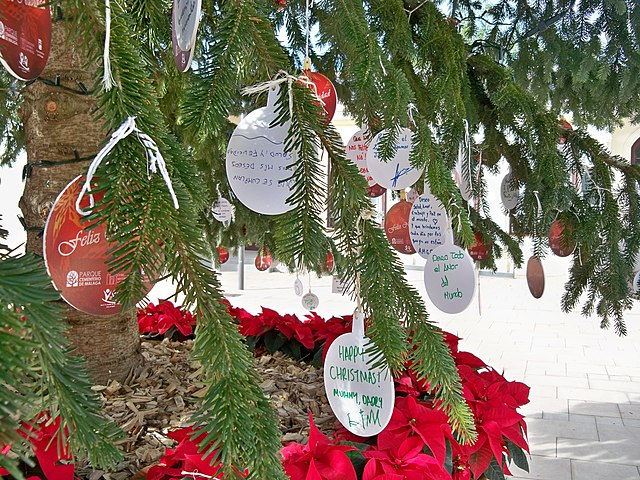
Árbol de navidad Árbol de Navidad en la plaza del Patrocinio (ubicación). Fuente: trabajo propio (CC BY-SA 4.0) disponible en Wikimedia Commons.

Acabo de añadir al mapa mi primer árbol de Navidad. El árbol, junto con otros objetos relacionados con la Navidad, se puede visualizar en este mapa interactivo creado por Miche.

Si queréis conocer cómo añadir al mapa árboles, mercadillos, belenes y otros objetos de temática navideña, en esta página del wiki encontraréis todos los detalles.

¡Feliz Navidad!

P. D. (2022-12-24): He añadido al mapa las ubicaciones de los dos principales mercadillos navideños y los belenes más significativos que se pueden visitar en la ciudad de Málaga, aquellos que se repiten año tras año, con fechas y horarios de apertura actualizados a las navidades de 2022-2023.

See full entry

Location: San Miguel, Centro, Málaga, Málaga-Costa del Sol, Málaga, Andalucía, España
Posted by Anil Basnet on 19 December 2022 in English.

A ‘polling station’ or ‘voting center’ is a place where people vote, i.e. where ballots are cast. It can be a room in a building where voter registrations are checked, ballot papers are provided, and ballot box are available to put the ballot papers.

In Nepal, generally some rooms or blocks of schools and community buildings are used as the voting centers or polling stations for the purpose of voting in the election. While mapping a polling station in OpenStreetMap, we will add a node for a voting center and tag it.

Tagging Instructions:

Required Tags:

  • amenity=polling_station
  • polling_station=ballot_box

Naming Tags:

  • name=* (commonly used name of the voting center in native (Nepali) language)
  • name:ne=* (name of the voting center in Nepali language)
  • name:en=* (name of the voting center in English language)

Introduction

In the third week of October 2022, unfortunately, there was a big flooding event in Jembrana District Bali that caused several damages and casualties.

The Support

Right after the flood happened, Bali Disasater Management Agency (BPBD) contacted Open Mapping Hub Asia-Pacific (OMH AP) team to give some mapping support in some of the affected areas. Before OMH AP launched the tasking manager mapping to respond to the request, we conducted rapid data gap assessment through disaster ninja to see whether we still need remote mapping support or we can directly support them in the data utilization to create a flood impact map on that area. After we found that there were OSM data gaps on the affected areas, OMH AP created the Tasking Manager Project to support that event.

See full entry

Location: Mendoyo Dangin Tukad, Jembrana, Bali, Lesser Sunda Islands, 82251, Indonesia

I’ve written a long blog post on sealed and unsealed roads in NSW. OpenStreetMap now has comprehensive coverage of road surface tags in NSW and the post provides lots of maps and tables to illustrate the patterns. Hope you enjoy it.

https://little-maps.com/2022/12/16/openstreetmap-now-has-comprehensive-data-on-sealed-and-unsealed-roads-across-new-south-wales-australia/

Posted by Kai Johnson on 15 December 2022 in English.

While I’ve been working on BLM Ground Transportation Linear Features (i.e. highways) in Imperial County, I took a small diversion to put in the BLM Off-Highway Vehicle Areas in California. Four of the major BLM OHV areas are in Imperial County, so it was relevant. These boundaries are important because many of the OHV areas are “open,” allowing cross-country travel off of designated roads and trails.

I’ve been working with the BLM CA Off Highway Vehicle Designations data set, which has 31 OHV areas in California and one OHV area from Nevada that slipped in because it’s managed by a BLM field office in California.

As I started adding the OHV areas, I noticed that almost all of these areas have never been mapped. Some of these areas are notable institutions in the off-road community, like Imperial Dunes (aka Glamis) and Johnson Valley (home of King of the Hammers). So adding these areas is a significant contribution to the map.

Tagging these areas is a little bit of a challenge. After some discussion with Minh Nguyen, I settled on landuse=recreation_ground and leisure=offroad_driving to tag all the OHV areas. The recreation_ground tag is a slightly odd fit but it seems close enough to be appropriate. And some renderers have an idea what to do with it.

Some of the OHV areas only permit vehicles on designated routes. That’s no problem because the access tags go on highway features and the OHV area doesn’t need any additional tagging. But many OHV areas permit open cross-country riding, so tagging vehicle access is an issue for these areas. I settled on adding motor_vehicle and ohv access tags directly to the areas, with values like yes for unrestricted access, permit where vehicles must have a pass, and permissive for the shared-use area of Johnson Valley which is periodically closed for military use (but not on a predetermined schedule).

See full entry

Location: Imperial County, California, United States

A few days ago I wrote about extracting GPX location data from the raw videos coming out of my A129 dashcam, and uploading to Mapillary. I was doing this one video at a time. A typical drive yields a lot of short videos, each 1, 5 or 10 minutes long depending on the settings. Some automation would be nice!

Mapper n76 suggested in the comments to my previous post to concatenate the short videos first and then process the resulting single video. I tried this following the instructions on the ffmpeg website, but I could not get exiftool to extract location data from the resulting longer video. So what I did instead was write a simple bash script that just loops over all MP4 files in the directory and does the GPX extraction and Mapillary processing / uploading for each file. Here’s the full script I used, which has the gpx.fmt file you need for exiftool baked in for convenience, but the loop itself is simply:

for f in *.MP4; do
    exiftool -m -p gpx.fmt -ee -ext mp4 -w %f.gpx $f
    mapillary_tools video_process_and_upload $f --geotag_source gpx --geotag_source_path ${f%%.*}.gpx --skip_process_errors
done

I found that I need --skip_process_errors because there’s usually one image extracted from the start or end of each video file that cannot be matched with a timestamp from the GPX file. I don’t care enough about one single image out of an entire sequence to try and figure out why, but I’m sure someone more determined than I could fix it :)

Location: East Liberty Park, Salt Lake City, Salt Lake County, Utah, 84105, United States

I have created my first preset to speed up marking river milestones on Vistula (Wisła) river. I’m tagging both physical boards on the shore and virtual ones according to: / Stworzyłem swój pierwszy preset by przyspieszyć oznaczanie kilometrażu rzeki Wisły. Oznaczam zarówno tablice na brzegu jak i wirtualny pikietaż na rzece, zgodnie z:

Tag:waterway=milestone

I’m using following tags / używam następujących tagów:

  • key=ref value=Wisła
  • key=waterway value=milestone
  • key=distance value=*

and following Open Sea Map tags / i następujących z Open Sea Map:

  • key=seamark:type value=distance_mark
  • key=seamark:distance_mark:category value=board (for the board on the shore / dla tablicy na brzegu)
  • key=seamark:distance_mark:distance value=*

and special two for the virtual kilometer point in the river / i specjalnych dwóch dla pikietażu na rzece:

  • key=river:waterway_distance value=*
  • key=seamark:distance_mark:category value=not_installed

Please see the results in overpass / Rezultat w overpass

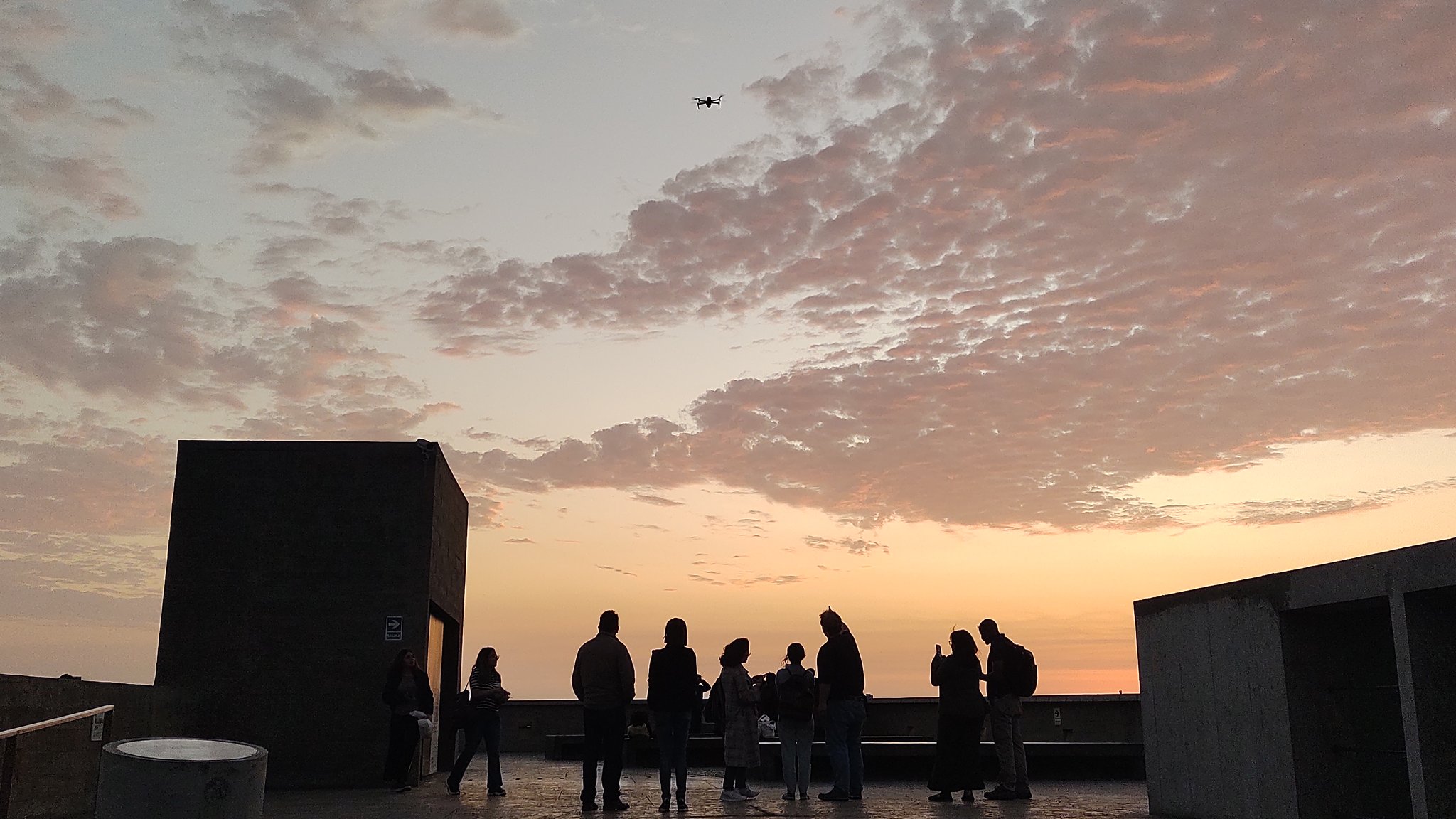
Durante la última semana de noviembre, participé a la Conferencia de Gestión popular de riesgos de desastres y OpenStreetMap LATAM 2022 organizada por OSM Perú y el nuevo capítulo de Youthmappers Llamitas Mapeadoras, en la Universidad Nacional Mayor de San Marcos en Lima.

Aquí redacto unas reflexiones personales como contribuidora de OSM LATAM.

1.Fue un evento muy concurrido, sin ser un State of the Map y siendo esencialmente un evento nacional, pero con participantes internacionales. Pero rescato sobre todo que tuvo una participación de personas realmente interesadas en el tema y con real intención de colaborar, conocer, escuchar de experiencias de otr@s, reflexionar junt@s para aportar a sus situaciones comunitarias en materia de gestión de riesgo, y esto desde un enfoque no especialista y profesional, sin tampoco cerrarse al mismo. En este sentido, para mi, fue un evento muy integrador y me emocionó mucho. Logró la “I” de la sigla “GIRD”.

See full entry

Location: Roma Sur, Ciudad de México, Cuauhtémoc, Ciudad de México, 06760, México
Posted by SK53 on 14 December 2022 in English.

A few days ago i provided an example Overpass query to show buildings with a mapped start_date colour coded by age. This was in response to a query by long-time Latvian contributor richlv. Another user based in Latvia asked on Mastodon if it was also possible to look at data by how long ago since it was edited.

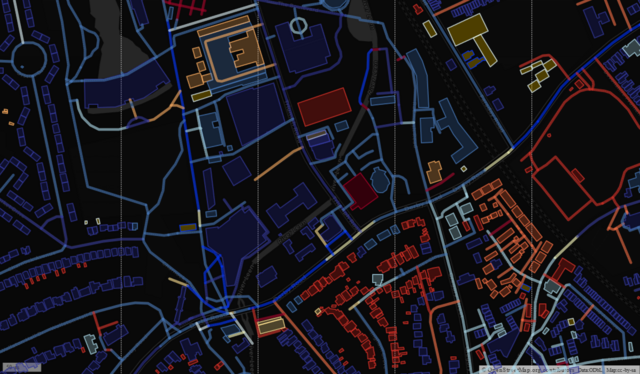
Building & Highways coloured by edit age

This proved to be quite a lot harder than my previous example. The issue is that the “@timestamp” field in Overpass-Turbo is always treated as a string and is never cast to a number or date. This meant that the MapCSS queries have to deal with regular expressions, so I’ve just done the bands in years (“way[@timestamp=~/YYYY.*/]”), as I haven’t experimented with how rich the regexp implementation is for MapCSS. An example of the amended query for roads and buildings in a given bounding box is here.

See full entry

Location: Old Lenton, Lenton, Nottingham, East Midlands, England, NG7 2FE, United Kingdom